



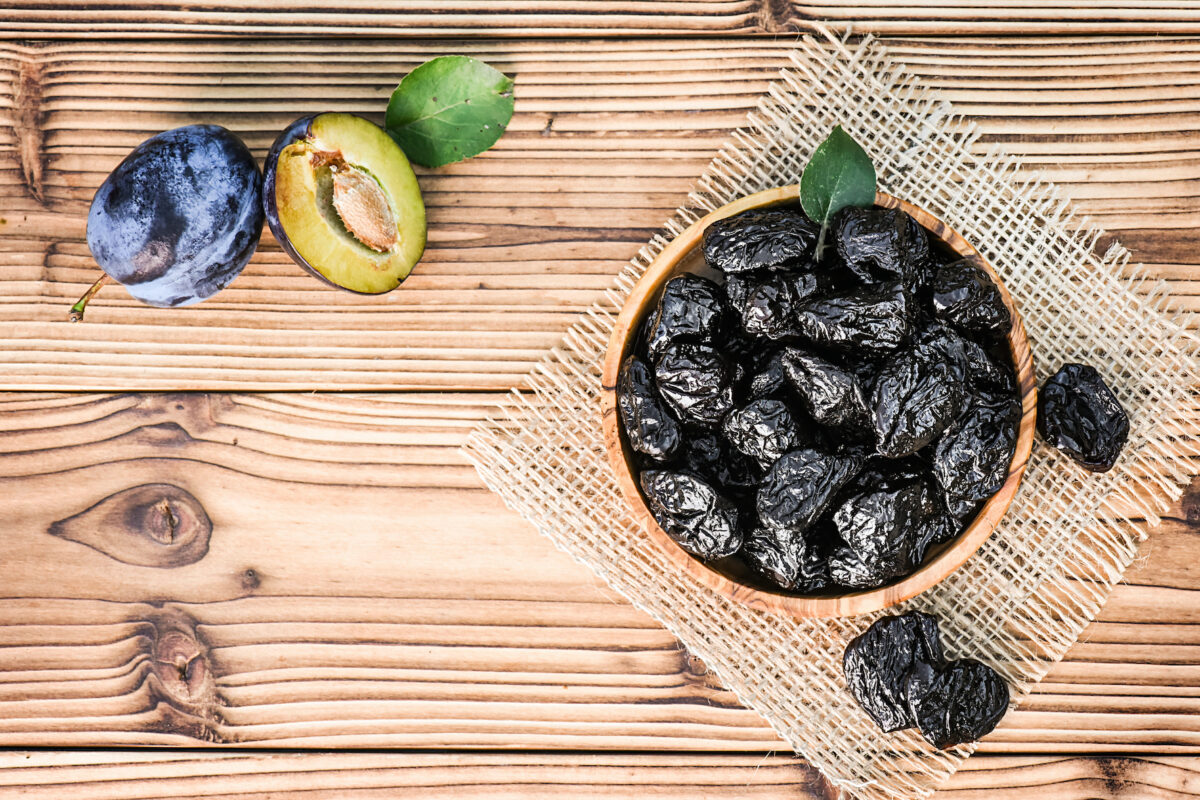
Eating prunes daily could slow the progression of age-related bone loss and reduce fracture risks in postmenopausal women, according to a study led by researchers from Pennsylvania State University, funded by the California Prune Board.
The study authors found that postmenopausal women who consumed at least four to six prunes daily for one year preserved their bone structure and strength in the weight-bearing area of their shin bones.
“This is the first randomized controlled trial to look at three-dimensional bone outcomes with respect to bone structure, geometry, and estimated strength,” lead study author Mary Jane De Souza, a distinguished professor of kinesiology and physiology at Penn State, said in a statement. “In our study, we saw that daily prune consumption impacted factors related to fracture risk. That’s clinically invaluable.
“When we look at bone mineral density, we’re looking at how much bone there is, but we also want to know about the quality of the bone.”
Looking at bone structures three-dimensionally “tells us how good the bone is,” she said.
Ms. De Souza said prunes contain bioactive compounds, including polyphenols, that can prevent the inflammation that contributes to bone loss.
Prunes Benefit More Than the Bowels
As we grow, our bones undergo a constant process of regeneration and remodeling. But as we age, bone regeneration slows, and bones become more brittle and fracture more easily, leading to osteoporosis.
Postmenopausal women are especially at risk of osteoporosis because they lose estrogen during menopause. Estrogen helps keep bones strong.
In the controlled trial, researchers at Penn State followed 235 postmenopausal women for one year. More than 70 percent hadn’t started hormonal or osteoporosis treatment.
Women were randomized to eat no prunes, four to six prunes daily, or 10 to 12 prunes daily. The research team assessed bone density and strength every six months through a computed tomography (CT) scan.
The researchers evaluated bone structure and strength in several areas of the women’s shin bones.
Throughout the year, they found that bone mass density and bone strength in the shin bones of women who ate no prunes decreased.
Consuming prunes preserved the tibia’s cortical bone—the dense, hard outer layer of the shin bone. Both groups that ate prunes maintained bone density and structure in this weight-bearing area. However, the women asked to eat 10 to 12 prunes a day dropped out of the study at the highest rate because of boredom with having to incorporate so many prunes into their diet.
A word of caution: While prunes contain anti-inflammatory polyphenols, they are also high in sorbitol, which can cause diarrhea if consumed in large amounts.
“It’s pretty exciting data for a 12-month study,” Ms. De Souza said. “We were able to maintain and preserve bone at the weight-bearing, cortical bone of the tibia, and the maintenance of cortical bone and bone strength is key to avoiding fracture.
Researchers’ next step is to see whether prunes could help reduce the risk of osteoporosis, because the study didn’t cover that, she said. Previous research showed that eating five or six prunes daily for a year preserved total bone mass density at the hip, Ms. De Souza said.