



The microbiome has proven difficult to study, becoming an area of intense interest among researchers. Studies often conflict or prove hard to replicate, and confounding variables make it hard to generalize findings.
Now a new study finds that even the time of day researchers look at the microbiome may significantly change its appearance.
Researchers who noted fluctuations in gut microbes that can be radically different within the same day are sounding the alarm that the finding warrants guidelines to help contextualize future studies.
Published today in Nature Metabolism, the review noted a number of factors that can alter the composition of the gut microbiome, which was found to shift depending on whether samples were collected in the morning or evening.
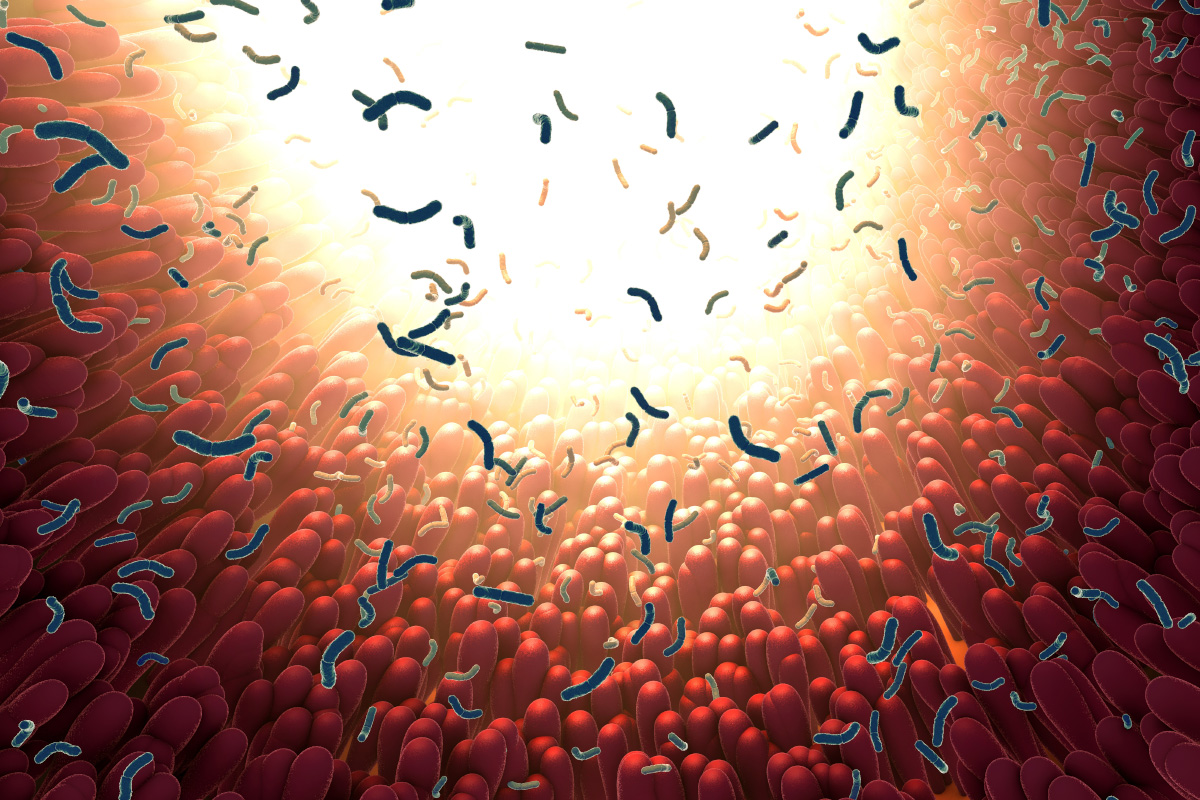
The microbiome is the collection of all the bacteria, viruses, and fungi living in a specific part of the body. It’s an emerging field of study in which various microbial “signatures” have been linked to diseases and symptoms.
For all its complexities, it also holds an immense amount of promise, which has led to what the Stanford Report described as “an explosion of research.”
New Influential Factor
Research has already noted that our lifestyle—how we eat, exercise, our family, antibiotic use, and stress—can all influence our gut microbial composition. The new study reveals even the time of the test appears to be an important variable.
“We found that when a sample is taken can dramatically affect which microbes were present and the conclusions the scientists drew about the disease they were studying,” said Dr. Amir Zarrinpar, gastroenterologist and associate professor of medicine at the University of California San Diego School of Medicine, in a news release.
Senior author on the study, Dr. Zarrinpar went on to say that this variability is likely why microbiome scientists struggle to replicate research. A closer look at research, including some yet to be published, found the “microbiome oscillates throughout the day, with different populations of microbes dominating at different times.”
In fact, the study was inspired by a conversation Dr. Zarrinpar had with a colleague about the difficulty in replicating microbiome findings that led to a discovery about sample times being taken differently by researchers in the same lab. One liked to collect stool samples first thing in the morning, and the other collected samples right before going home for the day.
Stool samples are used in both animal and human studies to analyze the microbes and metabolites that are believed to come from the colon.
Timing Matters
The co-authors of the review believe timing is such a vital factor in stool microbiome samples that they’re calling on the National Institutes of Health (NIH) to require that it be reported in their papers.
Dr. Zarrinpar noted that other scientists, particularly circadian biologists, have been petitioning the NIH about stricter standards for sample collection timing.
Josiane Broussard, assistant professor in the Department of Health and Exercise Science at Colorado State University and director of its sleep and metabolism laboratory, told The Epoch Times in an interview, that insight from circadian biology is often beneficial for many biomarkers, such as blood pressure, lipids, and blood glucose checks.
Checking blood glucose levels, for instance, can help guide the timing of eating, exercise, and sleep, according to Cleveland Clinic.
“Timing matters for everything,” Ms. Broussard said. “Almost everything has a circadian rhythm so it makes so much sense that a whole community of organisms has circadian rhythm.”
A Factor Largely Ignored
The microbiome field hasn’t especially focused on sample timing. In fact, the new study looked at more than 550 articles that have been published in major journals since 2019 and discovered only 0.32 percent of them included the specific time of sample collection.
Because of that, the researchers had to expand their investigation to explore the question of whether timing matters. That included tracking down six previously published preclinical datasets they could analyze, as well as two circadian collections from an unpublished study.
A microbiome sample that was nearly 80 percent different four hours after a mouse ate breakfast was among the findings.
“Part of the difficulty with the microbiome is it’s so heavily influenced by diet,” Ms. Broussard said. “Have we been able to disentangle the effects of diet and eating from the intervention or manipulation that people are interested in?”
Consumer Beware
Dr. Sabine Hazan, gastroenterologist and chief executive officer of Progenabiome, said consumer products promising microbiome analysis aren’t likely too reliable yet as the research is in its infancy.
For instance, while timing can change results, it really depends on the quality of the testing and the sample, she said in an interview with The Epoch Times.
“I agree the microbiome fluctuates if you are doing shallow sequencing … especially if you have poor methods of analyzing the microbiome,” she said. “If your standard operating procedures are perfect, it doesn’t matter what time of day you’re taking your stools, it’s not going to fluctuate that much.”
Sequencing is technology that allows researchers to look at the DNA of microorganisms. Deep sequencing can determine the species of the microbes within the microbiome. Experiments can be designed a number of ways, including how many cells are profiled and to what level of taxonomic depth, according to a 2020 article in Nature Communications.
“Unfortunately the majority of microbiome tests that are out there are trying to offer a consumer product that’s cheap, but it’s not accurate. It doesn’t really tell you much,” Dr. Hazan said. “The problem is 80 percent of the data written since 2017 is flawed. That’s why microbiome technology is strictly a research product.”
Dr. Zarrinpar is calling for standardized guidelines for collection times and methods—an effort that will require broad collaboration.
Drs. Zarrinpar and Hazan both emphasized that being able to reproduce findings is what validates key findings in research. Without that, microbiome research faces a “replicability crisis” that could hamper interdisciplinary findings, such as those that link the microbiome to diseases like inflammatory bowel disease, multiple sclerosis, Alzheimer’s disease, cancer, and many others.
“If we’re ever going to be able to communicate to each other about our science and what we think is going on in an effective way, then we need to understand that if you got different results than I did, maybe that could be due to the time that we’re collecting samples or not. Right now, you can’t even tell,” he said.