



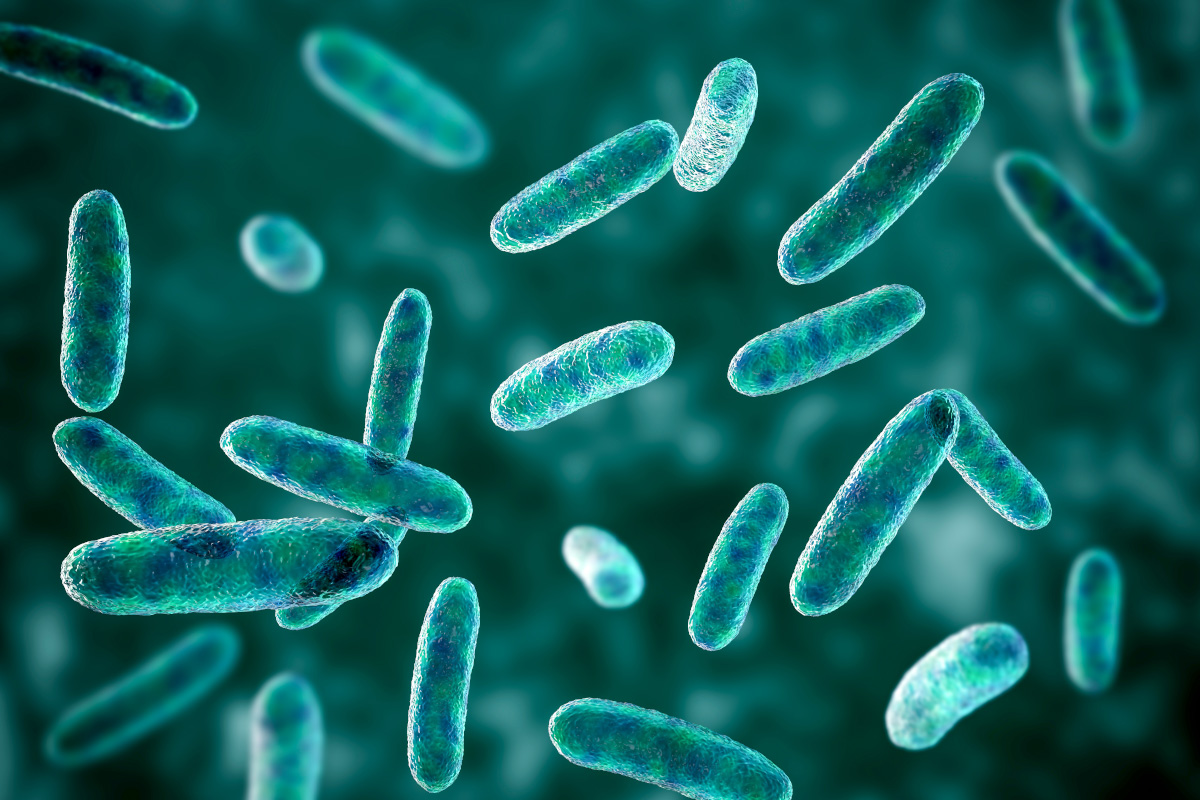
While it’s known that washing away germs can help heal wounds, one bacterium might be helpful to keep around. Alcaligenes faecalis (A. faecalis) has been found to promote the healing process in tough-to-treat diabetic wounds, according to a study published in Science Advances.
The study, conducted by researchers from the Perelman School of Medicine at the University of Pennsylvania (Penn), showed that the helpful bacterium supports skin cell movements necessary for wound closure by reducing the production of certain enzymes often overexpressed in people with diabetes.
Understanding how A. faecalis boosts healing could help scientists find new treatments for diabetic wounds, the researchers said.
The Bacterium’s Relation to Diabetes
Chronic wounds, such as ulcers, sores, and lacerations, can plague people with diabetes. These wounds often take a long time to heal or fail to heal altogether. According to the study, chronic wounds affect more than 6 million people in the United States each year, costing an estimated $96 billion to manage nonhealing wounds. Additionally, nonhealing wounds can be painful, can lead to other illnesses and mobility issues, and can be socially isolating, reducing quality of life.
“This research builds heavily on our previous research where we profiled the bacteria found in diabetic foot ulcers over time and studied how these bacteria influence healing outcomes,” professor Elizabeth Grice, the study’s lead researcher, said in a statement. “We did not expect to find that a bacterium would be able to promote healing, but this surprising finding motivated further studies of A. faecalis.”
According to the study, A. faecalis is typically found in water and soil and is rarely the cause of infection. In fact, it appears to live in wounds rather than infect them. The bacterium can be found in wounds worldwide, earning it the label “core microbiome” within diabetic foot ulcers.
The research team conducted studies on mice with diabetes and their skin cells, as well as human diabetic skin samples, to understand how A. faecalis affects diabetic healing. They found that inoculating diabetic mice with the bacterium accelerated the healing of any wounds the mice had.
The researchers also discovered that the bacterium caused keratinocytes, the main healing cell type in the epidermis, to grow and advance toward diabetic wounds. This process sped up the healing of skin wounds in the mice.
Skin samples taken from diabetes patients were also cultured with the bacterium. After 10 days, the samples had a significantly larger outgrowth of keratinocytes than samples from diabetic patients cultured without A. faecalis.
Additionally, researchers found that the bacterium activated specific T-cells in the immune system. With more T-cells activated, wounds healed better. A. faecalis also downregulated a gene that breaks down collagen: enzymes known as matrix metalloproteinases (MMPs). According to the researchers, wound healing is suppressed when someone has too many MMPs.
“MMPs are necessary enzymes that break down connections between cells to allow cells to move. But in patients with diabetes, MMPs are known to exist at much higher levels,” Ellen White, a doctoral and medical student at Penn and co-author of the study, said in the statement. “Our findings show that A. faecalis rebalances the MMP expression in wounds, which allows faster wound closure.”
Future of Wound Healing
According to the researchers, these findings may allow scientists to explore new potential microbe therapies for wound healing.
“Bacterial-based wound therapies are an exciting new frontier,” Grice said. “There are many different ways to take advantage of our findings and future work on the wound microbiome. It may be possible to isolate the pro-healing molecules secreted by A. faecalis or target the pathways that are downstream of the bacteria’s effects.”