



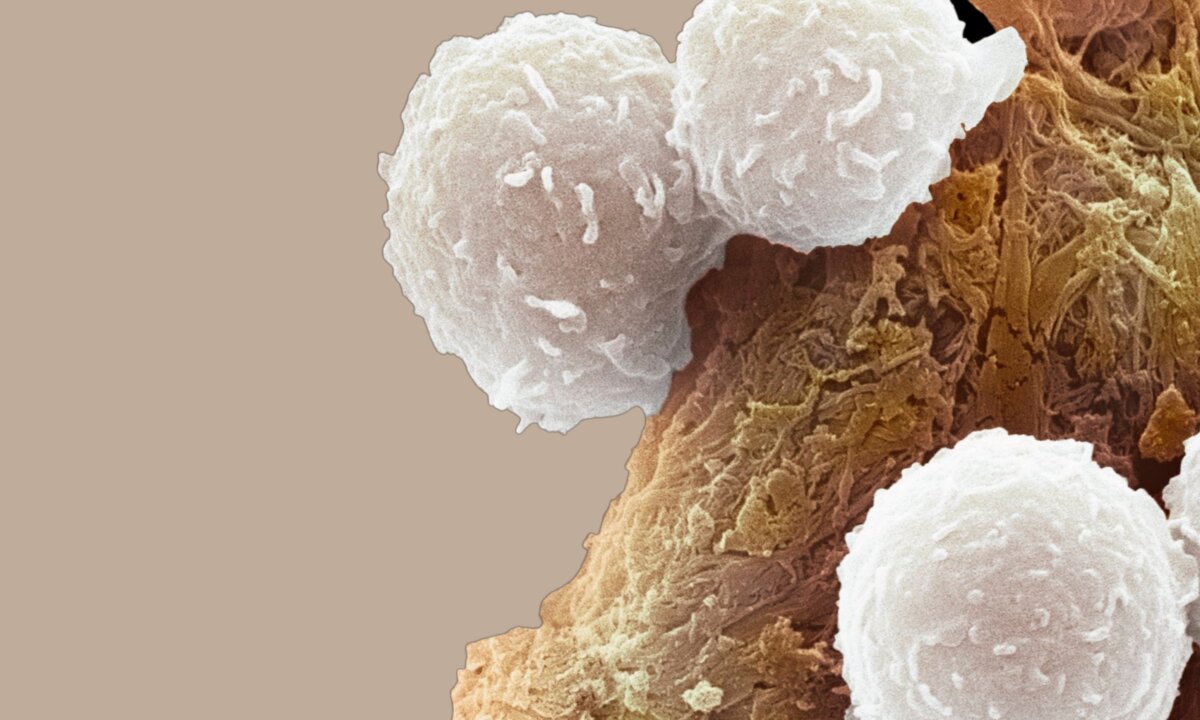
Scientists have discovered that cancer cells, long thought to be competitive with each other, actually work together to source nutrients in harsh environments, according to a new study.
Researchers at New York University (NYU) identified a specific enzyme that enables this cooperation, allowing tumor cells to share resources when nutrients are scarce. When this enzyme was blocked, cancer cells were unable to feed and died completely.
Cooperation Under Harsh Conditions
The results of the NYU study, recently published in Nature, highlight an intriguing aspect of cancer biology. While cancer cells have historically been viewed as competitors for nutrients and resources, they may also display cooperative behaviors, especially in challenging environments. The researchers examined this duality in mice and illustrated cooperation among organisms under extreme conditions.
For example, the researchers noted, microorganisms such as yeast work together to find nutrients, but only when facing starvation. Similarly, cancer cells, which require nutrients to thrive and multiply into life-threatening tumors, often reside in environments where nutrients are scarce.
“Although competition is certainly critical for tumor evolution and cancer progression, cooperative interactions within tumors are also important, albeit poorly understood,” the researchers wrote.
They pointed out that nutrient scarcity is a defining feature of the tumor microenvironment and theorized that natural selection might be a mechanism encouraging the survival of cancer cells that could cooperate to source nutrients.
Starved Cancer Cells Work Together for Survival
To find out whether cancer cells cooperate, the NYU researchers tracked the growth of cells from different types of tumors.
Cancer cells typically uptake amino acids, the building blocks of proteins, in a competitive manner. But the researchers observed that starving cancer cells of the amino acid glutamine, the most abundant amino acid in the body, led the cancer cells to collaborate in acquiring the necessary resources.
“Surprisingly, we observed that limiting amino acids benefited larger cell populations, but not sparse ones, suggesting that this is a cooperative process that depends on population density,” Carlos Carmona-Fontaine, associate professor of biology at NYU and a senior author of the study, said in a statement. “It became really clear that there was true cooperation among tumor cells.”
By conducting additional experiments with skin, breast, and lung cancer cells, the researchers determined that a key source of nutrients for cancer cells came from oligopeptides, which are pieces of small amino acids that act as messengers between cells.
Crucial Enzyme Could Be Targeted to Kill Cancer
Instead of just taking in peptides, which are small proteins, cancer cells get cooperative, according to Carmona-Fontaine. They release a special enzyme called CNDP2 that breaks those peptides into even smaller free amino acids, which they can then easily use for energy, fueling rapid growth.
“Because this process happens outside the cells, the result is a shared pool of amino acids that becomes a common good [for the cancer],” he noted.
When bestatin (also known as ubenimex), a drug that inhibits the function of CNDP2, was applied to cancer cells, they became unable to feed on the small amino acids and died off completely.
Marianne Matzo, a certified advanced gerontological nurse practitioner in oncology and palliative care with a master’s and a doctorate in gerontology, told The Epoch Times that bestatin is not approved for any treatment in Europe or the United States. But it is approved and has been in use in Japan for more than 35 years as an adjuvant therapy following chemotherapy.
Adjuvant treatments are drugs that are used in addition to the primary therapy to improve the initial therapy’s effectiveness.
“In Japan it is used to maintain remission and survival in acute non-lymphocytic leukemia in adult patients,” she said.
Bestatin consistently blocked oligopeptide uptake across all cancer cell lines tested in vitro, which included a wide variety of skin, lung, breast, colon, and pancreatic tumor cells.
Scientists Blocked Gene to Starve Tumor Cells
Having identified CNDP2 as a factor behind the cooperative feeding process in cancer cells, the NYU researchers went on to test what happens when the enzyme is missing. They used CRISPR gene editing technology to knock out the CNDP2 gene in tumor cells.
They found that the growth of the gene-deleted tumors was reduced, a difference even more pronounced when the deletion of CNDP2 was combined with restricting the tumor’s access to amino acids using diets low in oligopeptides. Dietary sources of oligopeptides include foods such as milk, eggs, meat, soy, beans, grains, and seeds such as hemp and flaxseed.
The researchers were also able to reduce the growth of tumors that hadn’t had CNDP2 deleted by combining these diets with bestatin, a combination that could help patients under clinical care, according to the study authors.
“Because we’ve removed their ability to secrete the enzyme and to use the oligopeptides in their environment, cells without CNDP2 can no longer cooperate, which prevents tumor growth,” Carmona-Fontaine said. “We hope that a clearer understanding of this mechanism can help us make drugs more targeted and more effective.”
Implications and Future Research
The NYU researchers aim to translate these findings into cancer therapies that disrupt cellular cooperation. While this early mouse study provides proof of concept, the efficacy in humans requires further investigation.
Existing cancer treatments work by physically removing the cancer surgically, killing the cells with radiation or chemotherapy, boosting the body’s defenses with immunotherapy, or changing how the cells grow with targeted therapy. However, the findings of this new study sound “promising” and offer a different approach to cancer treatment, Matzo said.
“This model seeks to starve the cancer cells to death, which is a new approach to cancer treatment,” she said.