



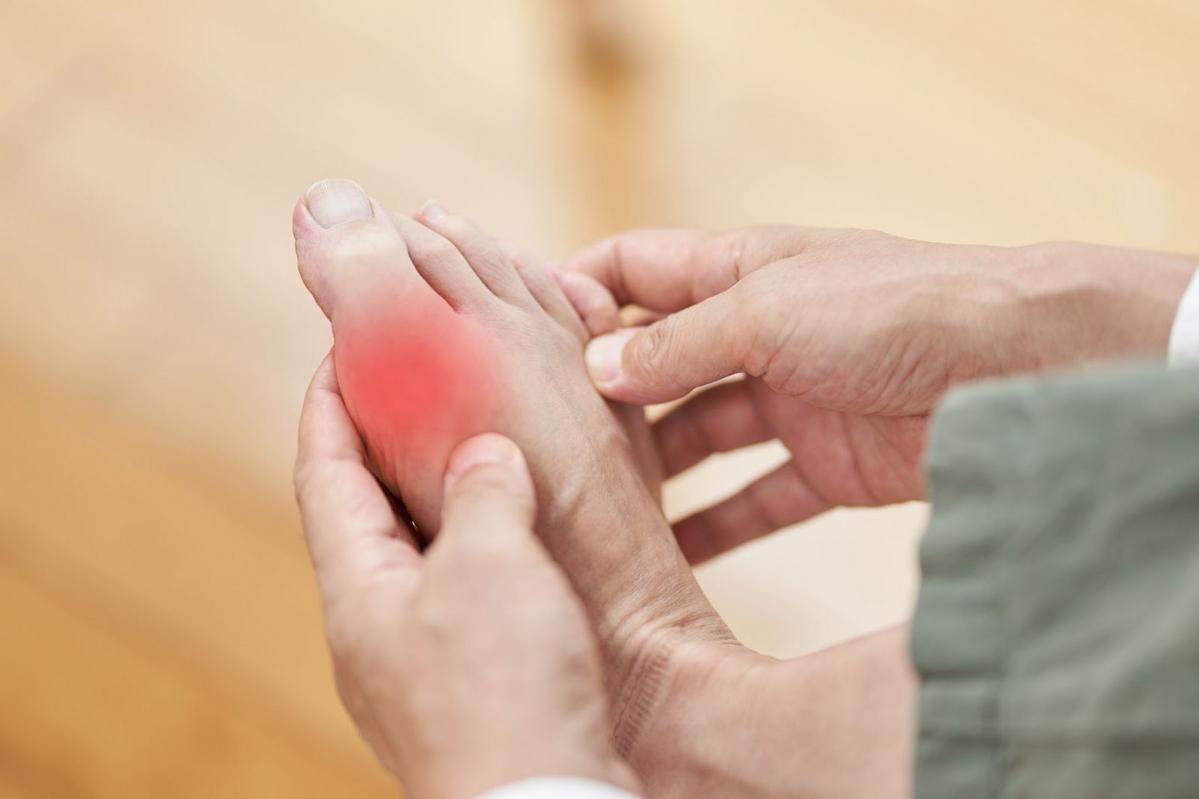
A gout flare-up can come on fast, bringing sharp, unbearable joint pain. Drawing on wisdom from traditional Chinese medicine (TCM), ear acupressure techniques can rapidly alleviate pain, and Chinese herbal remedies and teas can also bring relief to those with gout.
Ear Acupoint for Quick Pain Relief
TCM views the ear as a microsystem intricately linked to the body’s meridians, five organs, and six viscera. Stimulating specific ear acupoints can unblock the flow of qi (vital energy) and blood, regulate organ functions, and promote healing.
For gout, a key acupressure point on the inner side of the ear’s antitragus can offer quick pain relief during a flare-up. Gently press the point to temporarily ease discomfort.
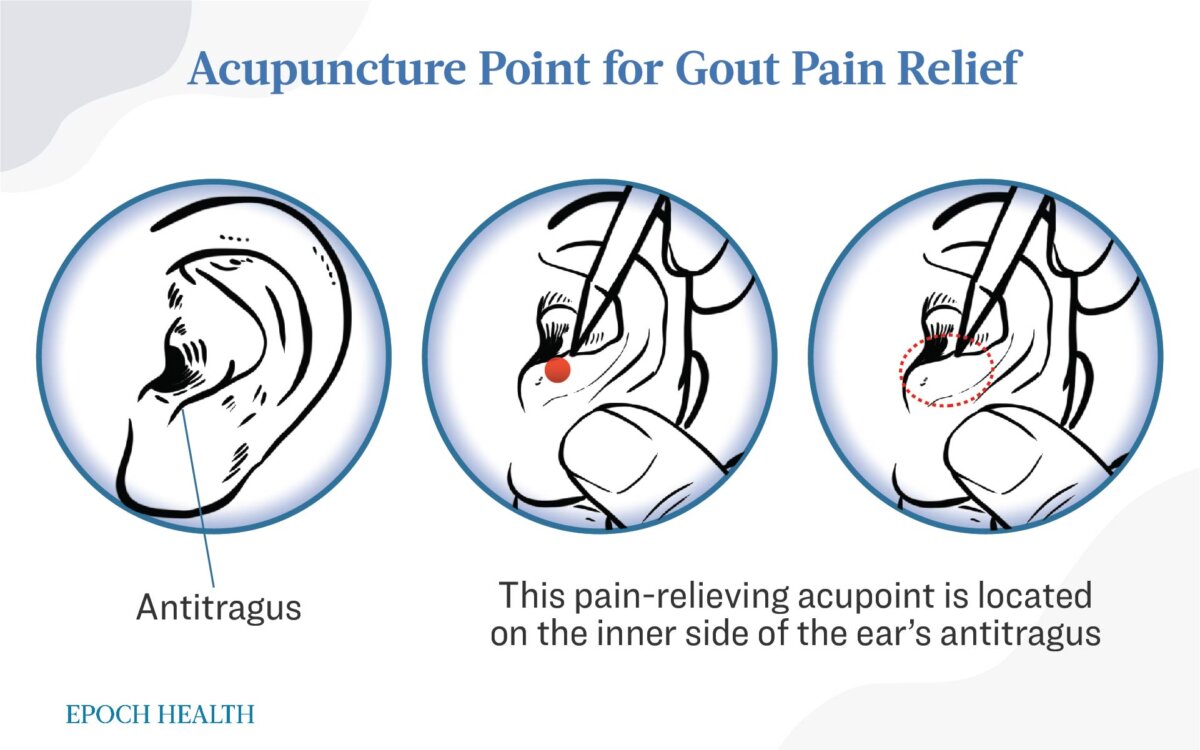
However, the acupressure method addresses only the pain, not the underlying cause of gout. Once the pain subsides, it’s essential to consult a health care professional to address the root condition and prevent future attacks.
Acupuncture, a practice rooted in thousands of years of TCM tradition, has gained modern recognition for its effectiveness.
A systematic review found that acupuncture, either as a standalone or adjunctive therapy, significantly reduced pain and improved outcomes in gouty arthritis compared with conventional treatment.
Chinese Herbal Teas for Gout Relief and Prevention
1. Corn Silk Tea
Corn silk—the long, yellowish, shiny threads on ears of corn—is a commonly used Chinese medicinal herb, often brewed into tea. It has diuretic effects, aiding in the excretion of uric acid, thus helping prevent and alleviate gout.
Studies show that corn silk contains natural bioactive compounds such as carotenoids, anthocyanins, saponins, and alkaloids. These compounds offer pain relief.
Preparation
- Prepare 50 grams of organic corn silk, rinse thoroughly, and place in a pot.
- Add 300 ml of water and bring to a boil, reduce heat, and simmer for 10 minutes.
- Strain out the corn silk, and the tea is ready to drink.
2. Four Herbs Soup (Si Shen Tang)
A 78-year-old patient came to me with concerns about high blood sugar, hypertension, and gout. After treatment, her blood sugar and blood pressure showed significant improvement. To support her gout management, I recommended incorporating “Four Herbs Soup” into her daily routine.
Four Herbs Soup is made of Job’s Tears (Yi Ren) and Poria cocos (Fu Ling) to strengthen the spleen, promote diuresis, and help regulate abnormal uric acid metabolism; Job’s tears (Qian Shi) to tonify the spleen and kidneys and remove dampness from the body; and lotus seeds (Lian zi) and Chinese yam (Shan Yao) to aid digestion and boost metabolism.
Two years later, she returned to share her progress. She had been consistently eating Four Herbs Soup every day—sometimes drinking just the broth and enjoying the ingredients as part of her main meal or as a side dish. She reported that her gout symptoms had completely resolved, and her blood pressure and blood sugar levels remained stable.
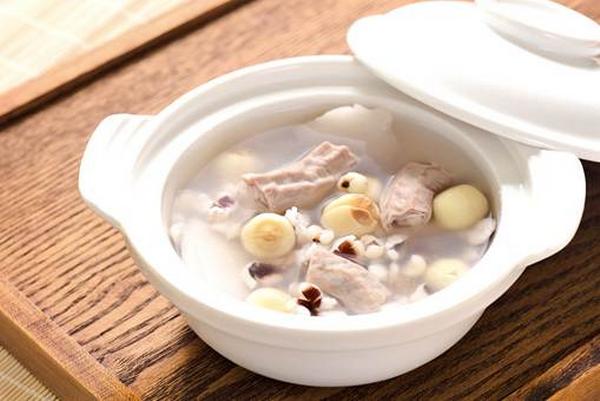
Ingredients
- 30 grams Job’s tears
- 25 grams Poria cocos
- 60 grams Job’s tears
- 60 grams lotus seeds
- 30 grams Chinese yam
- 1,500 milliliters water
Preparation
- Rinse ingredients thoroughly, then soak in water for 20 minutes.
- Place ingredients in a pot, add water, and bring to a boil over high heat. Reduce heat and simmer on low for 40 minutes.
- Optional: Add meat, such as chicken breast, pork ribs, or pig intestines, for an enhanced flavor.
Notes
Pregnant women should avoid eating Four Herbs Soup, as the Job’s tears, also known as coixseed, contains coixenolide, which may stimulate uterine contractions and pose a risk of miscarriage.
While some of the herbs mentioned may sound unfamiliar, many can be purchased at health food stores or Asian grocery stores. Medicinal recipes are intended for daily wellness only. Because of individual differences in constitution and conditions, please consult a physician for specific treatment plans.
Understanding Gout
In TCM, gout falls under the “Bi Syndrome,” which refers to joint pain caused by invading external pathogenic factors—primarily wind, cold, and dampness.
When external elements enter the body—especially when combined with internal imbalances triggered by factors such as alcohol consumption, overeating, or physical exhaustion—they can lead to the accumulation of “phlegm-dampness.” In TCM, this term goes beyond the typical idea of mucus in the respiratory system. It refers more broadly to sticky, turbid substances that result from disrupted water metabolism, including excess lipids, metabolic waste, and other materials the body struggles to clear out.
When this phlegm-dampness accumulates in the joints, it causes “Bi pain,” which aligns with what modern medicine refers to as gouty arthritis, or gout.
Ancient Chinese medical texts refer to gout as “Li Jie Feng” (“calendar joint wind”), describing the nature of the condition: pain that moves between joints, often flaring up suddenly and disappearing just as quickly—much like the wind.
Gout most commonly affects the first metatarsophalangeal joint, located at the base of the big toe. Symptoms typically include redness, swelling, heat, and intense pain. As the condition progresses, the pain may radiate to the ankles, knees, or other joints, sometimes accompanied by a burning sensation.
From a modern biomedical perspective, gout is recognized as a form of arthritis caused by a disruption in purine metabolism, leading to the overproduction or underexcretion of uric acid, which then crystallizes in the joints and triggers inflammation.
Who’s at Risk?
Gout is heavily influenced by diet and lifestyle. High-risk groups include:
- Those with high-purine diets: Eating excessive high-purine foods—such as animal organs, fish skin, shellfish, straw mushrooms, asparagus, and broth made from large bones—can elevate uric acid levels in the body, triggering gout.
- Frequent alcohol drinkers: Alcohol increases uric acid production and impairs its excretion, raising the risk of gout attacks.
- Those with poor kidney function: Impaired kidney function hinders uric acid excretion, causing excess uric acid to form crystals that deposit in joints, leading to gout.
- Long-term users of diuretics: Diuretics used to lower blood pressure can inhibit uric acid excretion, thereby increasing blood uric acid levels and the risk of gout.
- Postmenopausal women: Hormonal changes during menopause can affect uric acid metabolism, elevating the risk of gout.
- Those who are overweight or obese: Clinically, most gout patients are found to be overweight.
A Balanced Approach to Gout Relief
Traditional Chinese medicine offers gentle, effective strategies that soothe pain and address the root causes of the condition.
In addition, lifestyle adjustments—including a balanced diet, regular hydration, reduced alcohol intake, and medical supervision—remain essential for lasting results.
Views expressed in this article are the opinions of the author and do not necessarily reflect the views of The Epoch Times. Epoch Health welcomes professional discussion and friendly debate. To submit an opinion piece, please follow these guidelines and submit through our form here.