



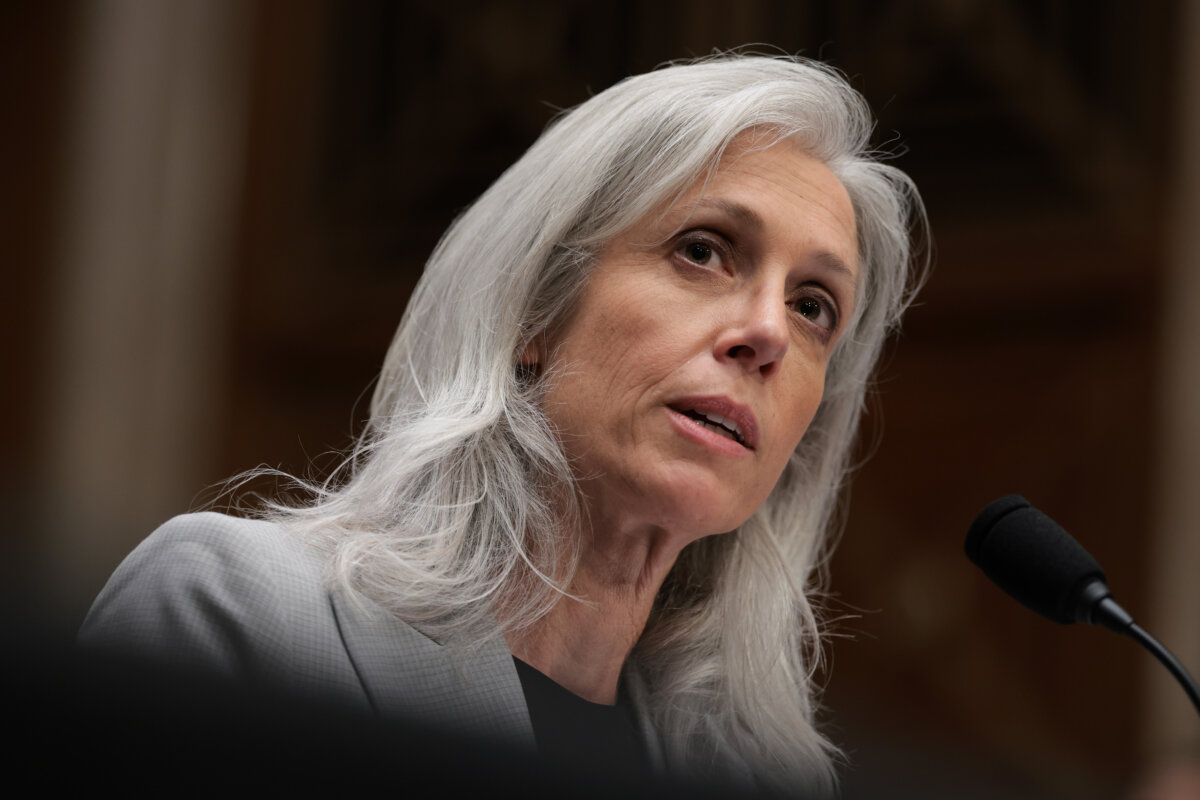
President Donald Trump’s new nominee to lead the Centers for Disease Control and Prevention (CDC) told senators on June 25 that she would refocus the agency to tackle infectious diseases but still look to support the Make America Healthy Again (MAHA) agenda promoted by Trump and Health and Human Services (HHS) Secretary Robert F. Kennedy Jr.
“As CDC refocuses its efforts specifically on communicable diseases … we’ll be laser-focused on that area, but we will continue, and I will continue, to make sure that we’re supporting the secretary’s vision of overall Making America Healthy Again,” Susan Monarez, nominee to lead the CDC, said during her confirmation hearing in Washington.
She listed as an example improving children’s access to sources of food and clean water, which was described as being under the umbrella of working to “reduce all of these conditions leading to … chronic diseases in [American] children.”
Trump on March 24 nominated Monarez, who was serving as the CDC’s acting director, to take the post permanently. She stepped away after being nominated because the nominee cannot be the agency’s acting director under federal law.
Trump, when nominating Monarez, noted that she has worked in public health and related fields for decades and described her as “an incredible mother and dedicated public servant.”
If confirmed, Monarez would report to Kennedy. Trump said Monarez would work with Kennedy to restore confidence in the CDC and address what he described as “the chronic disease epidemic.”
Kennedy said on social media platform X, “I handpicked Susan for this job because she is a longtime champion of MAHA values, and a caring, compassionate and brilliant microbiologist and a tech wizard who will reorient CDC toward public health and gold-standard science.”
Senators on June 25 pressed Monarez multiple times on whether she disagrees with any moves Kennedy has made as HHS secretary, including the removal of all members of the panel that advises the CDC on vaccines.
Monarez declined to detail any disagreements.
“He has said he values and prioritizes independent thinking and using science to drive decision-making,” she said. “I am an independent thinker, and I am a scientist. And I will welcome the opportunity to share my opinions based on science and evidence with him as he makes some of these very difficult decisions.”
When Sen. Maggie Hassan (D-N.H.) asked whether Monarez backed Kennedy’s statement that cod liver oil and vitamin A are effective treatments for measles, Monarez said there are no antivirals or treatments approved by federal regulators for measles but noted that vitamin A has been found effective in treating the illness and is recommended by the World Health Organization.
Hassan said, “I am very concerned that a CDC nominee who says she wants to be independent and will apply science is so unwilling to speak publicly about scientific evidence that contradicts the secretary.”
In her opening remarks, Monarez said that if she is confirmed, her top priorities will include restoring trust in the CDC in part by delivering recommendations backed by publicly available science; ramping up use of artificial intelligence; and modernizing the agency’s laboratories and tools, such as diagnostics, in order to be prepared for future outbreaks.
“These threats are in our backyard or always just a flight away,” she said. “CDC must be fully prepared to defend the American people against these known biological risks, and as importantly, be prepared to defend against those we have not yet seen.”
The nominee also said vaccines save lives and that if she becomes CDC director, she is committed to making sure the agency continues to “prioritize vaccine availability.” And she said she looked forward to participating in the process involving the Advisory Committee on Immunization Practices, the panel whose members Kennedy dismissed before naming replacements.
The committee was meeting separately on June 25 in Atlanta to consider updated recommendations for respiratory syncytial virus vaccines. The new chair of the panel also announced new initiatives to investigate the cumulative effects of the childhood vaccination schedule on youth.
Monarez, before joining the CDC, was a deputy director for the Advanced Research Projects Agency for Health. The research funding agency and the CDC are part of HHS.
In March, Trump withdrew his original nominee for the position, Dr. Dave Weldon.
Weldon, a former U.S. representative, said the nomination was withdrawn because several Republicans, including Sen. Bill Cassidy (R-La.), planned to vote against him because of concerns about his past work analyzing the safety of vaccines.
Republicans control both chambers of Congress, giving them majorities on each panel.
A majority vote from the Senate Committee on Health, Education, Labor, and Pensions would advance Monarez to the full Senate. A simple majority there would confirm Monarez.
CDC directors require Senate confirmation under a provision in a 2023 bill that took effect this year.