



The Centers for Disease Control and Prevention has informed some outside groups that they can no longer participate in panels that review vaccine data and form recommendations for the CDC’s vaccine advisory committee.
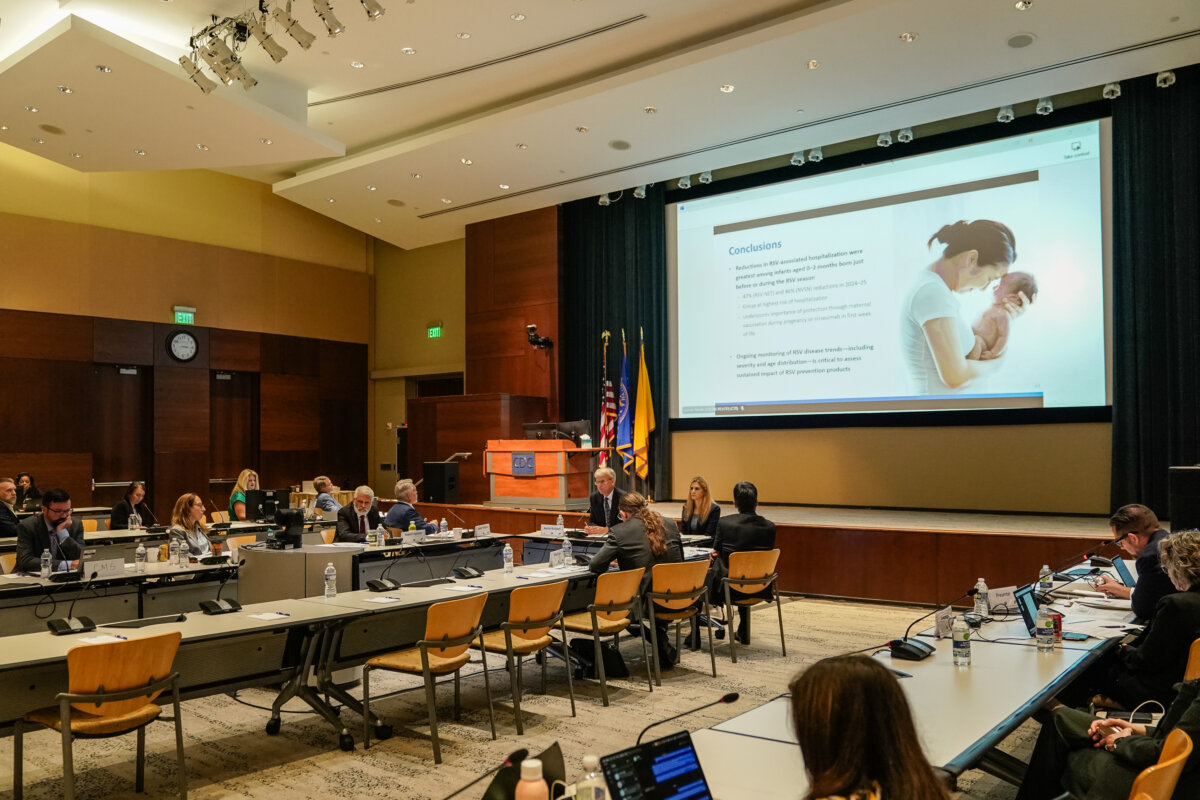
The panels, or workgroups, meet behind closed doors and typically comprise members of the Advisory Committee on Immunization Practices (ACIP)—which advises the CDC on vaccines—and experts from liaison organizations such as the American Academy of Pediatrics.
Groups that employ the experts have been informed that they won’t be part of the workgroups any longer, the Department of Health and Human Services (HHS), the CDC’s parent agency, told The Epoch Times on Aug. 1.
“It is important that the ACIP workgroup activities remain free of influence from any special interest groups, so ACIP workgroups will no longer include liaison organizations,” an email to the groups stated.
Some of the organizations, including the American Academy of Pediatrics, are suing Health Secretary Robert F. Kennedy Jr. Others are being removed from the process because of concerns they have conflicts of interest, an official said.
The American Pharmacists Association, for instance, lists vaccine manufacturers such as GlaxoSmithKline and Moderna among its corporate supporters.
“Under the old ACIP, outside pressure to align with vaccine orthodoxy limited asking the hard questions,” Andrew Nixon, a spokesman for the HHS, told The Epoch Times in an email. “The old ACIP members were plagued by conflicts of interest, influence, and bias. We are fulfilling our promise to the American people to never again allow those conflicts to taint vaccine recommendations.”
Other outside experts will continue to be included in the workgroups based on their experience and expertise, according to the agency.
The workgroups will engage experts from an “even broader set of disciplines,” Retsef Levi, an ACIP member, said on X.
The workgroup guidance states that each must include at least two ACIP members, as well as a CDC expert. Other members may be other government officials, representatives of liaison groups, and invited consultants.
The 11 existing workgroups include panels that review data on COVID-19 vaccines, immunization schedules, and influenza shots, according to the CDC.
The American Pharmacists Association said in a statement that it was concerned by the move to exclude experts from liaison organizations.
“Pharmacists are frontline providers. We care for patients every day and deliver public health in our communities,” said Michael D. Hogue, executive vice president and CEO of the group.
“Calling our profession a ‘special interest’ that ‘biases’ our participation is wrong and dismisses decades of scientific contributions that have kept Americans safe.”
Eight other liaison organizations said in a joint statement: “For decades, liaisons from our organizations have reviewed published and unpublished data and literature related to vaccine efficacy, effectiveness, and safety and provided unbiased input for ACIP’s consideration. To remove our deep medical expertise from this vital and once transparent process is irresponsible, dangerous to our nation’s health, and will further undermine public and clinician trust in vaccines.”
The development comes nearly two months after Kennedy removed all ACIP members, citing conflicts of interest. At least some of those members had recently received money from pharmaceutical companies, according to an Epoch Times review.
Kennedy named new members, including former Harvard Medical School professor Martin Kulldorff and vaccine researcher Dr. Robert Malone.
The remade panel convened in June and voted to endorse annual influenza vaccination, advise officials to stop recommending influenza vaccines with a mercury-based preservative, and support a new antibody against respiratory syncytial virus.
They also announced plans to form several new workgroups, including one that would analyze the cumulative effects of the childhood vaccination schedule.
Kulldorff said at the time, “Secretary Kennedy has given this committee a clear mandate to use evidence-based medicine when making vaccine recommendations, and that is what we will do.”
“Vaccines are not all good or bad,” he said. “If you think that all vaccines are safe and effective and want them all, or if you think that all vaccines are dangerous and don’t want any of them, then you don’t have much use for us. You already know what you want. But if you wish to know which vaccines are suitable for you and your children and at what ages, then we will provide you with evidence-based recommendations.”