



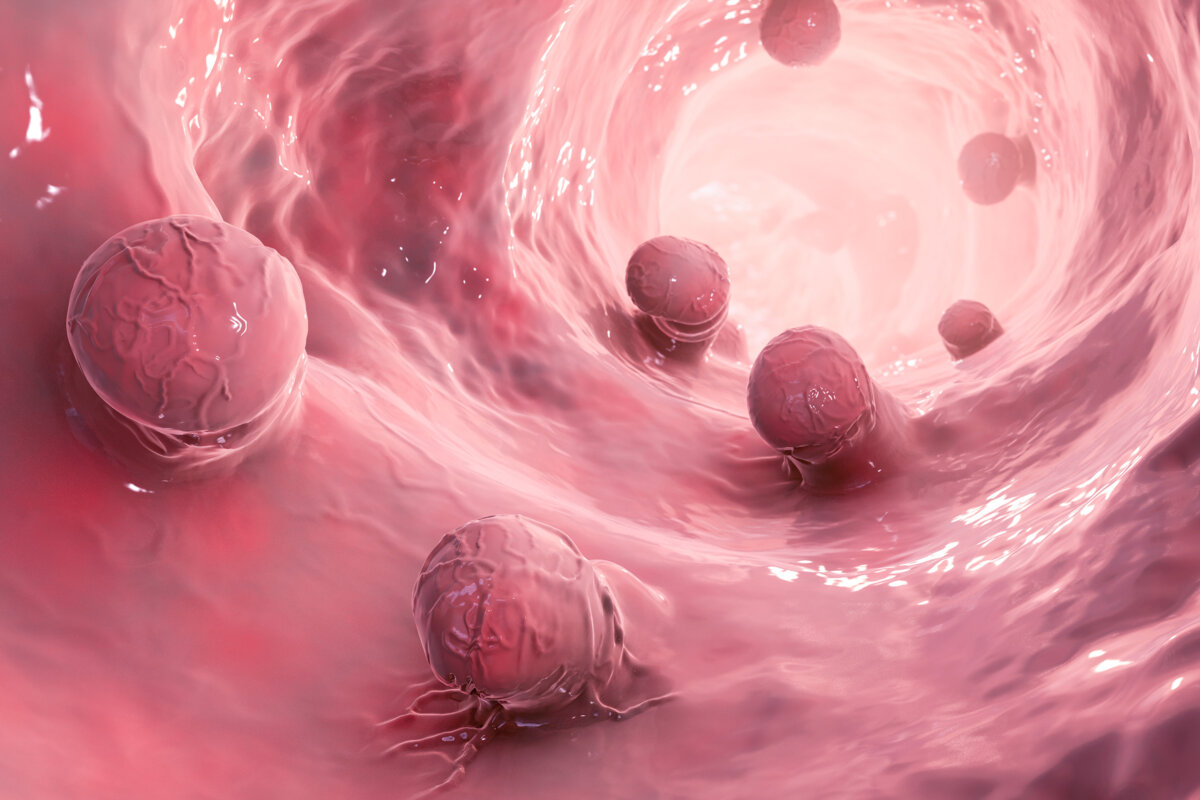
Scientists may have found a key to understanding why colorectal cancer is increasingly afflicting younger Americans. It lies in how chronic inflammation stiffens colon tissue over time, creating conditions ripe for tumors to flourish.
“Our findings strongly suggest that chronic inflammation is the source of the stiffness,” study author Dr. Emina Huang, professor of surgery in the Division of Colon and Rectal Surgery and executive vice chair of research for surgery at UT–Southwestern, told The Epoch Times, warning that the frequency of this disease is increasing.
Developing tests to measure intestinal stiffness could help identify people at risk of early-onset colorectal cancer (CRC), similar to how colonoscopies are used for screening.
“Certainly, there are younger and younger patients who are presenting to our clinics with advanced stages of disease,” she said.
The Stiffness–Cancer Connection
Researchers at UT–Southwestern and UT–Dallas examined intestinal tissue from 33 patients who had surgery to remove cancerous tumors—19 with average-onset CRC and 14 with early-onset CRC.
Their findings, published in December 2025 in Advanced Science, revealed that tissues from early-onset CRC patients were significantly stiffer than tissues from patients with average-onset CRC.
Tissue collected from patients with early-onset CRC showed signs of extensive scarring.
In the study, researchers found that colon tissues from early-onset cancer patients had higher levels of collagen—a protein involved in scarring—within the tissue. The collagen in these samples was denser, longer, more mature, and running in parallel, all of which are signs of scarring.
This scarring leads to a stiffer colon and directly affects the behavior of cancer cells: When grown on stiffer surfaces, colorectal cancer cells multiply faster and grow larger.
The likely cause of this scarring is chronic inflammation.
Chronic inflammation in the colon leads to tissue scarring and stiffness, Dr. Sabine Hazan, a gastroenterologist and CEO of Ventura Clinical Trials, who was not involved in the study, told The Epoch Times. Chronic inflammation causes immune cells to release signaling proteins that promote scarring, stimulating cells to produce excess collagen while preventing its breakdown.
“When the colon is inflamed over and over, from any cause like [inflammatory bowel disease], chronic irritation, infections, diet-related changes, and so forth, the body tries to ‘repair’ the area,” Dr. Jason Korenblit, a gastroenterologist and digestive expert with Just Answer, who was not involved in the study, told The Epoch Times. “In the short term, that’s helpful, but if the signal to repair never turns off, the repair process can overshoot.”
Unexplained Rise in Early-Onset Colorectal Cancer
Although deaths from and incidence of these cases have decreased over the past three decades, the number of CRC cases before age 50—known as early-onset CRC—has risen sharply in recent years.
Since 2020, early-onset CRC accounts for about 12 percent of all CRC diagnoses in the United States, but the reasons for this increase remain unclear.
Established risk factors such as genetic predisposition and environmental exposures also do not fully explain the significant increase in colorectal cancer rates in young adults, Dr. Raj Dasgupta, who is board-certified in pulmonary, sleep, internal, and critical care medicine and serves as chief medical adviser for Sleepopolis, told The Epoch Times. He was not involved in the study.
“I think this is a meaningful shift in how we think about colon cancer risk in younger individuals, especially,” Dasgupta said. “It suggests that cancer is not only due to a combination of modern lifestyle factors like poor diet—processed foods and sugary drinks—and sedentary habits, which alter the gut microbiome.”
Implications for Prevention and Screening
The findings suggest that tissue stiffening could be a key factor in the disease’s progression and may lead to new prevention and treatment methods.
“Currently, we do not have screening protocols for stiffness,” Huang said. “However, as we develop signatures based on clinical and social determinants of disease, we may identify high-risk groups of young people that may benefit from either much earlier colonoscopic imaging, or perhaps even newer modalities of screening and potentially targeted lifestyle or chemopreventive strategies.”
Chronic inflammation and tissue stiffening have been linked to other cancers, such as breast and pancreatic cancer, making the connection to colorectal cancer a logical avenue of investigation.
Dasgupta said that the findings add an important “missing link.”
Factors such as diet, obesity, and antibiotic exposure have long been suspected because they promote chronic inflammation. What this research shows is how inflammation may translate into cancer risk at the tissue level.
“The research shows that this stiffening can occur even before visible cancer changes appear,” Dasgupta said, adding that immune cells can change their behavior in ways that cause harm.
What Patients Can Do Now
Korenblit said that although there’s no guarantee that fibrosis can be prevented in every person, the general medical approach is to find chronic inflammation early and treat it effectively.
He said that in practical terms, this means:
Diagnosing and tightly controlling inflammatory bowel disease, including ulcerative colitis and Crohn’s colitis, to minimize ongoing injury.
Addressing modifiable inflammation drivers such as smoking, obesity or metabolic disease, heavy alcohol use, very low-fiber ultra-processed diets, and poor sleep, which “can all push toward higher baseline inflammation,” he said.
Not ignoring persistent symptoms such as rectal bleeding, unexplained anemia, chronic diarrhea, unintentional weight loss, and ongoing abdominal pain.
“Early evaluation matters because ‘silent’ inflammation can go on for a long time,” Korenblit said.
He said that he sees the new study as more of a bridge than a replacement for how we think about the causes of early-onset CRC.
Traditional risk factors—such as diet, obesity, a sedentary lifestyle, smoking, alcohol, microbiome shifts, and environmental exposures—likely still matter.
“What this study adds is a plausible shared pathway that could connect many of those exposures,” he said.
Korenblit cautioned that although the findings of the new study are compelling, they’re “not the final word.”
“The sample size is modest, and ‘matched normal’ tissue taken near a tumor may not perfectly represent the rest of the colon,” he said.