



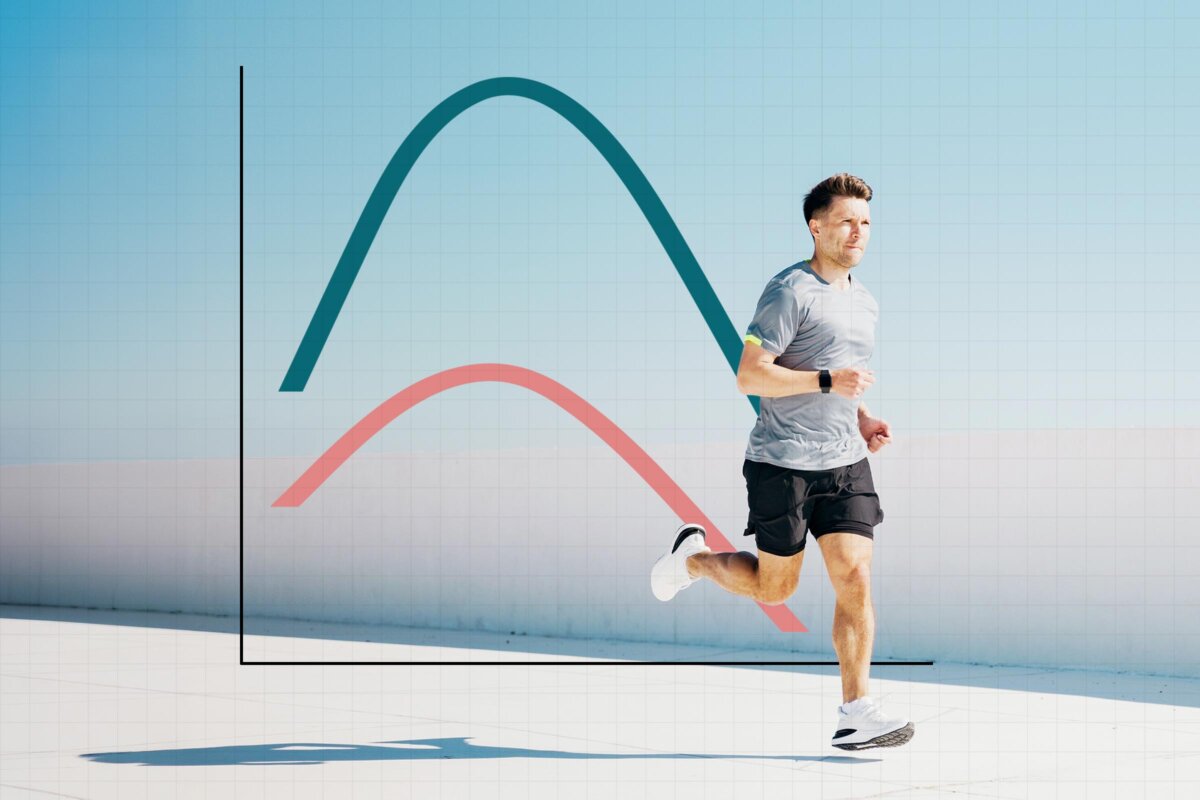
Researchers have found that your fitness may peak earlier than you think. A new study found that regardless of fitness levels, people’s physical ability begins to decline at the latest by age 36, contrary to previous assumptions that fitness levels vary by person.
The long-term Swedish study, published in the Journal of Cachexia, Sarcopenia and Muscle, tracked 427 people born in 1958 from age 16 to 63, and measured how well they could perform activities such as running, lifting, and jumping.
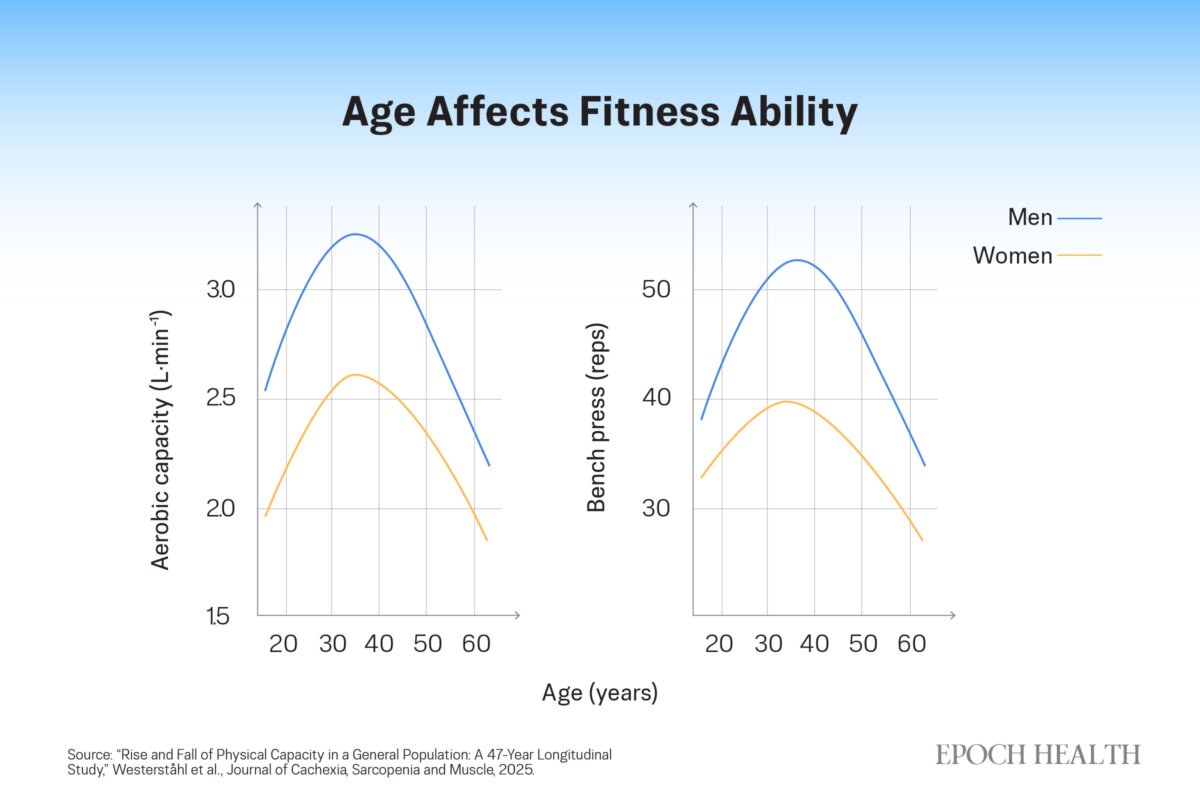
In both men and women, physical fitness peaked between 26 and 36 and then declined gradually.
The results confirm what many suspected but few have proven over such a long timeline: Physical performance peaks between our late 20s and 30s regardless of training volume, then begins a gradual slide that accelerates with age.
By the time participants reached their early 60s, their ability to perform physical tasks had decreased by approximately 30 percent to 48 percent from their peak. Fitness and strength began declining as early as age 35, and the decline accelerated at about age 40.
There’s also good news: Participants who started being physically active in adulthood improved their physical capacity by 5 percent to 10 percent, effectively buying back years of decline.
“A common misconception is that once physical ability begins to decline, exercise is less effective or no longer worthwhile,” Dr. Kelly Ryan, a sports medicine primary care physician with MedStar Health, and not involved in the study, told The Epoch Times. “This study reinforces what we already see clinically—that physical performance peaks and gradually declines—but it does not mean exercise loses its value.”
Decline Starts Earlier Than You May Think
The findings provide new insights into how physical ability changes with age, especially since most previous research relied on snapshots of data rather than tracking the same people over decades. Researchers measured fitness and strength regularly in the same group of people across Sweden, making this one of the longest continuous studies of its kind.
The results showed that physical abilities began to decline as early as age 26 in some measures, regardless of training volume. Strength, stamina, and muscle power all gradually deteriorated, and the pace accelerated after age 40.
Age-related loss of muscle mass and strength (sarcopenia) begins in our early 30s, Dr. Derek Ochiai, an orthopedic surgeon and sports medicine specialist at Nirschl Orthopaedic Center, who was not involved in the study, told The Epoch Times.
Those who are sedentary will lose about 5 percent of their muscle mass per decade after age 30, and previous research shows that the rate of decline is even higher after age 60.
To slow this process, Ochiai recommends resistance training by doing light weight lifting two to three times per week, which he said is “the most effective treatment” that we have for sarcopenia. Although aerobic fitness is also important, it does not replace resistance training, which is critical to preserve muscle mass, he said.
Thinking that you’re too old to start is “nonsense, it is literally never too late,” he said. It’s riskier not to do appropriate resistance training because the chance of injury is outweighed by the benefits of preserving muscle mass, “which prevents injury.”
Having a diet adequate in protein also helps, Ochiai said.
“As we age, we require more protein intake, not less,” he said.
The Swedish study found that staying active during adolescence and adulthood helped maintain better physical performance over time, and people who were physically active in their youth performed better in strength and endurance tests. However, the benefits weren’t limited to lifelong athletes—those who became active later still saw measurable improvements.
The Goal Shifts With Age
The purpose of exercise evolves as we get older, Ryan said.
“Instead of focusing on getting bigger, faster, or stronger, exercise becomes about preserving function, reducing injury risk, maintaining independence, and improving long-term health,” she said.
Lead study author Maria Westerstahl, senior lecturer at the Department of Laboratory Medicine at the Karolinska Institutet, said in a statement, “Our study shows that physical activity can slow the decline in performance, even if it cannot completely stop it.”
Ryan said this study helps quantify a reality long observed in sports medicine: that aging is unavoidable but that how we age is highly modifiable.
“We see age-related changes reflected not only in performance, but also in injury patterns, such as higher rates of rotator cuff tears or Achilles ruptures over time,” she said, noting that the takeaway from these findings isn’t discouragement, “it’s recalibration.”
“Exercise remains critical at every stage of life, but our goals should evolve toward longevity, injury prevention, and reducing future health risks,” Ryan said. “And regardless of age, physical activity continues to improve quality of life and how people feel day to day, which is a powerful benefit in itself.”
The study will continue. Next year, the same participants, who will then be 68 years old, will be examined again. The researchers hope to connect changes in physical ability to lifestyle, health, and biological factors, and to investigate why everyone reaches peak performance at about age 35 and why physical activity can slow performance loss but not fully prevent it.