



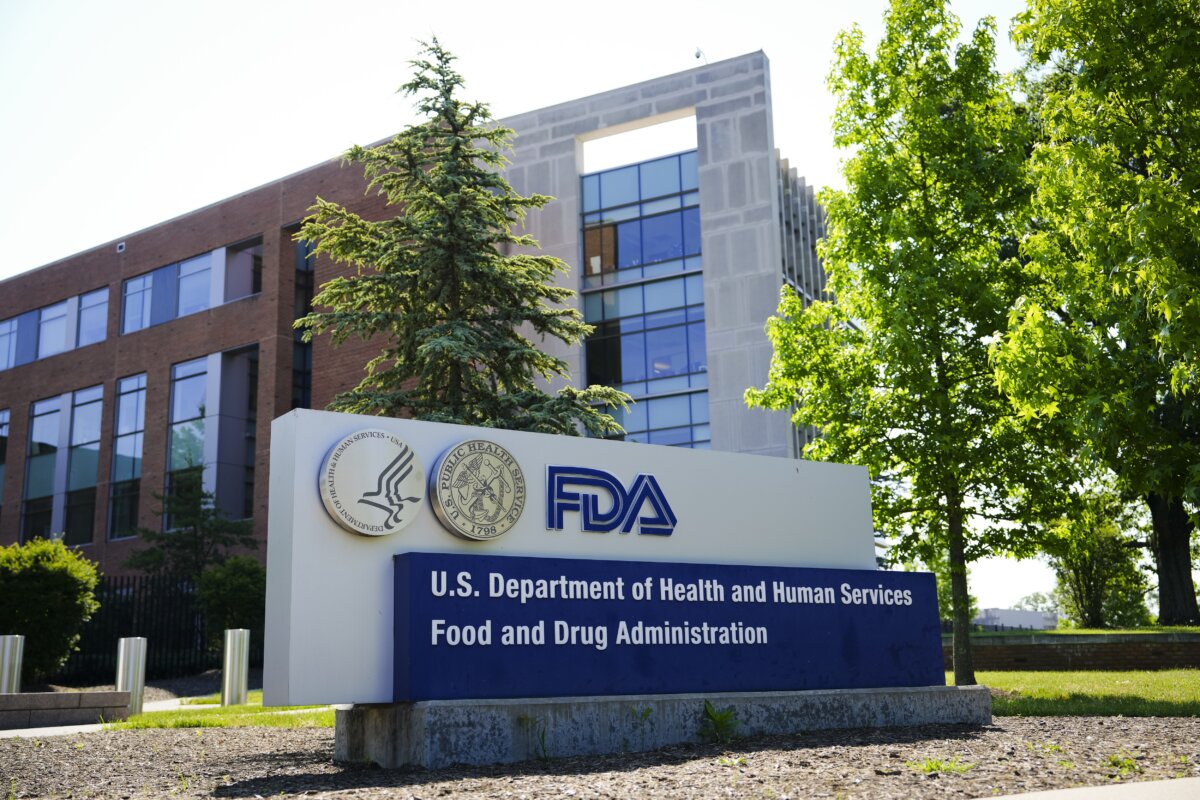
A Food and Drug Administration (FDA) initiative to cut down regulatory barriers for domestic manufacturing facilities has begun accepting requests from pharmaceutical companies to take part in its pilot phase, according to a Feb. 1 statement from the agency.
The initiative, FDA PreCheck, seeks to strengthen the pharmaceutical supply chain and increase regulatory predictability for companies, facilitate the construction of manufacturing sites in the United States, and streamline aspects of drug manufacturing.
“Facilities will be selected based on overall alignment with national priorities across multiple selection criteria, such as products to be manufactured, phase of facility development, timeline to producing pharmaceutical products for the U.S. market, and innovation in facility development,” the statement said.
“Additional priority consideration will be given to facilities producing critical medications for the U.S. market.”
On May 5, President Donald Trump signed an executive order to provide regulatory relief to promote the domestic production of critical medicines.
The PreCheck pilot program was developed in response to this executive order, seeking to speed up the establishment of high-priority new manufacturing facilities in the country.
According to the FDA, pharmaceutical manufacturing was largely domestic-focused until the 2000s, after which facilities increasingly moved offshore.
“As of 2025, approximately 53 percent of branded drug products and 69 percent of generic drug products are manufactured outside of the United States.”
“Only 11 percent of API manufacturers are in the U.S., compared to 22 percent in China and 44 percent in India,” the agency said. API refers to Active Pharmaceutical Ingredients, the biologically active component of a drug.
The PreCheck pilot initiative consists of two phases—Facility Readiness and Application Submission.
In its Facility Readiness Phase, the FDA will provide pharma companies with early technical advice before a manufacturing facility becomes operational.
In the Application Submission Phase, applicants and the FDA will conduct meetings to resolve issues and speed up the assessment of manufacturing information provided in a drug application.
“After 35 years of globalists taking pharmaceutical manufacturing overseas, the FDA is taking bold steps to bring it back,” FDA Commissioner Marty Makary said.
“The PreCheck program is one of several powerful incentives we are providing to make the U.S. pharmaceutical manufacturing sector more resilient and competitive.”
Drug Pricing
While the Trump administration moves ahead with boosting domestic drug manufacturing capabilities, it has faced criticism over drug pricing.
On Wednesday, a group of Democrat lawmakers held a press conference, criticizing what they called Trump’s “broken promise” to lower drug prices, according to a Feb. 4 statement from the office of Sen. Peter Welch (D-Vt.).
“The President loves to talk a big game and make promises to working families about lowering prescription drug prices. But in reality, his Administration has done nothing to address the crisis,” Welch said.
“Democrats are determined to bring prices down, and we’re willing to work with anyone to find concrete ways to do it. We’re going to lower health care costs and ensure everyone can access affordable, life-saving, and pain-relieving medication.”
On Thursday, Trump announced the launch of TrumpRx.gov, which offers medications at discount prices.
According to a Feb. 5 White House Fact Sheet, customers can access “large discounts on many of the most popular and highest-priced medicines in the country, paying prices in line with the lowest paid by other developed nations.”
In total, “massive price reductions” are being offered on 40 popular and expensive branded drugs, it said.
For instance, the website offers diabetes and obesity medications Ozempic and injectable Wegovy, which used to cost $1,028 and $1,349 monthly, at an average price of $350 and as low as $199.
The price of Cetrotide, a commonly used fertility medicine, will drop from $316 to $22.50. Airsupra, an inhaler used to treat symptoms of asthma, will see prices drop from $504 to $201.
During the launch, Trump said the initiative represents the “largest reduction in prescription drug prices in history by many, many times.”
White House press secretary Karoline Leavitt said during a Feb. 5 briefing that “this historic announcement will save millions of Americans their hard-earned money.”