



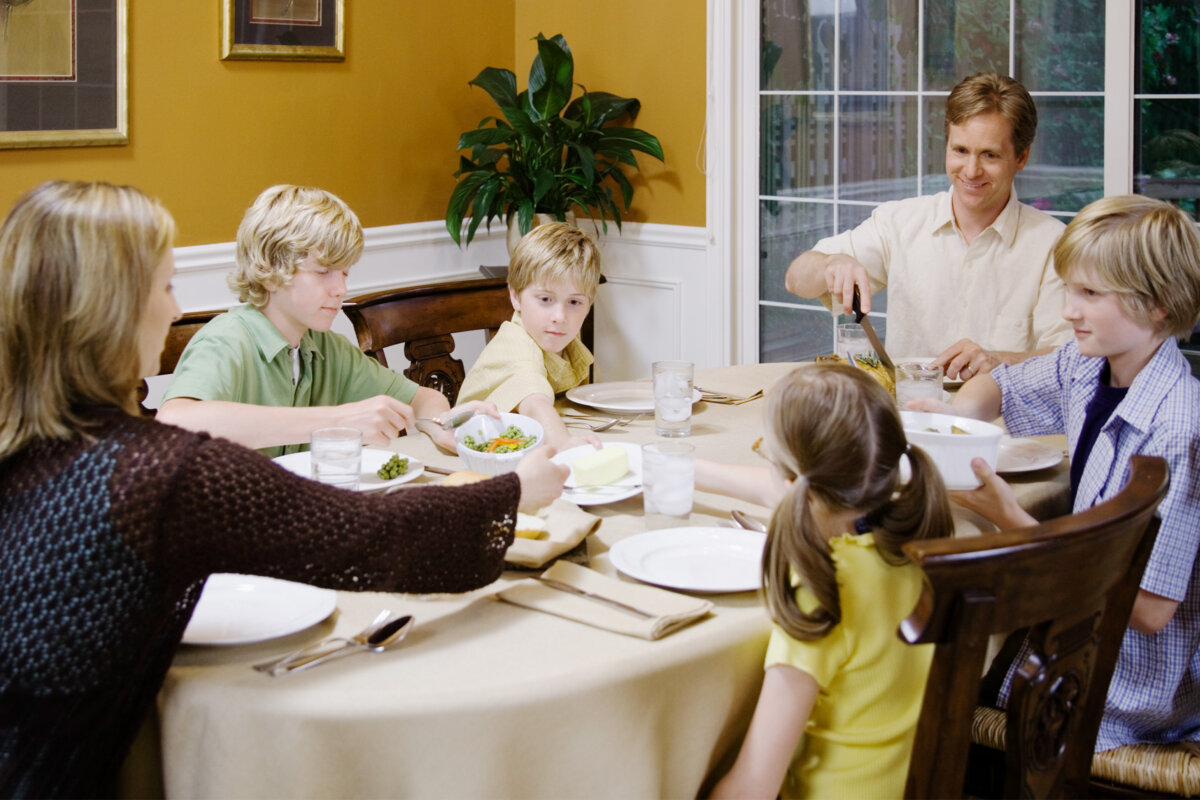
Family dinners do more than bring everyone to the table—they can also help lower teens’ risk of drinking alcohol, vaping, or using cannabis, according to research on more than 2,000 adolescents.
The study, published in the Journal of Aggression, Maltreatment & Trauma, found that teens in families with more enjoyable dinners—with open conversations and fewer digital distractions—were about 20 percent to 30 percent less likely to report drinking, vaping, or using cannabis than their peers.
“It’s not about the food, timing, or setting; it’s the parent-child relationship and interactions it helps cultivate that matter,” Margie Skeer, a professor and chair of the Department of Public Health and Community Medicine at Tufts University School of Medicine and the study’s lead author, said in a statement.
In previous research, Skeer and her team found that promoting regular family meals can help reduce early risk factors for adolescent substance use.
However, teens who had faced serious hardships didn’t see the same protective benefit.
What Makes a Dinner ‘High-Quality’
Researchers surveyed 2,090 adolescents in the United States, aged 12 to 17, and their parents about what family dinners were actually like.
The study measured dinner quality on a six-point “dinner-quality” score ranging from very low to very high, based on how much people talked during meals, whether dinners felt enjoyable, how often phones or screens were present, and whether teens helped with tasks such as setting or clearing the table and washing dishes.
Each one-point increase in dinner quality reduced the overall likelihood of alcohol or cannabis use by roughly 17 percent and vaping by 9 percent. However, that average masked dramatic differences based on teens’ life experiences.
“These findings build on what we already knew about the value of family meals as a practical and widely accessible way to reduce the risk of adolescent substance use,” Skeer said in the statement.
Researchers found that the protective effect of family dinners depended on the teenager’s life experience. In teenagers who had experienced no adversity—such as a family member’s substance use or mental illness, parental divorce, exposure to violence, or frequent criticism of their body—each increase in dinner quality was linked to about 30 percent lower rates of drinking, vaping, and cannabis use.
In teenagers with low-to-moderate adversity, dinner quality was still protective, but the effect was smaller. For teenagers with high adversity—meaning that they had experienced four or more adverse experiences—dinner quality offered little protection against substance use.
Why Family Dinners Help—and When They Don’t
Shared family routines create space for conversation and give parents greater insight into their children’s lives during a stage when teens spend more time with friends and less time at home. Regular meals establish emotional safety and predictability, offering a low-pressure space to unwind and stay connected.
In a separate study published in 2025 of 15‑ and 16‑year‑olds in Los Angeles, developmental psychologist Danny Rahal found that family meals seemed to offer something specific that went beyond simply time spent together. He tested parental support, family cohesion, and total time spent with family.
“This really told us that there’s something unique about family meals that goes beyond just improving relationship quality,” Rahal, an assistant professor of psychology at the University of California—Santa Cruz and director of the Health Equity in Youth Lab, told The Epoch Times.
Rahal said he believes that part of that effect comes from the conversations that happen around the table and part from how meals structure the day. Sitting down together creates space for unplanned discussions about school, friendships, and daily stressors, while also establishing routines that can interrupt peer time.
“If you’re using substances regularly, that’s really hard to mask from your family if you actually have tasks at the end of the day,” he said.
Early substance use, he noted, is often social rather than driven by emotional distress, especially at the start. Regular expectations around cooking, eating, and cleaning up can limit opportunities for experimentation—and make frequent use harder to hide.
“Having this daily routine in place where you’re spending time with family might actually interrupt other peer activities in a way that can be helpful for youth,” he said.
Participation makes a difference. In his research, stronger effects were seen among girls, suggesting that when teens are expected to help with meals—by preparing food, carrying on a conversation, or cleaning up—they may feel more accountable and connected to family life.
Dr. Sharon Levy, chief of addiction medicine at Boston Children’s Hospital, who was not involved in the research, sees these everyday routines as central to the protective effect.
“Family dinners are a great opportunity to have spontaneous conversations that build bonds,” Levy told The Epoch Times in an email. “When families do this regularly, parents can learn about what is happening in their children’s lives, elicit their children’s thoughts, opinions, and feelings, and share their own.”
“Values are transmitted through these types of conversations, and that has a protective effect for all teens,” she said.
When Dinners Aren’t Enough
When serious adversity is present—such as physical or sexual dating violence, parental substance use, or a family member’s significant mental illness—teens may withdraw from family activities, struggle to communicate, or seek out substances in different contexts. In those situations, even a regular dinner may not feel supportive enough to counter the other pressures they face.
“For teens growing up in difficult environments, the protective effect of family dinners cannot entirely overcome other factors in their lives,” Levy said.
For these teens, Levy recommends counseling or regular time with a trusted adult, such as a mentor, coach, or guidance counselor.
“Participating in structured activities through school, community centers, or religious organizations can also have positive effects on mental health and behavior,” she said.
Practical Steps at–and Beyond–the Dinner Table
For many families, regular, distraction-free meals remain a simple, everyday step that can make a real difference. Keeping phones off the table, involving teens in meal planning or preparation, and focusing on conversation help dinners feel more engaging and less forced.
Creating a relaxed, welcoming atmosphere—without pressure to talk about grades, behavior, or problems—can make teens more likely to stay engaged. Open-ended questions, such as asking what surprised them that day or what they’re looking forward to, can help conversations unfold naturally.
However, shared meals aren’t the only moments that matter. Even ordinary moments, such as giving a child a ride, running errands together, or waiting for an appointment, can become opportunities to connect if distractions are limited and attention is shared, Levy said. Those moments can reinforce the same protective dynamics as family dinners, especially for families whose schedules make regular meals difficult.
“Not every conversation needs to be on a weighty topic,” she said. “Simply sharing mutual attention builds the foundation for strong relationships.”