



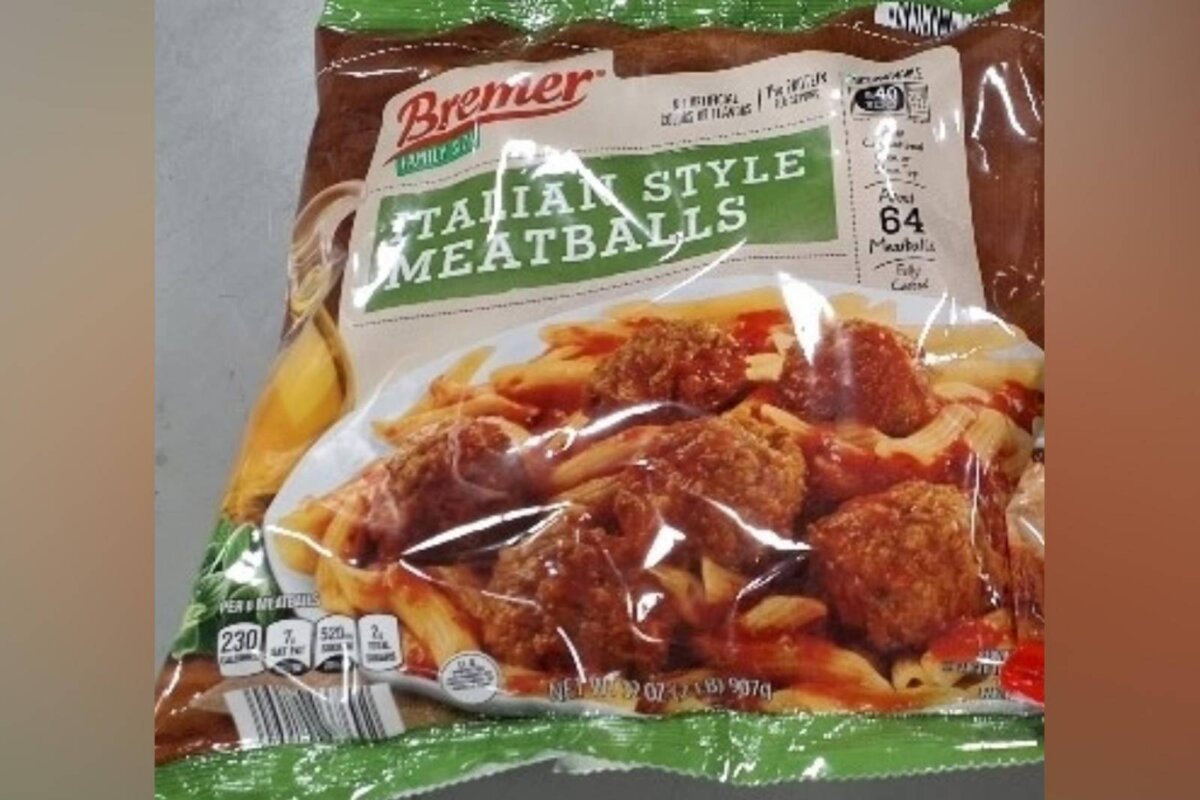
New York-based Rosina Food Products Inc. is recalling roughly 9,462 pounds of ready-to-eat frozen meatball products from the market due to potential foreign matter contamination, specifically metal, the Food Safety and Inspection Service (FSIS) said in a Feb. 22 statement.
The recall applies to 32 oz. bag packages of “Bremer Family Size Italian Style Meatballs” produced on July 30, with a “Best By” date of Oct. 30. The items were shipped to Aldi supermarket locations across the United States, FSIS said.
The recall is classified as a “High-Class I” under the U.S. Department of Agriculture’s classification system, under which FSIS operates. Such a designation is issued when there is a “reasonable probability” that the consumption of a product will result in “serious, adverse health consequences” or even death, according to the agency.
FSIS said the recalled items bear establishment number “EST. 4286B” inside the USDA mark of inspection on the packages.
“The problem was discovered after FSIS received a consumer complaint regarding metal fragments found within the product,” the announcement said.
“There have been no confirmed reports of injury due to consumption of these products. Anyone concerned about an injury should contact a health care provider.
“FSIS is concerned that some product may be in consumers’ refrigerators or freezers. Consumers who have purchased these products are urged not to consume them. These products should be thrown away or returned to the place of purchase.”
Customers with any queries can contact the company’s customer care at 1-888-767-4621.
The Epoch Times reached out to Rosina Food Products for comment but did not receive a response by publication time.
According to a September 2023 study published in the National Library of Medicine, foreign matter contamination has been responsible for 1 in 10 food recalls over the previous 20 years.
When people ingest food with metal fragments, they risk internal cuts and infections and may need surgery to remove the fragments, according to the study.
Sources of metal contamination in food include production machinery and employees. The majority of food manufacturing equipment is made of metal, ranging from manufacturing utensils to plant structures.
“Metallic foreign bodies can contaminate foods entering the food processing stream along with the raw ingredients, employees’ negligence, or disrepair of harvesting machines and equipment,” researchers wrote.
“Additionally, metal pieces can get to the food because of improper employee personnel practices, such as not wearing protective clothing, wearing jewelry, or careless handling of metallic elements.
“Metal fragments may enter the food from the processing area from damaged sieves, with broken pieces of the sieve entering the food product, or pieces of metallic particles from baking trays, scraped from the surface by mechanical friction.”
In a November 2023 industry analysis, engineering and scientific consulting firm Exponent said that foreign materials can contaminate packaged foods due to poor plant maintenance practices.
Daily and monthly preventive maintenance and inspections, as well as third-party audits, can help identify potential sources of contamination before they become an issue, the analysis said.
When new equipment enters a food production plant, it can introduce foreign material if it is not set up with proper safety measures, the company said. For instance, new spatulas or scrapers sourced from a different supplier may react differently to heat and chemical processes during production, and contaminate foods.
A 2025 report from X-ray inspection and contaminant retrieval services company FlexXray detailed the results of a survey of over 160 industry professionals on foreign material contamination in the food and beverage sectors.
More than 70 percent of respondents admitted to encountering foreign material incidents several times a year, the report said. Almost half of them witnessed such events monthly.
On the plus side, “over one-third of respondents saw improvement in their foreign material contamination track record over the last year,” the report said.
“Equipment failure is the top cause of foreign material contamination for producers. The main reporters of equipment failure were in segments that typically use a broader array of processing and production equipment: protein, RTE, baked goods, and snack foods,” it said, referring to ready-to-eat products.