



Sales of many vaccines in the United States dropped in 2025, the first year of the second Trump administration.
Sales declined for more than a dozen core vaccines, while rising or staying flat for six others, according to an Epoch Times review of regulatory filings and company documents.
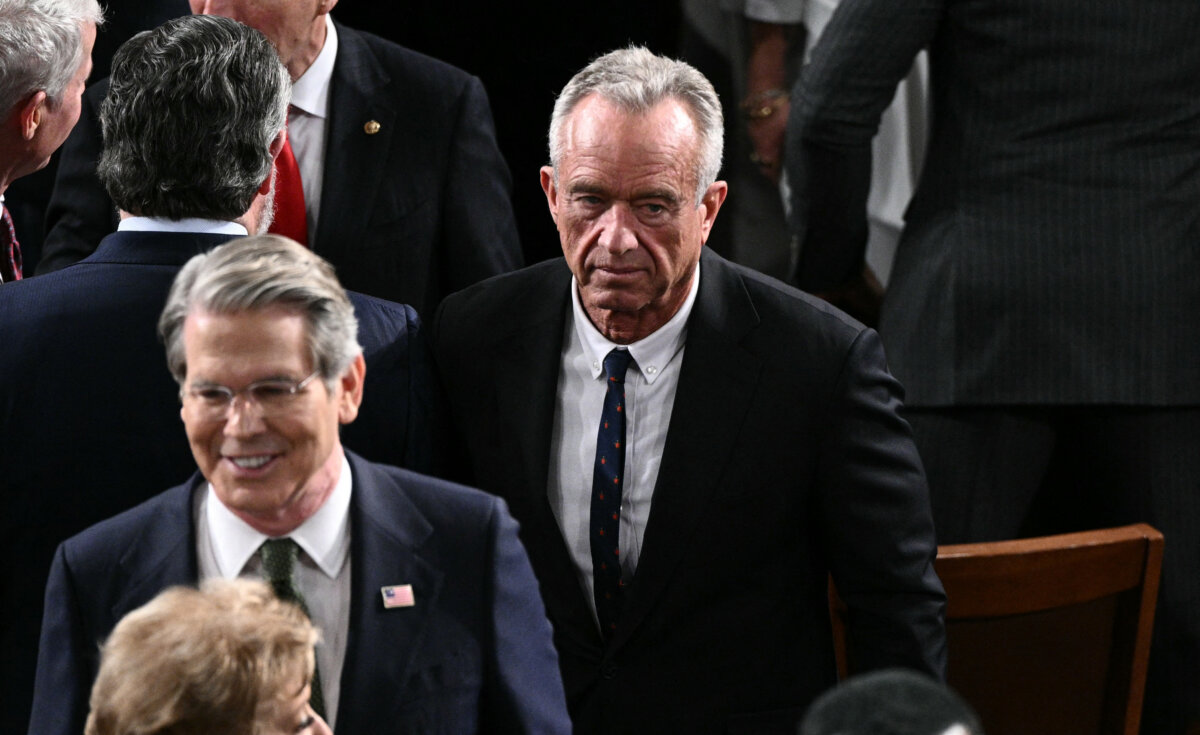
“I believe what we are seeing is the influence of Robert F. Kennedy Jr.’s rhetoric and policies,” Richard Hughes IV, who has a master’s degree in public health and is a professorial lecturer at George Washington University Law School, told The Epoch Times in an email, alleging Health Secretary Robert F. Kennedy Jr. has made “ambivalent, misleading, and outright false statements about vaccine science and safety.”
Kennedy was sworn in on Feb. 13, 2025, several weeks after President Donald Trump’s second term began.
Hughes, former vice president of public policy at the vaccine manufacturer Moderna, also pointed to how federal vaccine recommendations have been scaled back under Kennedy, including the recent narrowing of the Centers for Disease Control and Prevention’s childhood vaccine schedule.
A spokesperson for the Department of Health and Human Services (HHS), headed by Kennedy, told The Epoch Times via email that vaccine recommendations “are based on the best available gold-standard scientific evidence and public health considerations, not corporate interests.”
“Under this administration, HHS is not beholden to the pharmaceutical industry.”
The White House did not respond to a request for comment by time of publication.
Brian Hooker, a senior scientist with Children’s Health Defense, an organization founded by Kennedy, told The Epoch Times that based on actions by health officials and efforts to loosen state vaccine mandates, he expects further decline in 2026.
“I don’t know if that drop is going to be precipitous, or if it’s going to be mild, but I would expect that more and more people would be making different decisions for their families, and that more and more people are realizing that this ‘one size fits all program’ maybe isn’t necessarily right for their individual child,” he said.
Vaccine Sales Drop
Sales of many vaccines broadly recommended in the United States by the Centers for Disease Control and Prevention declined in 2025, according to statements and filings from vaccine manufacturers.
GlaxoSmithKline recorded the sharpest drops, including 40 percent lower sales for its respiratory syncytial virus (RSV) vaccine, 33 percent lower sales for its influenza shot, and about 20 percent lower sales for its shingles vaccine.
A decline in sales was also recorded for COVID-19 vaccines from Pfizer and Moderna, Merck’s rotavirus shot, Pfizer’s RSV vaccine, and Sanofi’s influenza vaccine, among other immunizations. Moderna has not provided specific numbers for its decline, so it was not included in the chart above.
For many of the vaccines, sales increased in 2025 internationally, when compared to 2024.
GlaxoSmithKline said in its 2025 earnings report, released Feb. 4, that sales decreased for some of its vaccines due to lower demand, “driven primarily by the continued challenge of activating harder-to reach consumers and competitive pressure for influenza vaccines.”
Pfizer said in a filing around that time that the decrease in sales of its COVID-19 vaccine stemmed in part from “lower utilization in the U.S. resulting from a narrower recommendation for vaccination,” referring to how the CDC scaled back its COVID-19 vaccine recommendation. Pfizer CEO Albert Bourla told the Wall Street Journal during a forum in January that Kennedy’s stance on vaccines is anti-science and that, for advancement on vaccines to happen, a new U.S. health secretary is needed.
Merck and Sanofi did not respond to requests for comment for this story. Paul Hudson, Sanofi’s CEO at the time, told reporters in January that vaccine sales dropped due to “misinformation that is going around” and that people should respect federal guidance but speak to health care professionals about vaccination.
“It’s clear this administration has particular sensitivity around vaccination and, indeed, pediatric vaccination, preferring to give the parents the choice. We know that is a very delicate line to walk because not everybody is well informed,” Hudson said at a conference on Jan. 12. He said Sanofi will stay objective, keep presenting evidence, and “see where Kennedy gets to.”
Some Sales Increase
Sales for a handful of vaccines did increase in 2025, including sales for GlaxoSmithKline’s measles, mumps, rubella vaccine, and Merck’s shots against pneumococcal disease and human papillomavirus.
GlaxoSmithKline in its report said the jumps were related to measles outbreaks and the CDC replenishing its stockpiles, but that the increases were “more than offset by lower U.S. demand and unfavorable pricing for Hepatitis vaccines.”
The jump in pneumococcal disease vaccine sales in the United States was due to increased demand for one of the shots, Capvaxive, which was just made available in late 2024, according to Merck. Caroline Litchfield, Merck’s chief financial officer, told investors in February that the increase for Merck’s human papillomavirus vaccine, known as Gardasil, was “largely due to price,” as sales fell 35 percent internationally.
Robert Davis, Merck’s CEO, told a conference earlier in the year that the vaccine is “no longer a key growth driver for the company” and that “we need to see how this single dose plays out.”
Merck told North Carolina officials in a Feb. 24 filing obtained by The Epoch Times that it is ceasing production of the vaccine at facilities in Durham County, which is expected to result in 154 layoffs.
In its January vaccine schedule update, the CDC said it only recommends one Gardasil dose, down from two. The schedule update, backed by Kennedy and Trump, also downgraded recommendations for six vaccines, including shots against hepatitis A, influenza, and rotavirus.
Early Administration Data
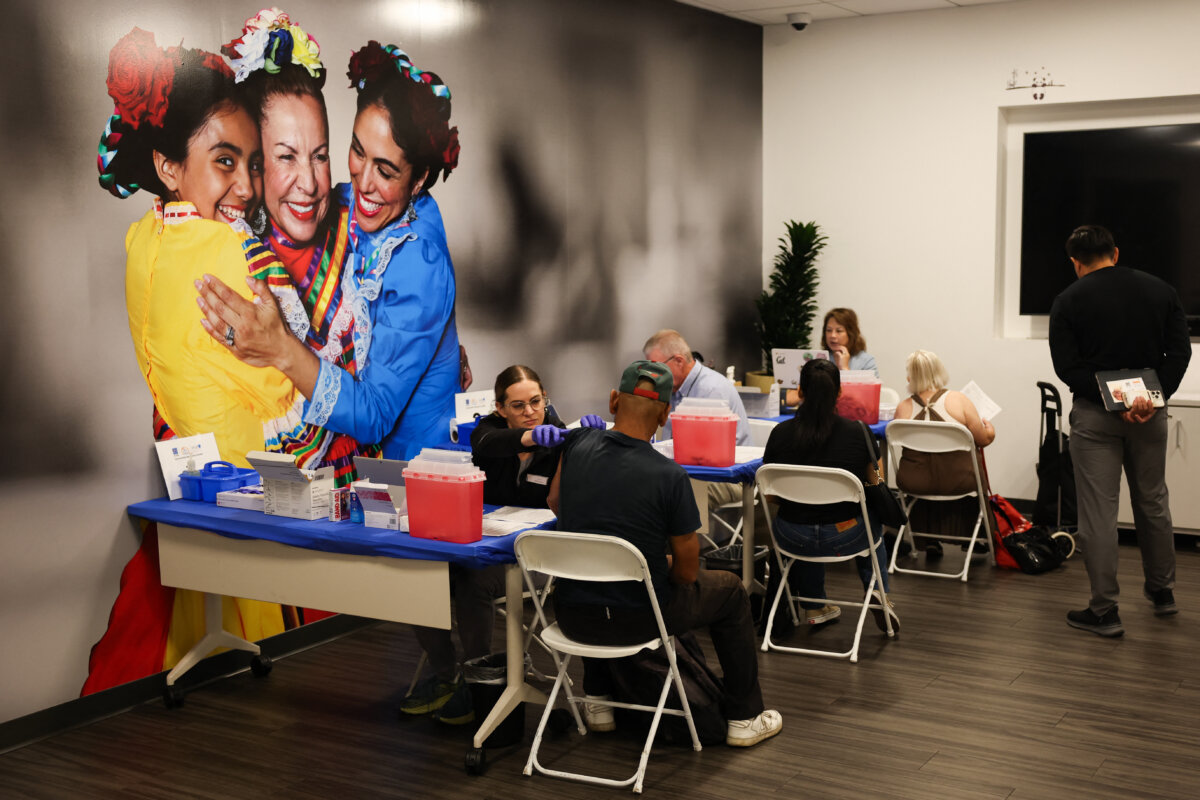
Sales figures generally come in before vaccine administration data, which is largely not available for the full year of 2025. But early indications are that administration of many vaccines fell in 2025 alongside sales.
The most up-to-date statistics for kindergarten vaccinations, for example, showed a decline in coverage for the school year that ended in mid-2025 for four of the five vaccines studied, including polio and measles vaccination.
The percentage of children and adults who received a COVID-19 vaccine in 2025 was just 8.1 percent and 16 percent, respectively, down from 10.8 percent and 20.4 percent, according to CDC data. The number of doses administered to adults in pharmacies and doctor offices dropped to 20.5 million around the end of 2025, down from 27.8 million a year prior.
Fewer newborns received the hepatitis B vaccine in 2025, according to electronic health records through August 2025 obtained by researchers and reported in the Journal of the American Medical Association on Feb. 23.
Influenza vaccination data is mixed. The CDC says 43.6 percent of children took one of the flu shots by the end of 2025, about the same percentage as a year prior, and the rate for adults actually rose 1.6 percent. On the other hand, the number of doses distributed to health care institutions declined to 132 million in 2025, down from 144.8 million in 2024, and the number of doses administered in pharmacies and doctor offices decreased by about two million to 52.2 million.
The CDC still lists on its website that increasing vaccination coverage among children is one of its goals. Decisions on vaccines are made through transparent processes “with the sole aim of protecting the health of the American people,” the HHS spokesperson told The Epoch Times. “Protecting public health and restoring trust will continue to drive HHS’ vaccine policy.”
What Do the Numbers Mean?
The decline in sales, and possibly in administration, “is just reflecting sort of an overall openness to, on the part of parents and as well as individuals who are receiving vaccines, openness to really question what they’re putting in their bodies,” Hooker, of Children’s Health Defense, told The Epoch Times. “It’s kind of a natural outcrop of what’s happening in HHS with Secretary Kennedy, and the fact that we’re having an open dialogue about vaccine efficacy and vaccine safety. And so, to me, it’s an encouraging sign.”
Some experts have expressed concern that when vaccination rates go down, herd immunity, or community protection against a disease or virus, will disappear.
The CDC says 95 percent of the population must be vaccinated or have had the disease for herd immunity against a number of diseases, such as measles.
Hughes said that the actions by the government and Kennedy’s statements have contributed to lower uptake of vaccines.
“The lower sales are an early indicator of weakening herd immunity that will result in unnecessary disease and death,” he said.
Dr. Ronald Nahass, president of the Infectious Diseases Society of America, said in a recent statement that the change in vaccine recommendations would “undermine confidence in vaccines with the likely outcome of decreasing vaccination rates and increasing disease.” Nahass, who practices in Illinois, has received payments from vaccine manufacturers.
Hooker said that according to his review of vaccine data, many vaccines do not prevent transmission well or at all, and that he would like to see discussions move away from herd immunity. For diseases such as measles, it would be “very, very difficult, if not impossible, to achieve herd immunity given the vaccine formulations,” he said, citing a 2020 paper that estimated the levels of vaccination needed for herd immunity.
Dr. Shira Miller, volunteer founder and president of Physicians for Informed Consent, told The Epoch Times in an email that it would be better to look at the overall health of children rather than focusing solely on vaccine coverage and disease prevalence.
“It is often assumed that higher vaccination coverage translates into better health, however it has not been proven that childhood vaccines are safer than the diseases they target,” she said, pointing to a book her organization released in 2025 called “Vaccines and the Diseases They Target” and webpages it has on various diseases and vaccines. Miller, who practices in California, has not reported payments from vaccine companies, and says she does not accept money from pharmaceutical firms.
Sylvia Xu contributed to this report.