



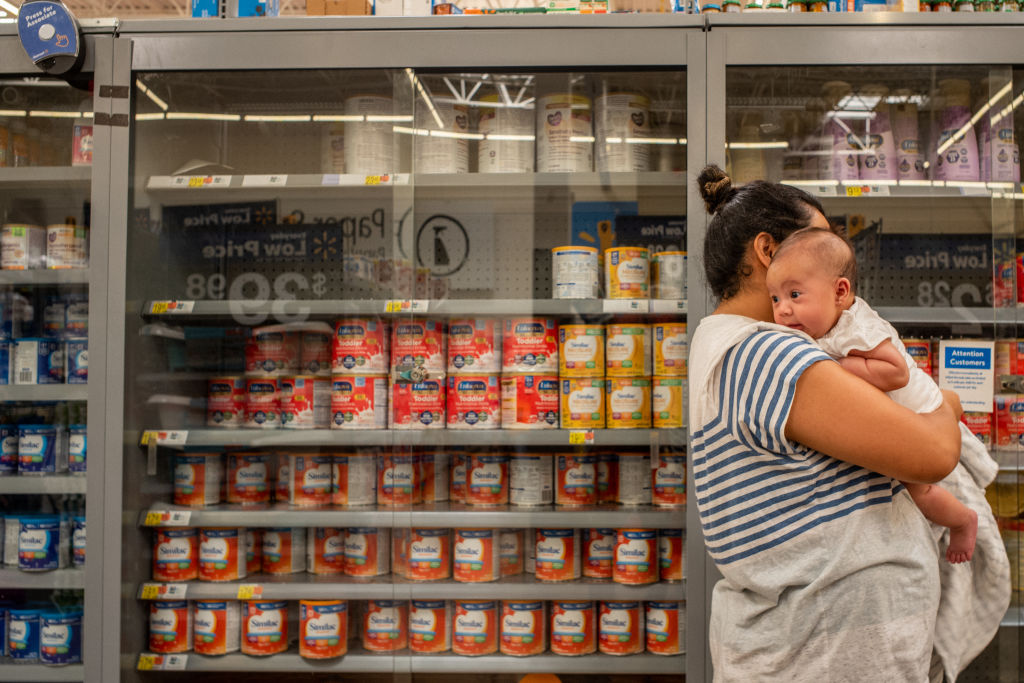
A test of 49 infant formulas sold in the United States found that 26 had “potentially concerning levels” of harmful contaminants such as heavy metals and chemicals, advocacy group Consumer Reports said in a March 3 report.
Consumer Reports tested three types of infant formula: ready-to-feed, concentrated, and powdered. The team tested the items for heavy metals such as arsenic and lead, and chemicals including per- and polyfluoroalkyl substances (PFAS). Other contaminants tested were acrylamide, cadmium, mercury, and several bisphenols, including BPA.
Out of the 49 products, 15 ready-to-feed and concentrated formulas were deemed to be “worse choices” as they contained some of the contaminants “at or above level of concern,” Consumer Reports said. This includes items from Danone, Abbott Nutrition, and Mead Johnson.
Danone’s Nutricia Fortini was categorized as an inferior choice for infants. Among Abbott Nutrition, Similac 360 Total Care Sensitive, Similac Advance, Similac Sensitive, Similac Pro-Total Comfort, Similac Alimentum, Similac NeoSure, Similac Soy Isomil concentrated, and Similac Soy Isomil ready-to-feed were identified as problematic.
As for Mead Johnson, Enfamil 24, Enfamil NeuroPro EnfaCare, Enfamil NeuroPro Gentlease, Enfamil Nutramigen Hypoallergenic, Enfamil ProSobee Simply Plant-Based, and Enfamil Pregestimil Hypoallergenic were deemed to be poor choices.
Within powdered infant formulas, 11 were classified as “worse choices.”
This includes Mead Johnson’s Enfamil NeuroPro EnfaCare, Enfamil Nutramigen With Probiotic LGG, and Enfamil Sensitive.
Parent’s Choice (Walmart) Sensitivity Premium, Up&Up (Target) Sensitivity Premium, Dr. Brown’s Good Start Soy-Ease Pro, and Up&Up (Target) Hypoallergenic, all manufactured by Perrigo, were on the list.
Other products among the 11 were DGC New Zealand’s Nannycare Goat First Infant Milk, Nestle’s Alfamino, Danone’s Pepticate Hypoallergenic Infant Formula, and Sprout Organic’s Plant-Based Infant Formula.
According to the Centers for Disease Control and Prevention (CDC), long-term exposure to arsenic may lower the IQ scores of children. Arsenic, which can cross the placenta and come into contact with fetuses, has been identified in fetal tissue. The metal may also exist at low levels in breast milk, which can then be transferred to breastfeeding infants.
Exposure to lead can seriously harm a child, including by damaging their brain and nervous system, slowing down growth and development, and causing learning and behavior issues. This can result in lower IQ, decreased ability to pay attention, and underperformance in school among children, according to the CDC.
PFAS exposure has been associated with decreases in birth weight, changes in liver enzymes, increases in cholesterol levels, and kidney and testicular cancer, according to the CDC. Young children are more likely to have PFAS in their bodies due to their tendency to chew on things, such as fabrics and toys.
“Fortunately, the results of our tests show that there are still many safe, inexpensive options for parents on the market today, and many are available through the Special Supplemental Nutrition Program for Women, Infants, and Children,” Consumer Reports said in the report.
“Among the liquid and ready-to-feed formulas we tested, a third of the formulas landed in our ‘Top Choices,’ with contaminant levels that were either very low or not detected at all. And over half of the powdered formulas we tested were top choices for low or undetected contaminant levels.”
Company Responses
Consumer Reports contacted the infant formula manufacturers and received responses from these companies justifying the safety of their products.
Just three companies—Abbott, Mead Johnson, and Perrigo—which sell infant formula products under various brand names, account for an estimated 79 percent of the U.S. infant formula market, Consumer Reports said.
A spokesperson from Mead Johnson told Consumer Reports that the company employs a “stringent testing protocol” for its offerings and tests ingredients before manufacturing the final products. The items “meet all safety and quality standards set by U.S. and global regulatory bodies.”
Only products that meet the company’s “rigorous safety standards” are released in the market. The spokesperson emphasized that heavy metals are never intentionally added to the items.
An Abbott spokesperson said its infant formula products are safe and that parents can use them with confidence.
“Today, Abbott’s infant formulas—including those sold in the U.S.—meet existing regulations for heavy metals set by the European Commission and Health Canada. These European Commission limits are the most stringent regulatory limits for heavy metals in infant formula adopted to date by any nation in the world,” the spokesperson said.
“They also meet [Food and Drug Administration’s] current limits for heavy metals in (non-formula) baby foods, children’s juices, and drinking water.”
Both Abbott and Mead Johnson said that trace levels of heavy metals are normal in the environment and occur throughout the food supply, highlighting that the issue was not unique to baby formula items alone.
Perrigo told Consumer Reports that it conducts risk assessments for all raw ingredients sourced to manufacture infant formula. The ingredients are also tested for contaminants of concern. All finished products are surveyed for 25 to 30 contaminants.
Protecting Infants
In January, a report from the Healthy Florida First initiative had made similar findings. The Florida Department of Health tested 24 widely available infant formula products, finding that 16 of them had “elevated levels” of heavy metals.
The Trump administration’s Make America Healthy Again (MAHA) Commission released a strategy report on Sept. 9 aimed at improving the health of American children.
One area of focus in the strategy report is ensuring that the FDA increases its testing of infant formula products for heavy metals and other contaminants.

In July, Sen. Tom Cotton (R-Ark.) introduced the Safe Baby Formula Act, seeking to ban all toxic heavy metals in baby formula products, according to a July 22 statement from the lawmaker’s office.
The bill directs the FDA to conduct a study to assess the impact that toxic heavy metal exposure via infant formula has on children’s health.
“New parents should not have to worry about toxic heavy metals being a part of their infant’s formula, or what potential side-effects they may have,” Cotton said. “This legislation will bring much-needed transparency to the FDA’s rules around infant formula.”
The bill has been referred to the Senate Committee on Health, Education, Labor, and Pensions.