



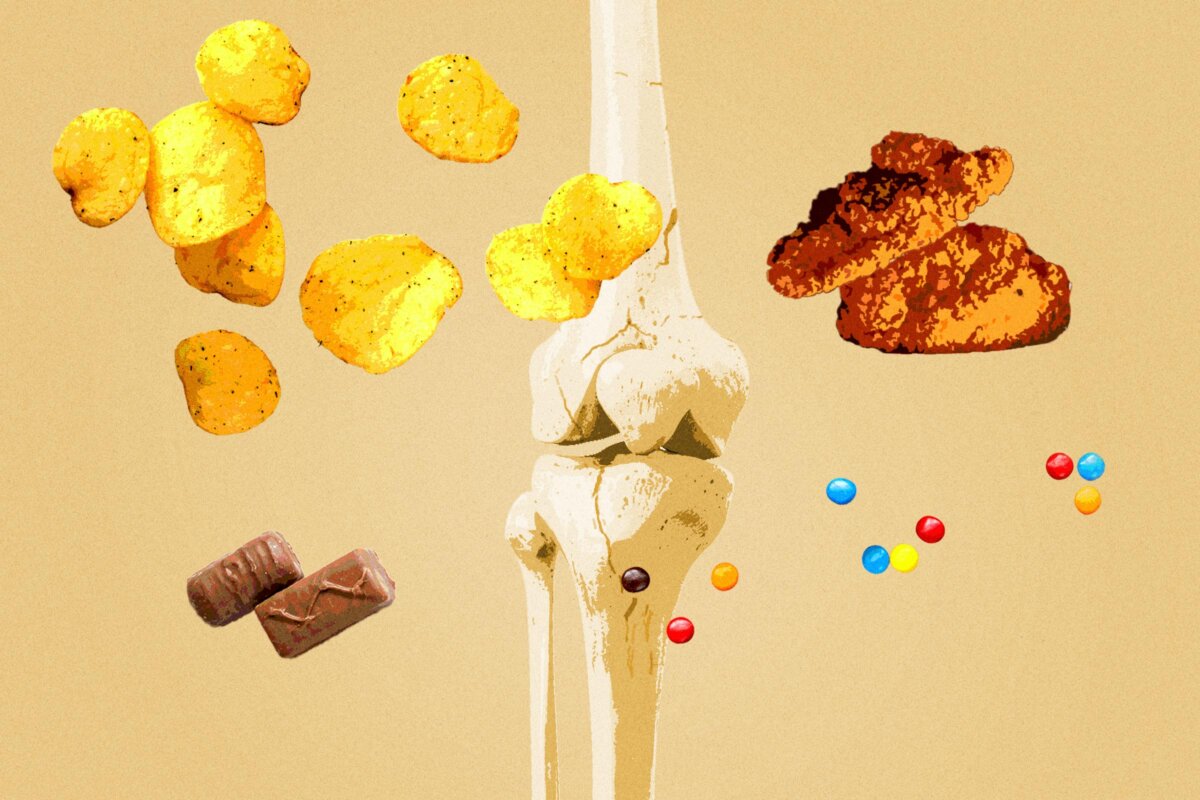
Ultra-processed foods have long been linked to weight gain, diabetes, and heart disease. Now, researchers have found a less obvious casualty: your skeleton.
Even a few extra servings a day—think a frozen dinner, a cookie, and a soda—were linked to a more than 10 percent higher risk of hip fracture.
The findings, published in The British Journal of Nutrition, come from one of the largest studies ever conducted on diet and bone health, tracking 163,855 UK Biobank participants over 12 years. Researchers found that higher consumption of ultra-processed foods (UPFs) was consistently associated with lower bone mineral density and a significantly elevated risk of fractures.
Fracture Risk Rises With Every Extra Serving
Participants, with an average age of 56, reported their diets through five 24-hour dietary recall questionnaires completed over five years.
Researchers used the reports to identify UPF consumption using the NOVA classification, which groups foods by level of processing and includes a wide range of industrially manufactured products such as packaged snacks, sugary drinks, processed meats, and ready-to-eat meals. Bone density was measured using dual-energy X-ray absorptiometry, the clinical gold standard for assessing bone mineral density.
The researchers also adjusted for a range of factors, including age, sex, body mass index, physical activity, smoking, alcohol use, socioeconomic status, and total energy intake.
Over the follow-up period, 1,097 participants experienced hip fractures and 7,889 sustained fractures elsewhere in the body. Greater UPF consumption was associated with weaker bones at several key skeletal sites, including the neck of the femur, the trochanter of the femur, the lumbar spine, and sites across the whole body. The femoral neck—one of the most common sites of hip fractures—showed particularly concerning declines among people with the highest UPF intake.
For every 3.7 additional servings of UPF consumed daily, the risk of hip fracture increased by 10.5 percent, and the risk of overall fractures rose by 2.7 percent.
The association between UPF intake and poorer bone health was strongest among adults younger than 65 and among underweight people—two groups that may warrant particular attention, the researchers said.
Why Young and Underweight People Are More Vulnerable
“Those who are underweight already have lower bone mineral density to begin with,” Melissa Mitri, a registered dietitian-nutritionist and nutrition writer, told The Epoch Times.
They also tend to have less muscle mass, which increases their risk of fractures.
Dr. Lu Qi, professor at Tulane University and co-corresponding author of the study, said that age-related differences in digestion may help explain why younger adults were more affected.
“We assume the stronger association in those under 65 is partly due to the younger population having better digestive function and absorbing more added ingredients in ultra-processed foods than older populations,” Qi told The Epoch Times.
Emerging research suggests that diets high in processed foods can disrupt the balance of gut bacteria, which play an important role in nutrient absorption and metabolic signaling.
Kara Siedman, a gut health and microbiome specialist and senior director of partnerships at Resbiotic Nutrition, told The Epoch Times that younger individuals may more efficiently absorb both beneficial nutrients and harmful components of ultra-processed foods, potentially amplifying their effects on the body.
From a microbiome perspective, these groups may also be more vulnerable to diet-driven shifts in gut ecology, she said.
“If ultra-processed foods disrupt microbial diversity and metabolic output, this can influence inflammation, nutrient absorption, and bone signaling pathways,” Siedman said.
She said that this may, over time, have a compounding effect on bone density.
How UPFs Undermine Bone Health
The findings add to a growing body of research linking ultra-processed foods with poor skeletal health.
One study of adults aged 20 and older found that those who ate more ultra-processed foods were more likely to have osteoporosis. Another study reported that children living in neighborhoods with greater access to fast-food outlets tended to have lower bone mineral content.
Ultra-processed foods are industrially manufactured products made by breaking down whole foods into components such as oils, sugars, starches, and fats, then recombining them with additives such as preservatives, artificial sweeteners, and emulsifiers.
Because of how they are produced, these foods often contain fewer essential nutrients needed to maintain healthy bones, including calcium and vitamin D, partly because processing strips away naturally occurring nutrients and partly because they are made from refined, low-nutrient ingredients.
At the same time, UPFs are typically high in added sugars, salt, and unhealthy fats, which can negatively affect bone health in several ways. Excess sodium, for example, can increase calcium loss through urination, while diets high in sugar and refined carbohydrates may contribute to metabolic changes that impair bone formation.
“Not only are many ultra-processed foods low in bone-building nutrients, but eating a higher amount means they are likely replacing whole, nutrient-rich foods that support bone health,” Mitri said.
The Gut Microbiome May Also Play a Role
Scientists are also increasingly interested in how ultra-processed diets may affect bones indirectly through the gut microbiome—the community of microbes that helps regulate digestion, metabolism, and immune signaling.
“Microbiome imbalances can reduce short-chain fatty acid production, impair mineral absorption, and influence immune signaling pathways that regulate osteoblast and osteoclast activity,” Siedman said.
Changes in gut microbes may alter the production of metabolites that influence bone-remodeling cells—potentially increasing the activity of osteoclasts, the cells that break down bone tissue, while suppressing bone-building cells called osteoblasts. Microbiome disruption can also promote chronic low-grade inflammation, which further shifts the balance toward bone breakdown.
UPF-related metabolic conditions such as hyperglycemia and diabetes may compound the damage, Qi said.
As research continues to link ultra-processed foods to a range of health concerns, experts emphasize that prioritizing whole, nutrient-rich foods—such as fruits, vegetables, lean proteins, and calcium-rich options such as dairy and leafy greens—remains one of the most effective ways to support long-term bone health.
Convenience may save time in the short term, but when it comes to bone health, what is easy today may come at a cost later.