



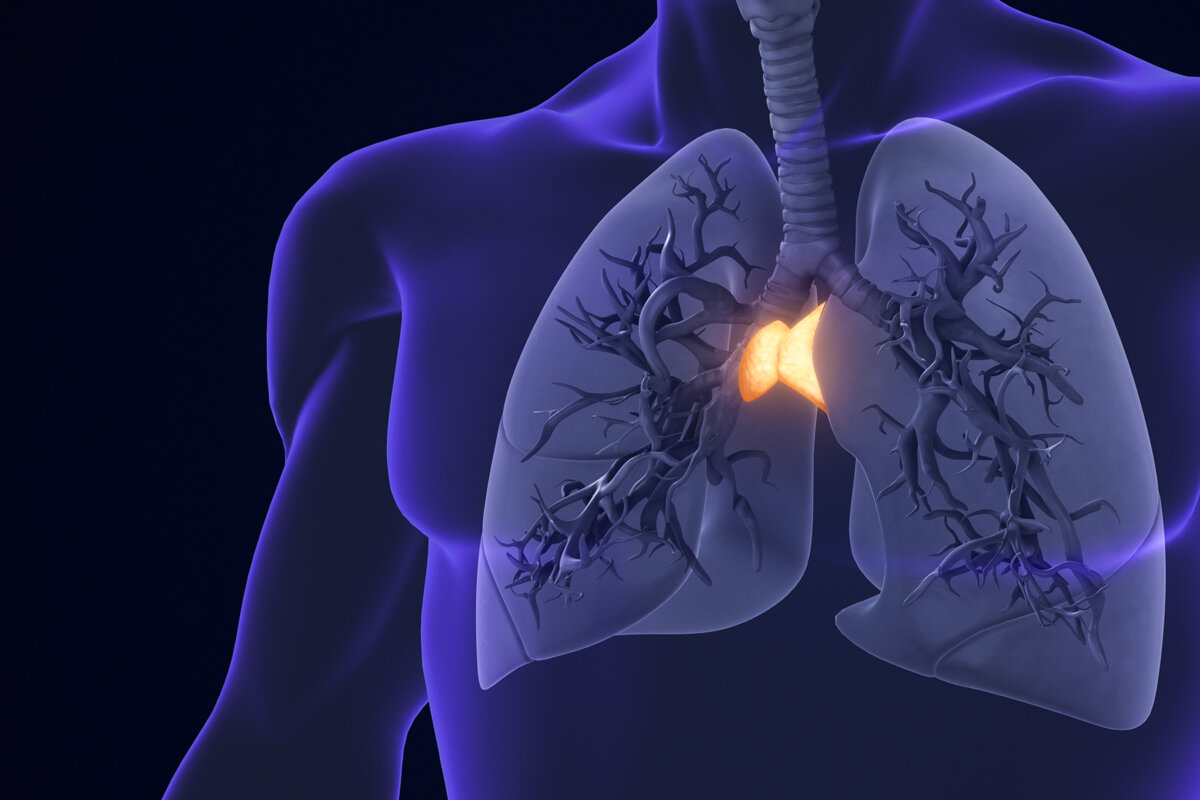
For decades, doctors dismissed the thymus as a childhood organ that fades by middle age. However, two new major studies suggest that this often-overlooked gland—one that most people have never heard of—remains active in adults, playing a surprisingly large role in long-term health and fighting off disease.
The studies found that having a healthy thymus reduced mortality risk and improved outcomes from cancer immunotherapy.
The thymus is a small, butterfly-shaped organ that sits behind the breastbone. Its primary job is to train T cells, the immune system’s front-line fighters against infection and cancer. Conventional medicine has long held that it shrinks into irrelevance with age.
“The thymus gland, which I must admit, has never really been front and center with regards to patient care, may be much more important than previously thought,” Dr. Michael D. Cirigliano, an associate professor of medicine at Perelman School of Medicine at the University of Pennsylvania, who was not involved in the study, told The Epoch Times.
What the Research Found
In the first study, published in Nature, researchers used artificial intelligence to analyze chest scans from more than 27,000 people, developing a thymic health score based on the organ’s appearance in routine imaging. Higher scores indicated a healthier, more functional thymus.
Better thymic function was associated with a reduced risk of death from all causes, including lung cancer, cardiovascular disease, and other illnesses. Over a 12-year follow-up, people with better thymic function showed about a 50 percent lower risk of death, 63 percent lower risk of cardiovascular death, and 36 percent lower risk of developing lung cancer than those with low thymic health.
These associations held even after researchers adjusted for age and other health factors.
People with healthier thymuses showed greater immune cell diversity and lower levels of inflammatory proteins, suggesting broader benefits tied to a stronger immune system.
A second large prospective study, also published in Nature, tracked more than 25,000 adults and reinforced those findings: Better thymic health predicted longer lifespan, lower lung cancer risk, and reduced cardiovascular mortality, independent of age, sex, and smoking habits.
A Game Changer for Cancer Treatment
The implications extend beyond aging. In the second study, among more than 1,200 cancer patients treated with immunotherapy, a technique that enlists the immune system to fight tumors, those with healthier thymuses fared significantly better.
Patients with stronger thymic health had about a 37 percent lower risk of cancer progression and a 44 percent lower risk of death, even after accounting for other patient, tumor, and treatment factors.
The findings suggest a previously underappreciated role for the organ in shaping how well patients respond to cancer immunotherapy.
The benefit was observed across multiple cancer types, including lung, melanoma, breast, and kidney cancers. A separate study of lung cancer patients, published in October 2025, further confirmed the link between thymic health and survival.
Lifestyle Plays a Bigger Role Than Previously Thought
The studies also found that thymic health is not simply a function of age. It varies widely among adults and is shaped by factors within our control.
Women generally had healthier thymuses than men. Thymic health declined with higher body mass index. And chronic lifestyle factors—smoking, obesity, physical inactivity, and chronic stress—were all linked to accelerated thymic decline, and higher levels of inflammatory proteins were associated with aging and disease.
The first study also linked low thymic health to systemic inflammation, obesity, smoking, and metabolic disorders such as diabetes, all of which are associated with accelerated aging and increased disease risk. Cirigliano said that the data clearly show that lifestyle “most definitely” affects thymic health.
He said that although more research is needed to confirm these associations, spotlighting this long-neglected organ may be “just what the doctor ordered.”
Dr. Joao Pedro Matias Lopes, an allergist with expertise in immunology and assistant professor of pediatrics at Case Western University, who was not involved in the studies, noted that thymic involution cannot be reversed, as it is a natural biological process.
“What studies like these bring up is whether changes in health patterns or any other potential management strategies may allow us to reduce the rate of decline, and how much impact that can have on an individual’s health,” Lopes said.
The findings suggest that preserving or improving thymic function could be a promising strategy to promote healthy aging, reduce disease risk, and enhance cancer treatment outcomes.
“I would reinforce that a healthy diet, regular exercise, and absence of smoking are always a good thing,” Lopes said. “But it’s still up for full discussion how much they impact thymic function.”