



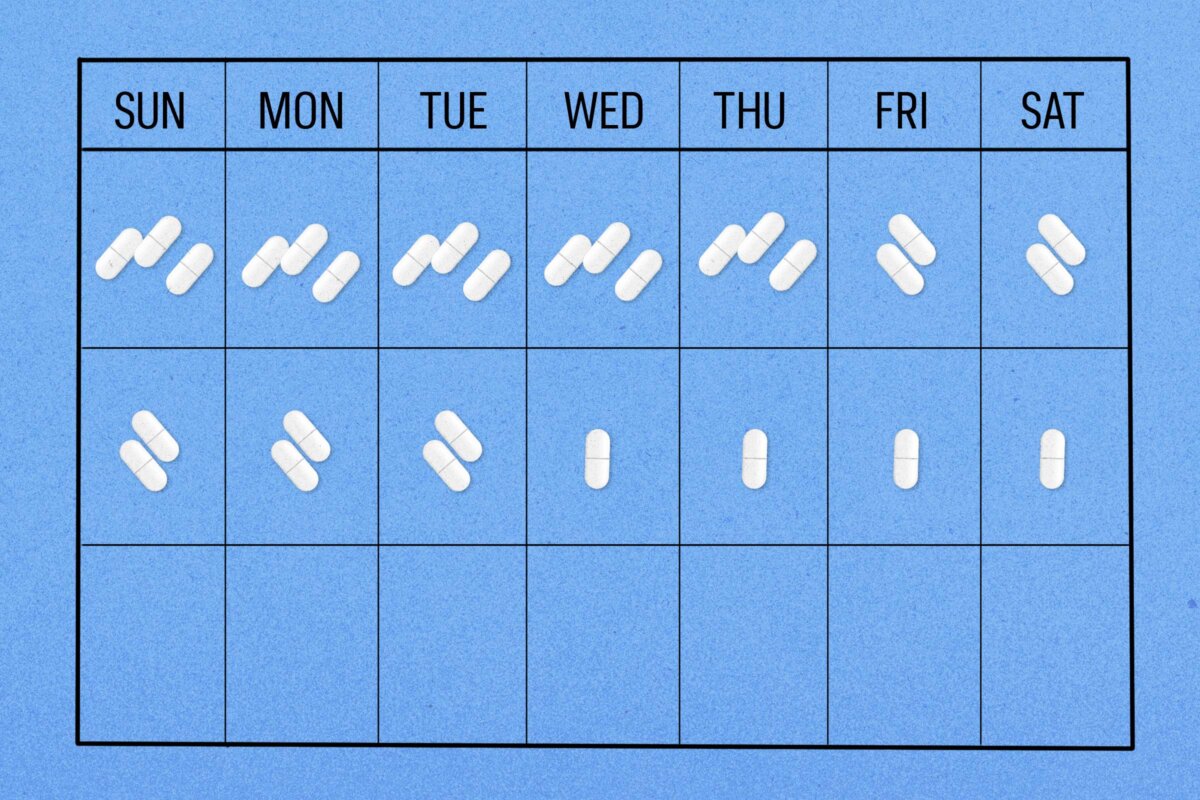
Research reveals that in everyday office visit settings, doctors are successfully helping some patients with Type 2 diabetes reduce or even stop their medications through simple lifestyle changes.
Some Type 2 diabetes patients were able to cut or eliminate their medications through diet and exercise—not through specialized programs, but through ordinary visits with their primary care doctors, according to a recent study.
When people stop or reduce their glucose-lowering medications, there may be improvements in quality of life, fewer side effects, and a lower risk of hypoglycemia, study author Micaela Karlsen, senior director of research and quality at the American College of Lifestyle Medicine, told The Epoch Times.
6 Percent of Patients No Longer Needed Medicine
The study, recently published in the Journal of Clinical Medicine, suggests that reducing or stopping diabetes medications in some patients with Type 2 diabetes can be both safe and achievable.
Researchers reviewed health records of 650 adults with Type 2 diabetes treated at two primary care clinics that focus on lifestyle medicine, an approach emphasizing healthy eating and exercise. They identified 41 cases in which patients’ diabetes medications were reduced or fully stopped after their blood sugar and other health markers improved. This accounts for about 6.3 percent of the patients studied.
Importantly, these medication reductions happened during regular doctor visits. Patients needed only two checkups on average to be considered for medication reduction.
Among those whose medications were reduced and who received a follow-up, body mass index dropped by an average of 2.3 points, and blood sugar levels dropped by 13 percent. No negative health effects were linked to the medication changes.
The most common adjustments included a 34 percent reduction in the dosage of metformin, a commonly prescribed oral medication for Type 2 diabetes; a 19.5 percent reduction in insulin; and a 19.5 percent rate of metformin being discontinued entirely, according to the study statement.
Karlsen said the study’s findings have real merit if applied to the American population. If the 6 percent rate were applied across the estimated 38 million Americans living with Type 2 diabetes, the potential effect would be significant, including reduced medication costs, fewer side effects, and improved quality of life.
Lifestyle modifications can be “significant” in the control of blood sugars in patients living with diabetes, Dr. Barbara Keber, chair of family medicine at Glen Cove Hospital, part of Northwell Health in New York state, who was not involved in the study, told The Epoch Times.
“I can give an example of a patient who just stopped drinking the 2 to 3 liters of regular cola drinks daily, and his initial [hemoglobin] A1C came down almost two full points with just that change,” she said. “So lifestyle modifications are certainly important in controlling blood sugar. The concern we often have is that they are difficult for many people to sustain on a regular basis.”
Deprescribing Versus Noncompliance
Researchers and outside experts were quick to draw a sharp line between patients who stop medications because a doctor determines that it is safe and those who simply stop taking their prescriptions.
“If someone discontinues because they are not following the prescription from their doctor, then they are at risk for uncontrolled diabetes and elevated glucose” along with all the downstream consequences such as heart disease, stroke, kidney failure, blindness, and amputation from nerve damage, Karlsen said.
This changes entirely for patients who have genuinely improved their health through lifestyle changes. For them, continuing to take glucose-lowering medication can introduce new risks. If a person is able to maintain normal blood sugar with diet and lifestyle changes, taking glucose-lowering medications as well may increase the risk of hypoglycemia, Karlsen said.
Application in Real Life
Lifestyle modification is critical to helping patients control blood sugar, but the reality of deprescribing in everyday practice—as something that can happen with a large number of patients—is not realistic, Keber said.
“In today’s world, many patients would rather take a pill than go to the trouble of working on diet and exercise to control their [blood] sugar,” she said.
There are also practical difficulties in making these changes. Patients may be unable to afford the foods needed to adjust their diet or may not have time to exercise because they’re working two to three jobs to make ends meet, Keber said. Doctors also may not have enough time to educate patients about lifestyle changes during a 15- to 20-minute appointment.
Karlsen said the patients involved in the study were not only those who were initially interested in making lifestyle changes, and she said that the findings “demonstrate the feasibility of deprescribing outcomes in a lifestyle medicine context, and are encouraging for offering lifestyle treatment at scale.”