



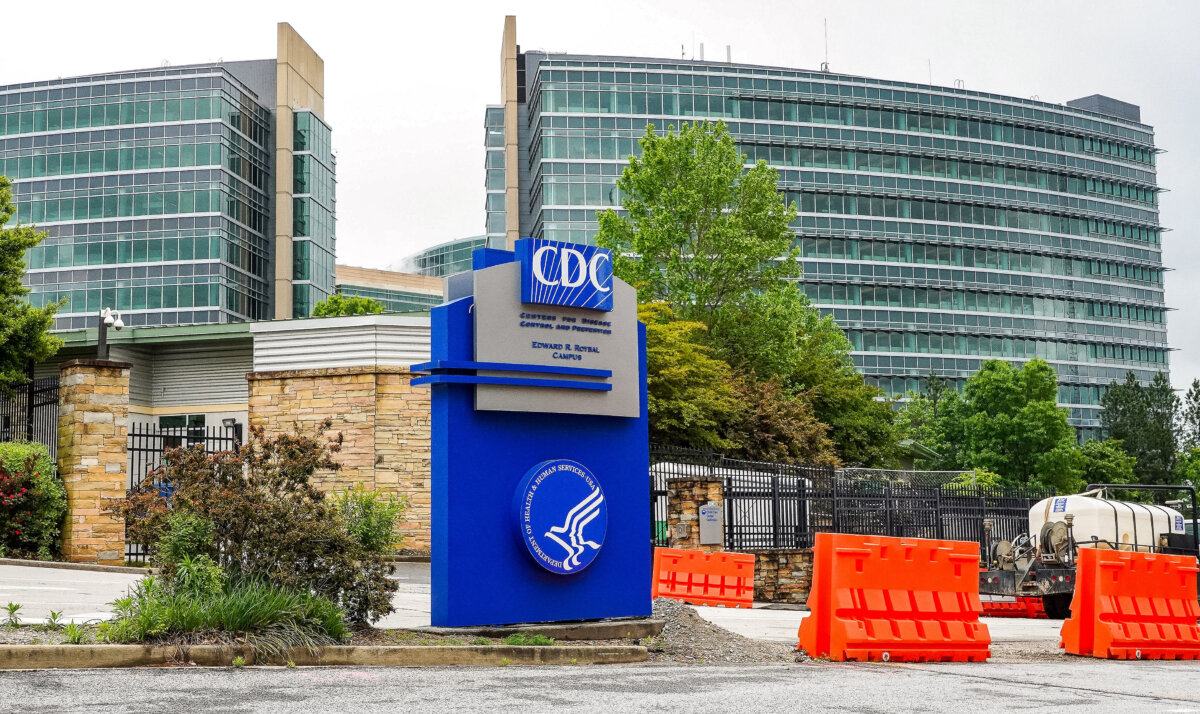
Data from the Centers for Disease Control and Prevention show that rotavirus, a highly contagious type of stomach virus, has been increasing across the United States in recent weeks.
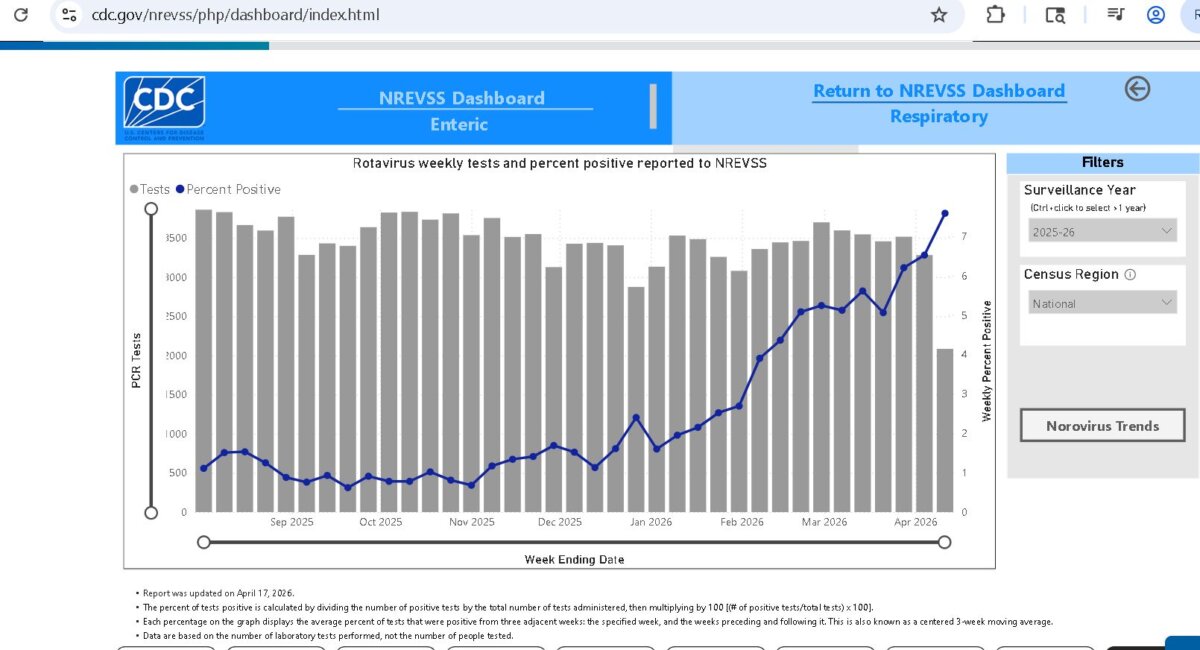
As of April 17, CDC figures showed that for the week ending April 11, out of 2,084 tests, 7.58 percent were positive.
A CDC graph shows that rotavirus positive test rates across the United States have generally been rising since Jan. 3, when 1.6 percent of tests were positive.
Last week, the United States saw a 6.52 positive rate, according to the graph. The week before that, the CDC reported a 6.2 percent rate.
In the three or so months before Jan. 3, positive test rates did not exceed 2 percent, according to CDC data. The highest percentage in all of 2025 was 6.77 percent, recorded on the week of April 19, 2025.
Data from the online tool WastewaterScan also show that rotavirus activity is elevated nationwide and has been rising continuously since January. It described the virus activity as “high.”
The CDC, on its website, deemed rotavirus a disease that’s “very contagious and causes outbreaks,” and noted that it spreads “through direct contact between people.” The agency says that infants and young children are considered to be most at-risk of developing severe illness from the virus.
Symptoms include vomiting and watery diarrhea that lasts from three to eight days, according to the federal health agency. Sometimes the diarrhea and vomiting can be severe, it also says.
Some adults are considered at higher risk of rotavirus infection, including older people, people who care for children with rotavirus, and people with weakened immune systems, the CDC says.
The Mayo Clinic says the most common complication of rotavirus is dehydration from excessive diarrhea and vomiting.
In rare instances, a rotavirus infection can cause intussusception, or “when one part of the intestine slides into another part of the intestine” that blocks the “intestine and cuts off blood flow to that section of the intestine, it says.
Two rotavirus vaccines are approved for use in young children. The CDC currently recommends that infants receive two or three doses of the vaccine, depending on the brand.
Under Health Secretary Robert F. Kennedy, the CDC in January announced the end of broad recommendations for vaccinating all children against flu, rotavirus, hepatitis A, hepatitis B, some forms of meningitis, and RSV. A federal judge in mid-March temporarily blocked federal health officials from implementing the change.
The change in vaccine recommendations came after President Donald Trump asked the agency to review how peer nations approach vaccine recommendations and consider revising U.S. guidance accordingly.
The Associated Press contributed to this report.