



Last winter, a man named David sat down in my office and told me, in the careful, measured way of someone who has rehearsed a sentence during the drive over, that he believed he was developing dementia. He was 61 and a retired civil engineer.
David had stopped going to restaurants because he could no longer follow a conversation across the table because of difficulty hearing. He had given up driving in the evenings because oncoming headlights smeared into halos. Once a month or so, when he stood up from his desk, the room would tilt, and he would have to grab the doorframe. His primary care doctor sent him to a specialist, who ran a series of tests and told him these events were simply symptoms of getting older. David came to me because the answer he received did not feel right—but he was afraid of what the right answer might be.
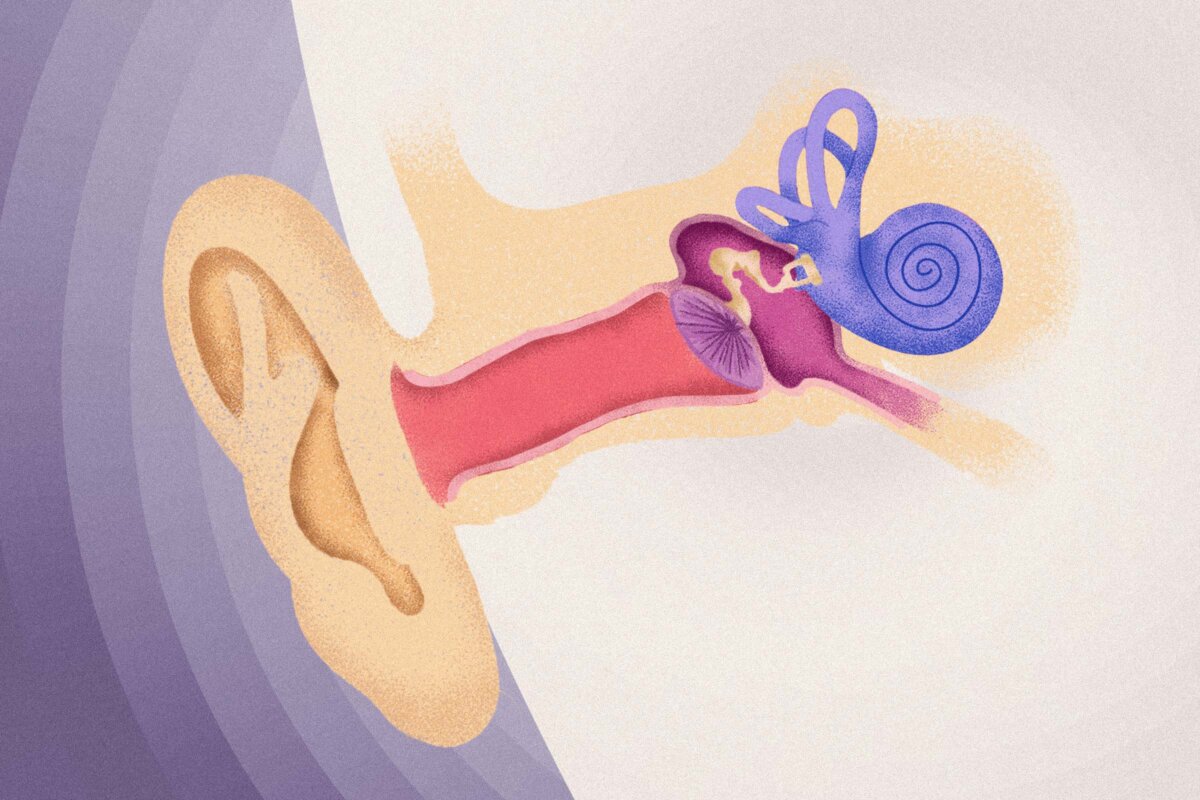
I told him I did not believe he had dementia. The pattern he was describing was one I had seen many times, and rarely in patients who turned out to have what he feared. The eyes, ears, and vestibular apparatus, responsible for our sight, hearing, and balance, are among the first organs in the body to register that something has gone subtly wrong—often years before anything shows up on bloodwork or imaging. When caught at this stage, the decline in most patients is still reversible. His window, I told him, was still open.
He hadn’t known that. Most patients don’t.
In 30 years of medical practice, I have come to believe that no single specialty—Western or Eastern, conventional or alternative—can, on its own, slow the loss of hearing, sight, and balance. Each specialty looks at one part of a much larger picture. What I have found useful is to look at multiple dimensions at the same time. I call this approach the ACES model, which stands for anatomy, chemistry, energy, and soul. The structural (anatomical) integrity of the body houses the senses; the biochemistry feeds them; sleep and vital energy restore them; and the unmetabolized weight of a life—the grief, conflict, and fear we never fully process—can, year after year, teach the senses to look away from what they don’t want to see.
David needed care across all four dimensions, as do most patients in his situation.
Anatomy: The Structural Bottleneck Few Doctors Examine
The first thing I want you to know is something that few general practitioners mention to their patients: Your eyes, ears, and sense of balance all live inside your skull, supplied by blood vessels and nerves that travel up through your neck to reach them. When that pathway is even slightly compressed or irritated, these senses suffer—long before anything shows up on a scan. The neck does more for your hearing and vision than most people realize.
Three patterns repeatedly appear in my exam room.
The first pattern is what I call the “screen-bound neck.” Forty years at a drafting table, 15 years at a computer, or hours spent looking down at a phone each day can gradually pull the head forward, tighten the muscles at the base of the skull, and restrict the blood flow to the very tissues that power your senses. None of this is dramatic. None of it announces itself. It just happens. When I asked David to fully turn his head to the right, he couldn’t—something he had not noticed before.
The second pattern involves old injuries the body never finished healing from: a rear-end collision 20 years ago, a concussion from college football, or a fall on the ice that went untreated. Patients almost always tell me these are ancient history. However, the affected tissues disagree. Whiplash and similar trauma can leave behind subtle restrictions that throttle circulation and nerve signaling for years—sometimes for life—unless something is deliberately done about them.
The third pattern involves the jaw. I cannot remember the last time a patient came to me with tinnitus or vertigo whose dentist or physician had thought to look at the patient’s bite. However, dysfunction of the temporomandibular joint (the hinge connecting the lower jaw to the skull in front of the ears), nighttime grinding, an old bridge that has shifted, an orthodontic correction that has slowly relapsed—any of these can distort the structures of the head under daily strain, year after year, in ways that affect hearing and balance directly.
The good news is that the anatomical misalignment is usually reversible. When the obstructed channel is opened, the function tends to return. I have seen patients walk out of an osteopathic cranial treatment, atlas correction, or acupuncture session telling me, with some surprise, that the world had become sharper or quieter.
Chemistry: What Your Blood Is Saying
The next thing I want to look at in a patient is his or her blood, because this is where the most actionable findings live—and where conventional medicine most often falls short.
There is a reason for that shortfall. Standard blood testing was designed to detect diseases and flag patients who have already fallen outside of the reference range. It was never designed to catch the slow erosion that precedes disease by years and produces the symptoms David and millions of others experience. These omissions are why so many people walk out of their annual physicals with clean bills of health yet still feel something is wrong. They are not imagining it. The tests simply aren’t addressing the right questions.
If you are losing your hearing, vision, or balance, four bloodwork findings deserve your attention. None appear on a routine panel, but all are worth discussing with your doctor.
The first is a B12 deficiency hidden within the normal range. The nerves that carry signals from your eyes and ears are wrapped in protective insulation that begins to break down when B12 levels are low. The symptoms that follow—tinnitus, blurred vision, unsteady gait, brain fog—are precisely the constellation that gets routinely waved away as aging. The problem is that the standard reference range used by most laboratories is too broad. Many of my patients are functionally B12-deficient even though their numbers look normal.
David was one of them. His serum vitamin B12 appeared reassuring. However, two more sensitive markers—methylmalonic acid (MMA) and homocysteine—did not. Both are metabolic byproducts that the body normally clears with the help of vitamin B12. When there isn’t enough functional vitamin B12 at the cellular level, these byproducts accumulate in the bloodstream years before serum vitamin B12 drops below the laboratory’s normal range.
For patients with sensory or neurological symptoms, I often recommend testing MMA and homocysteine. MMA is considered a more specific confirmation of a functional B12 deficiency, whereas homocysteine is not, so I treat it as supportive rather than decisive. You can ask your doctor to add MMA and homocysteine to your next blood draw.
The second issue is sluggish cellular energy. The retina and the inner ear are among the most energy-demanding tissues in the entire body, which is why they are among the first to falter when cellular energy production declines. A surprising number of common factors can affect this: certain cholesterol-lowering drugs, some antibiotics, chronic insulin resistance, and long-term toxin exposure. Although cellular energy production cannot be measured directly on a routine panel, its decline can be mitigated. Several well-studied nutrients, including coenzyme Q10, alpha-lipoic acid, and acetyl-L-carnitine, have strong evidence supporting their role as nourishment for mitochondria, which keep cells running. However, patients should consult a doctor before taking supplements.
The third issue is blood sugar. Diabetes is well known to damage the eyes and the ears. Less recognized is that the same damage to the small vessels feeding both organs begins long before glucose ever enters the diabetic range. Hemoglobin A1c—the three-month average of your blood sugar—is part of most physicals. A reading that is “still in range” but creeping upward year over year is already a signal worth acting on, particularly in people with sensory symptoms. Ask your doctor not just whether your A1c is normal, but also how it has changed over time.
The fourth issue is heavy metal exposure. Lead, mercury, and cadmium have a particular affinity for the auditory and visual systems. Heavy metal testing is not part of a routine physical exam, and most physicians don’t order it unless a patient requests it. Anyone with unexplained vertigo, hearing loss, or visual disturbances—particularly with occupational or environmental exposure risks—benefits from having one before being told the cause is simply aging.
Energy: The Dimension That Bridges 2 Traditions
The third dimension of the ACES model for health and medicine is the body’s energy. By energy, I mean two things at once: the modern, measurable sense of cellular oxygen, blood flow, and the rhythm of sleep, and the older, deeper sense of what classical Chinese medicine calls “qi and jing“—the vital energies believed to sustain life. These are not competing ideas. In my experience, they describe the same physiology from different vantage points.
From the perspective of Western medicine, the eyes and ears do not switch off when you sleep. Blood continues to flow to them, and oxygen continues to arrive. The brain’s nightly cleansing process—what researchers now call the glymphatic system—keeps flushing out the metabolic waste of the previous day. The senses depend on all of this housekeeping. When it fails, even partially, the eyes and the ears are the first organs to suffer. After years of disrupted sleep, the resulting decline is often dismissed as aging.
Untreated sleep apnea is one of the most common—and most overlooked—contributors to accelerated sensory decline. Repeated drops in oxygen, hour after hour, night after night, slowly damage the hair cells of the inner ear and the delicate fibers of the optic nerve. Many people have been told they have age-related hearing loss when a more accurate label is nocturnal hypoxia. In many cases, a simple home sleep study often changes the entire diagnostic picture.
The classical Chinese tradition, through centuries of careful observation, arrived at the same physiology. It teaches that the kidney “opens into the ears”—meaning that the body’s deepest energetic reserves govern hearing and balance. When those reserves are depleted by chronic stress, excess work, or fear, tinnitus and hearing loss frequently follow. The liver, meanwhile, is said to “open into the eyes.” When liver function or blood supply is depleted, the results are dryness, blurriness, floaters, and reduced night vision.
In practice, patients may walk in with a wiry, depleted pulse and hollowed under-eye skin that older Chinese physicians taught me to read as kidney reserve running low. The bloodwork I would order on the same visit usually shows the patient short on B12, and the patient is usually sleeping in fragments, with reduced cerebral blood flow. It is the same body interpreted through two different systems. Chinese medicine reads the pulse and tongue; Western medicine reads laboratory serum levels and sleep studies. Working with both systems is how I catch sensory decline early, when most of it is still reversible. When physicians work with only one, a great deal of it ends up classified as age.
This overlap between disciplines is exactly why no single specialty has been able to successfully slow sensory aging on its own. Ophthalmology measures the lens. Otolaryngology measures the cochlea. Neither specialty has the tools—or training—to ask what the body’s deeper reserves are doing. The energy dimension of the ACES model is the bridge between these worlds. For patients such as David, attending to their energy—by improving sleep, addressing apnea, and restoring kidney reserve with classical Chinese herbs and acupuncture—often produces gains that years of specialty visits had not.
[series_posts_list][/series_posts_list]
Soul: What the Senses Can Not See
The fourth dimension is the hardest to measure. It is also the one I have come to take most seriously of all four dimensions of the ACES model.
The body is not separate from the life it is living. Patients who describe themselves as “not wanting to see” what is happening in their marriages, careers, or families come into my office with disproportionate visual decline more often than any purely biological model would predict. A patient who has lost a spouse or has received a hard diagnosis or is watching a child struggle in ways the patient cannot fix—a patient who feels, in other words, the ground shifting beneath him or her—develops vertigo and imbalance that no inner-ear pathology fully explains.
The biology behind this is real and well-documented. Chronic stress reduces blood flow to the inner ear. Sustained high cortisol dulls the brain’s processing of visual information. Trauma that has never been worked through changes the way the nervous system interprets signals about balance. If physicians address a patient’s structure, biochemistry, and energy but leave the emotional load untouched, the senses return only in part.
The patients I have watched come fully back from symptoms are the ones who finally named the situations they had been avoiding—and then did something about it. Many improved through practices that allow the nervous system to discharge what it has been holding: acupuncture, somatic therapies, and structured psychotherapy with a trusted clinician. Others benefited from spending regular time in calming environments, such as in forests, near water, or in quiet spaces.
David had retired six months earlier than he had planned, after a long professional dispute that had not gone his way. He had not wanted to talk about it. When he finally did, he told me, almost in passing, that he had spent the preceding year feeling “like the ground had moved out from under” him. It was a phrase I had heard, in one form or another, from hundreds of patients. His vertigo was not only mechanical. Once he began addressing the emotional toll of that final working year—through psychotherapy, personal closure, and reconnecting with his faith—the last of his vestibular symptoms quietly resolved.
Why the ACES Approach Should Become the Norm
Six months after his appointment, David was back in restaurants. The vertigo had stopped. He was driving at night again.
None of the changes came from a single intervention, and none happened quickly. They came from working on all four dimensions at once—his neck, his bloodwork, his sleep, and the emotional burden he had avoided talking about. The cervical work and targeted bloodwork gave him back most of what he had thought of as the medical part: the blurry vision, brain fog, and severe unsteadiness. The final layer—the residual sense that the floor was not quite reliably beneath him—did not resolve until he had spent several months confronting his emotional struggles.
The decline in hearing, sight, and balance is rarely random and is often far more reversible than patients have been led to believe. It is a composite signal, sent up by a body that is asking, in the only language it has, to be heard in more than one way.
Our senses are not failing—they are just speaking. The challenge, for all of us, is learning how to listen.
Lidan Du-Skabrin, who holds a doctorate in nutrition, contributed to this article.
Views expressed in this article are the opinions of the author and do not necessarily reflect the views of The Epoch Times. Epoch Health welcomes professional discussion and friendly debate. To submit an opinion piece, please follow these guidelines and submit through our form here.