



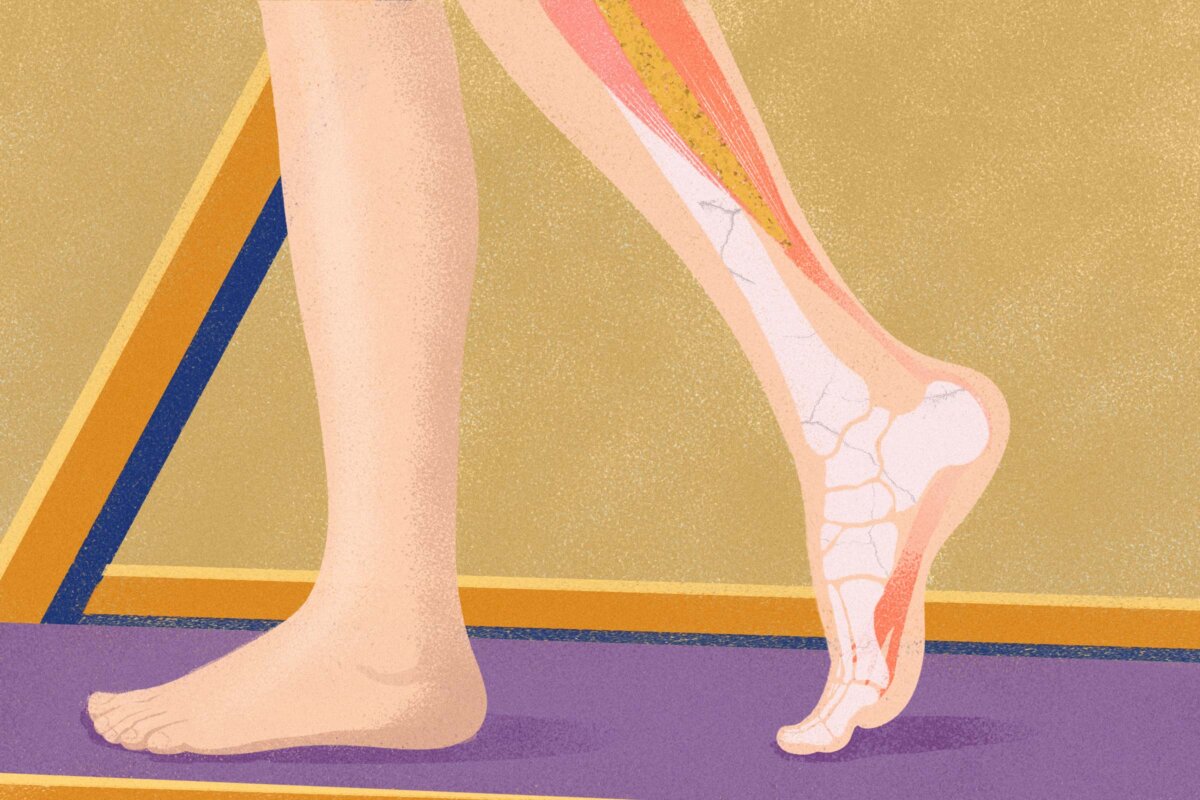
Eight years of caring for a mother with dementia will take things from you—sleep, time, the freedom of not being needed every hour. What Helen did not know—and what no one had thought to mention—was that it had also been harming her bones.
Helen was 68, a retired school teacher, when she came to my office three months after a fall that broke her wrist. Her primary care physician had done what most good doctors do: ordered a dual-energy x-ray absorptiometry (DEXA) scan, started her on medication to prevent loss of bone density, and told her to take more calcium.
The wrist, it turned out, was the smaller of her two losses. A body-composition analysis revealed that Helen had been losing muscle for years as well—her lean mass had fallen well below what her frame should carry, the kind of erosion that unfolds so gradually a patient barely notices it until something breaks.
Few patients hear about osteoporosis before a bone breaks. Fewer still hear about sarcopenia—the steady disappearance of muscle. By the time a fall or a scan finally reveals the problem, years of bone density and a substantial share of lean muscle are already gone. The standard response is a prescription, a calcium supplement, and a vague instruction to “stay active.” In my clinical experience, that response is profoundly inadequate.
The loss of bone and muscle is among the most consequential, but fortunately also among the most preventable and reversible, aspects of aging. Frailty is one of the strongest predictors of dependent living and death after 65. The patient who maintains musculoskeletal strength is far better positioned to maintain everything else: independence, balance, metabolism, and even the cognitive resilience that comes from staying physically capable.
Reversing decline requires a broader perspective. In my practice, I evaluate every patient using the ACES model for health and medicine: four dimensions that influence how the body maintains or loses its structure over time—anatomy, chemistry, energy, and soul. Bone and muscle loss is rarely a failure in just one of these dimensions. Treating only one or two—a prescription here, a supplement there—is why so many patients keep falling.
Helen’s condition was a failure in all four dimensions.
Anatomy–The Body Is Built by What You Ask of It
When Helen told me she walked 40 minutes every day and had done so for 20 years, she expected that to count in her favor—and it did—but not nearly enough. She had never lifted anything heavier than a bag of groceries in her life.
Bones and muscles are living tissues, and they respond directly to the demands placed on them. Wolff’s law, articulated more than a century ago, holds that bone remodels in response to the forces it experiences. When you take away the load, the osteoblasts—the cells that build bone—simply stop receiving the order to work.
This is why bedridden patients lose bone at an alarming speed and astronauts return from long missions with the bone density of someone decades older and have to train hard to get it back—a condition called “space osteoporosis.” It is also why walking, although far better than sitting, is not enough to maintain bone density on its own. Bone responds to load: resistance, impact, and weight that genuinely challenge the tissue.
Muscle obeys the same rule, with one harsh addition: The body actively dismantles tissue it doesn’t believe it needs. After roughly age 40, muscle becomes progressively deaf to the signals that once built it—a phenomenon called anabolic resistance. The same protein and the same workout that added muscle at 30 no longer suffice at 60. People who do not raise the stimulus lose a little more every year.
Modern life accelerates all of the above physiological changes. The average adult now sits up to nine hours per day. Hip flexors shorten, glutes go quiet, the upper back rounds forward, and the posterior chain (the structural backbone of human movement) wastes away.
What to Do
Give your skeleton and muscles a reason to stay. For most adults, that means resistance training two to three times per week: working the major muscle groups against meaningful weight, paired with a little impact—even something as simple as rising onto the toes and dropping the heels—which signals bone to rebuild. The load has to climb over time; muscle and bone adapt to challenge, not to repetition. If you are new to weight training, begin under the guidance of a trainer or physical therapist who can suggest safe movements.
Chemistry–What Your Blood Is Telling You
The biochemistry of bone and muscle is rarely investigated in depth, and the standard lab panel misses most of what matters.
Vitamin D is the first place to look. The optimal level of serum 25(OH)D for musculoskeletal function arguably lies in the 50 to 80 ng/mL range, rather than the 30 ng/mL “sufficient” threshold most labs flag as normal. Below that, calcium absorption falters. Adequate levels of vitamin D are required for the strength and speed of the fast-twitch fibers that catch you when you stumble. That is why vitamin D deficiency shows up not only as thinning bone but also as genuine muscle weakness and unsteadiness, resulting in a markedly higher risk of falls.
Vitamin K2 is often left out of the conversation entirely. It directs calcium into bone and away from arterial walls. A patient taking calcium and vitamin D without K2 may, in effect, be building weak bones and stiffening arteries at the same time.
Magnesium deficiency is widespread. More than half of U.S. adults are functionally short on magnesium, yet it rarely appears on standard panels. The body needs magnesium to activate vitamin D, regulate parathyroid hormone levels, and contract muscle. Subtle deficiency surfaces as cramps, restless sleep, and unexplained fatigue long before any change shows up on a scan.
Protein is an underestimated variable. The official U.S. Recommended Daily Allowance of 0.8 grams per kg of body weight per day is widely regarded by geriatric and sports-medicine specialists as too low for adults past 40. By then, maintaining muscle takes closer to 1.2 to 1.6 grams per kg per day, and how it’s distributed matters as much as the total intake.
Helen’s dietary intake on a typical day—a slice of toast, a small salad, a light dinner—gave her less than 35 grams of protein. Each meal needs to supply roughly 30 grams of high-quality protein to overcome anabolic resistance and actually switch on muscle synthesis. A large dinner cannot make up for a proteinless breakfast or the token amount of protein in her lunch.
Hormones complete the picture. Testosterone, growth hormone, IGF-1 (insulin-like growth factor 1), DHEA (building block for the production of major male and female sex hormones, including testosterone and estrogen), and thyroid all decline through midlife, and every one of them is essential to maintaining bone and muscle. Assessing and, where clinically appropriate, restoring this hormonal landscape can produce results no exercise program can achieve alone.
What to Do
Ask your physician for a panel that goes beyond the basics—25(OH)D, magnesium (ideally RBC magnesium) and, depending on your history, the relevant hormones. Get most of your protein from protein-rich whole foods—such as skinless chicken or turkey, fresh or canned tuna or salmon, and low-fat Greek yogurt, to name a few—spread across meals rather than loading a single meal, such as dinner.
Treat supplements such as vitamins D and K2 and magnesium as targeted corrections of measured deficiencies, not a scattershot of pills. Approach hormone therapy as a careful decision made with a knowledgeable physician.
Energy–The Power to Rebuild
Even flawless training and nutrition can fail if the body lacks the cellular power to act on them. Building bone and muscle is metabolically expensive work and depends on healthy mitochondria—the engines inside our cells.
Patients with chronic fatigue, lingering post-viral syndromes, or significant toxic exposures lose muscle and bone faster because the cellular power to rebuild them is compromised.
Sleep is when the rebuilding actually happens. Growth hormone is released primarily during the deepest stages of slow-wave sleep, and it is in that window that the body completes muscle protein synthesis and bone remodeling. Sleeping six hours cannot achieve what eight hours make possible, no matter how disciplined your workouts are. Helen had been a light, broken sleeper for most of the eight years she spent caring for her mother—a history written in her bones.
Traditional Chinese medicine (TCM) holds that the kidney governs the bones and the spleen governs the muscles. According to TCM, when the kidney’s essence—the body’s deepest reserve—is depleted by chronic stress, fear, overwork, and the accumulated wear of decades, bone loss, joint degeneration, and a weak, aching lower back ensue with age.
Similarly, when the spleen’s essence is depleted by poor diet, worry, and relentless mental strain, symptoms appear—muscle wasting, weak limbs, and the leaden fatigue patients describe as “no strength to lift my arms.”
What to Do
Protect sleep as if it were a prescription—a consistent schedule, a dark and cool room, and a hard stop on late-night screen use and alcohol intake, both of which sabotage slow-wave sleep. If your fatigue feels disproportionate to your life, take it seriously rather than pushing through it: Ask your doctor about thyroid, iron, B12, and, where your history warrants, environmental and metabolic contributors.
[series_posts_list][/series_posts_list]
Soul–The Weight You Are Carrying
Helen spent eight years caring for a mother with dementia. Her mother died the spring before Helen’s fall, and she had not yet allowed herself to grieve.
The body experiences emotional load as physical load. Chronic stress keeps cortisol elevated, and sustained cortisol levels break down muscle and suppress new bone formation. People living through prolonged grief, caregiving exhaustion, or unresolved relational strain lose bone and muscle faster than otherwise similar people. The biochemistry of being worn down is not a metaphor.
There is a subtler pattern, too. In my experience, people who feel unsupported—by a partner, a family, an institution—often weaken precisely in the structures that hold the body upright: the pelvic floor, the deep core, and the postural muscles running along the spine. The body, in a sense, stops standing for what no longer feels held.
What to Do
Treat emotional load as a clinical variable, not a footnote. Naming and moving through grief, repairing or releasing a relationship that drains you, asking plainly for support, or working with a therapist are not optional in a bone-and-muscle plan. For many patients, removing the emotional hurdle is what finally allows everything else to work.
Everyday Strides You Can Take
Small daily steps can make big changes in your bone and muscle health. Lift weights two or three times per week, and increase the weight over time. Get 30 grams of protein at every meal. Check your vitamin D, magnesium, and—if indicated—your hormones, and correct what is genuinely low. Defend eight hours of sleep. Do not ignore any grief or stress you have been carrying.
One year after we began—lifting weights twice per week, sleeping 7 1/2 hours, and eating protein at every meal—Helen’s follow-up DEXA scan showed a meaningful increase, her first gain in more than a decade. She has not fallen since. She told me, almost in passing, that she had finally begun to grieve her mother. The two changes were not unrelated.
The disappearance of bone and muscle is not a sentence handed down by age. It is the cumulative product of too little mechanical load, too little nourishment, declining hormones, depleted energy, and the unprocessed weight of life—and every one of those can be addressed.
Those who keep their musculoskeletal strength into their 70s and 80s are not merely avoiding fractures. They are preserving independence, mobility, metabolic health, and the simple freedom to live without bracing for the next fall. Few investments in the second half of life pay back as well.
Lidan Du-Skabrin, who holds a doctorate in nutrition, contributed to this article.
Views expressed in this article are the opinions of the author and do not necessarily reflect the views of The Epoch Times. Epoch Health welcomes professional discussion and friendly debate. To submit an opinion piece, please follow these guidelines and submit through our form here.