



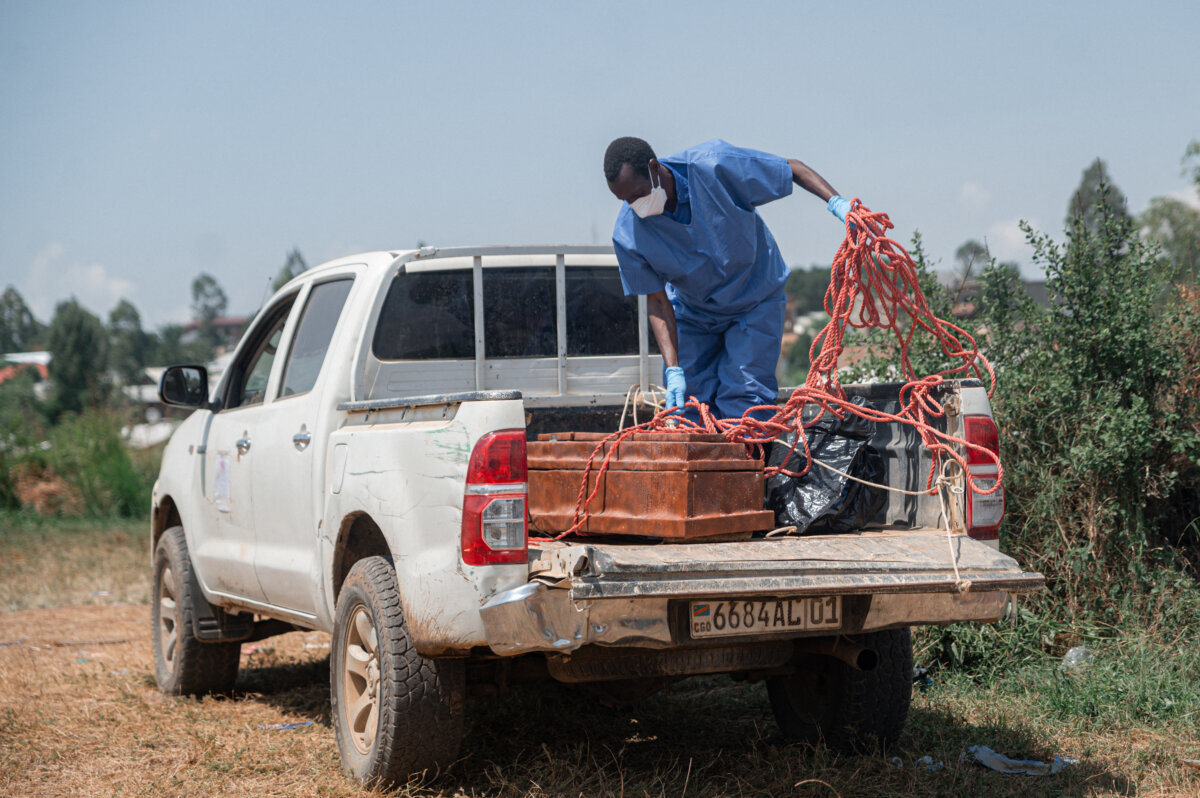
More than 1,000 people have been infected with Ebola in Congo in one of the largest outbreaks of Ebola in world history, authorities in the central African country said on June 21.
There are now 1,003 cumulative confirmed cases, Congo’s Ministry of Communications said in an update on Sunday.
About 25 percent, or 254 people, confirmed to have contracted Ebola have died. About 10 percent have recovered.
Currently, 365 of the confirmed patients are in isolation or hospitalized.
“The threshold of 1,000 confirmed cases has been crossed. Despite this progression, response teams continue active investigations, epidemiological surveillance, and prevention actions in affected areas,” the agency stated.
It added later, “Community communication efforts, diagnosis, and case management continue to be intensified to curb the spread of the epidemic.”
Efforts by Congolese authorities and a number of organizations have focused on isolating and treating suspected and confirmed cases, quickly carrying out tests for suspected patients, and tracing the contacts of confirmed patients.
Congo has a population of about 116 million people.
Approximately nine in 10 of the confirmed cases are in Ituri province, in northeast Congo. Uganda, one of Congo’s neighbors, has confirmed 19 cases and two deaths. Uganda has not identified any cases since June 5. No other countries have confirmed cases.
The outbreak is believed to include additional, unconfirmed cases, according to the World Health Organization and other groups, in part because authorities in Congo have only been able to follow up with 58 percent of people exposed to confirmed cases.
Congo also did not detect the outbreak until May, weeks or even months after it actually started, because initial testing was not able to identify the Bundibugyo virus, which is behind the outbreak.
Ebola is transmitted through direct contact with blood or other bodily fluids from infected people, or through contact with contaminated surfaces. The incubation period for the virus is two to 21 days. Symptoms can include fever, muscle pain, and unexplained bleeding.
Transmission is known to occur in health care settings, and 75 health care workers in Congo are among the confirmed cases in the current outbreak, World Health Organization officials said during a recent briefing. Seventeen of those workers died.
Since Ebola was identified in 1976 after an outbreak in modern-day Congo, most of the outbreaks have taken place in or near Congo. The largest outbreak to date occurred from 2014 to 2016 in West Africa, with cases in Guinea, Liberia, and Sierra Leone. The outbreak ended up sickening at least 28,600 people and killing 11,325.
The second largest outbreak started in 2018 and left at least 3,480 people in Congo and Uganda ill, with 2,299 dying.
Both of those outbreaks were caused by the Zaire virus, another ebolavirus.