



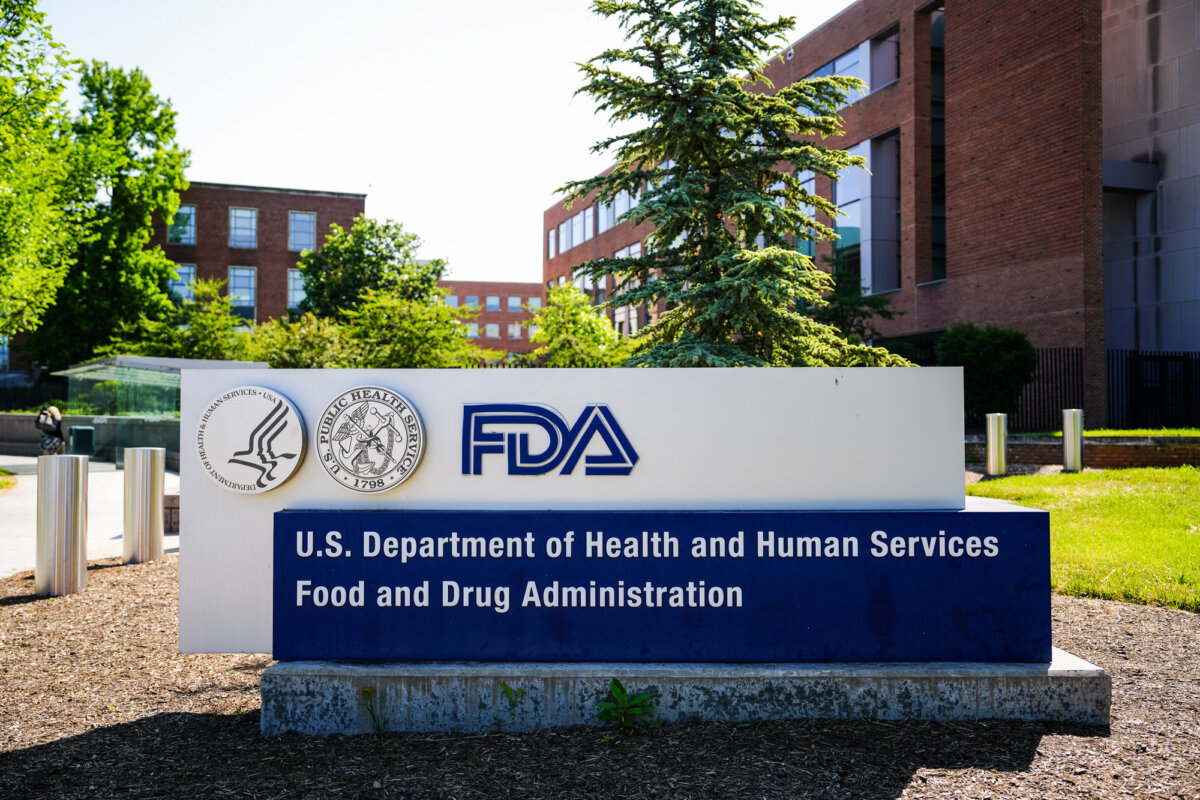
Food and Drug Administration (FDA) staffers said in newly released documents that they do not support letting compound pharmacies manufacture seven popular peptides.
FDA personnel said in documents posted online on June 29 that there are safety concerns with the peptides, including the possibility of triggering immune responses that could lead to “life-threatening and catastrophic reactions.”
They do not favor classifying BPC-157, KPV, TB-500, MOTS-c, Emideltide, Epitalon, or Semax in a way that would let pharmacies use them in compounded medicines.
Peptides are short chains of amino acids that act as building blocks of proteins and perform essential biological functions in the body. If permitted, compounding pharmacies can manufacture them for personalized medications tailored to patients’ unique needs.
They have become popular among some fitness influencers and have received endorsement from Health Secretary Robert F. Kennedy Jr.
Compounding refers to the creation of customized medicine by combining, mixing, or altering ingredients.
The documents were posted ahead of a scheduled meeting of the FDA’s Pharmacy Compounding Advisory Committee, which will consider whether to support or oppose loosening restrictions on the peptides.
The FDA in April said it would not take action against compounding pharmacies that use some of the peptides, and it is now considering whether to add them to a list of approved substances.
The FDA could create some guardrails within which peptides could be prepared by legitimate pharmacies, according to Scott Brunner, CEO of Alliance for Pharmacy Compounding, a trade association for pharmacies.
“We would urge the agency to look at this not as an up or down vote, but to consider a middle path that does address a very real public health concern,” Brunner said.
Ban
The FDA in 2023 labeled more than a dozen peptides, including BPC-157 and KPC, as substances banned for compounding.
Officials at the time said there was a lack of information on the peptides. The available data indicated “significant safety risks,” they said.
Kennedy has said the ban was illegal. Such bans should happen only if there is a safety signal, he has said.
No such safety signal was identified.
Rep. Diana Harshbarger (R-Tenn.), a pharmacist, wrote to officials in 2025 in support of allowing the compounding of six peptides, including BPC-157.
New Members
The FDA appointed multiple new members to the compounding panel, including seven who have links to businesses or clinics involved in peptide therapies.
That includes Robert Harshbarger, a Tennessee senator, a pharmacist, and the son of Diana Harshbarger.
“All committee members underwent the same ethics review and vetting process required of all FDA advisory committee members,” a Department of Health and Human Services spokesperson said.
“Candidates that could not meet existing ethics requirements were removed from consideration.”
Reuters contributed to this report.