



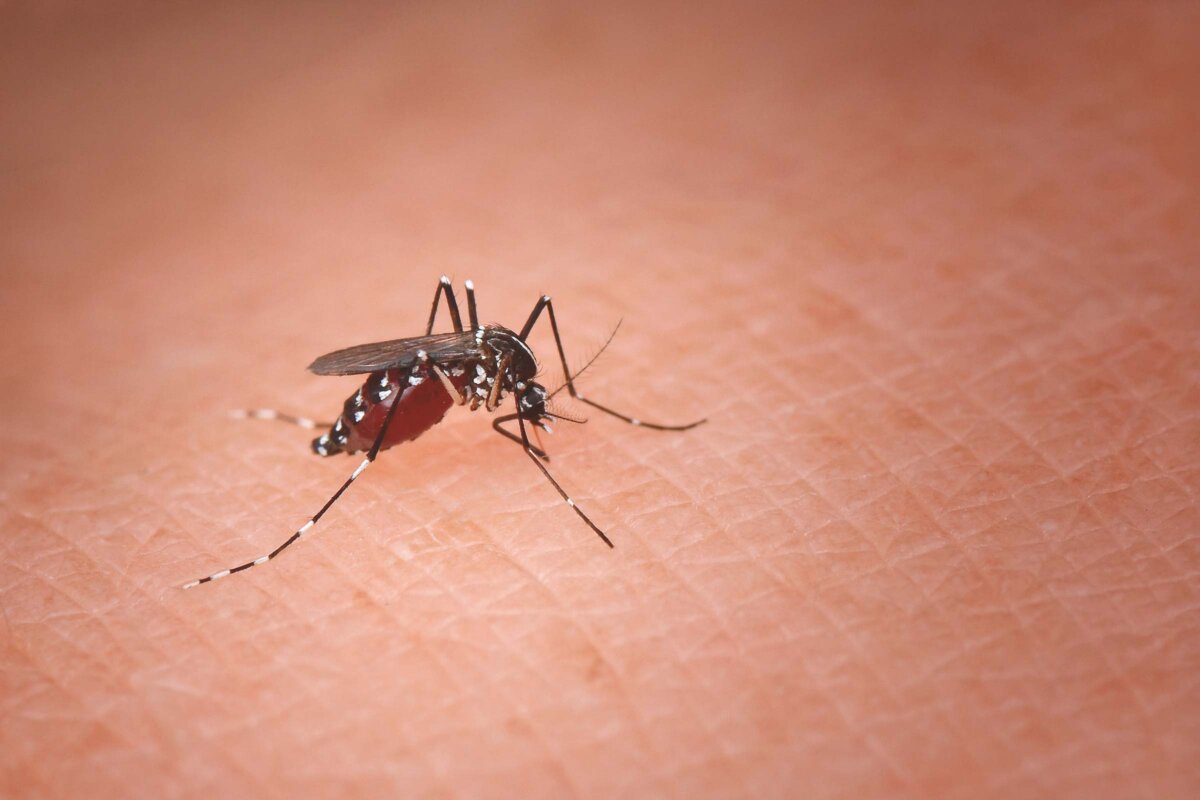
You could be a five-star buffet for one mosquito species and completely invisible to another, and scientists now know why.
A new study from Florida International University (FIU) found that three of the world’s most dangerous mosquito species each hunt humans using a different chemical playbook, zeroing in on distinct compounds in skin oil, sweat, and even the bacteria living on your body.
No single person was equally attractive to all three species, suggesting that each mosquito type responds to distinct human scent cues. Each species seemed to be chasing something different.
“Understanding mosquito attraction is extremely important because every mosquito-borne infection begins with a mosquito successfully finding and biting a host,” Luisa Messenger, a mosquito researcher and professor of public health at the University of Nevada, Las Vegas, who was not involved in the study, told The Epoch Times.
Many people picture mosquitoes as one generic pest. In reality, Messenger said, “there are over 3,500 species of mosquitoes, and only a minority of those prefer to bite humans.”
3 of the Most Dangerous Mosquitoes
Researchers tested 119 volunteers against three species responsible for some of the world’s most serious diseases: Culex quinquefasciatus, the most common disease-carrying mosquito, also known as the southern house mosquito, and a primary spreader of West Nile virus.
They also tested two Aedes mosquito species: Aedes aegypti and Aedes albopictus, both carriers of yellow fever, dengue, Zika, and chikungunya. Aedes mosquitoes are recognized for their bold white stripes.
Each species seemed to be chasing something different:
Southern house mosquitoes, which bite after dark, tracked people based on their skin’s bacterial makeup rather than the skin itself. Some bacteria made people more attractive; others seemed to actively repel the mosquitoes.
Aedes aegypti preferred people with little to no added scent, such as perfume or lotion, and skin that was naturally low in certain compounds called cyclic alcohols, monoterpenes, and ketones. It also showed a slight preference for men during the day.
Aedes albopictus, which bites during the day, was drawn to skin compounds that smell like plants—the same types of molecules that give fruit, flowers, and leaves their scent. Human skin releases trace amounts of these too, through diet, metabolism, and the bacteria living on us.
The researchers said that bacteria on the skin could help explain why different people have different skin compounds, though other studies have also pointed to genetics, diet, and lifestyle as factors that influence the scent on people’s skin.
Previous research involving Aedes aegypti found that people who are highly attractive to mosquitoes have higher levels of certain carboxylic acids on their skin, Dr. Luis Marcos, an infectious disease physician at Stony Brook Medicine in New York, who was not involved in the study, told The Epoch Times.
“This attractiveness can remain relatively stable over several years,” he added.
Your Skin’s Bacteria Do More Than You Think
Human scent is more complicated than most people realize. It’s made up of more than 1,000 different chemicals, and scientists still don’t know what most of them do.
For the southern house mosquito, the real target wasn’t the skin; it was the microbes living on it.
Bacteria like Staphylococcus and Corynebacterium species feed on human sweat and sebum, and as they break these secretions down, they release acids and ammonia. These byproducts act as a scent trail that southern house mosquitoes can follow after dark.
Conversely, a more diverse skin microbiome or the presence of specific strains like Pseudomonas or certain Micrococcus strains seemed to work in the opposite direction, producing compounds that mask human odors or actively deter mosquitoes.
“It is clear to me now that our skin microbiomes define our human odor signature,” FIU neurogeneticist Matthew DeGennaro, who led the study, said in a press statement. “Each species found its own way to decode that signature.”
By understanding these species-specific scent cues, the researchers plan to develop targeted repellents and public health strategies that address the preferences of mosquito species most common in a given area.
Attraction is only one component of disease risk, Messenger said. Whether someone becomes infected also depends on which mosquito species are present, whether they are carrying a pathogen, how frequently they bite, and a person’s existing immunity.
“What this study adds is the recognition that we probably should not think about ‘mosquito attraction’ as one universal phenomenon,” she added.
Factors Known to Increase Mosquito Attraction
Some everyday habits and dietary factors may make your skin chemistry more appealing to mosquitoes:
-
Exercise: Heavy sweating produces lactic acid and ammonia, which certain skin bacteria turn into strong mosquito attractants, especially for Aedes aegypti Asian tiger mosquitoes. Fitness enthusiasts also exhale greater volumes of carbon dioxide, another long-range beacon for virtually all blood-feeding mosquito species.
-
Alcohol: Alcohol raises skin temperature and widens blood vessels near the skin. A study found that beer drinkers were 44 percent more attractive to these insects than people who had abstained from drinking beer for at least 12 hours.
-
High-Protein or High-Fat Diets: These can increase oil production in the skin, which bacteria convert into acids mosquitoes are drawn to.
-
Oversanitization: Stripping your skin with frequent use of harsh antibacterial soaps destroys its microbial diversity, often allowing populations of robust, odor-producing Staphylococcus bacteria to rebound first—producing a scent the blood-sucking bugs home in on.
How Best to Prevent Mosquito Bites
Until species-specific repellents exist, Marcos said the best advice is to use proven preventive measures, as described by the Centers for Disease Control and Prevention. These measures include:
-
Use a suitable repellent registered by the Environmental Protection Agency, such as DEET, picaridin, IR3535, oil of lemon eucalyptus/PMD, or 2-undecanone, according to the product label.
-
Wear long sleeves and long pants, particularly during periods of high mosquito activity.
-
Consider permethrin-treated clothing and gear. Permethrin is an insecticide and should not be applied directly to the skin.
-
Eliminate standing water around the home where mosquitoes can breed.
-
Use protection during both the day and night, as mosquitoes can bite at either time, depending on the species.