



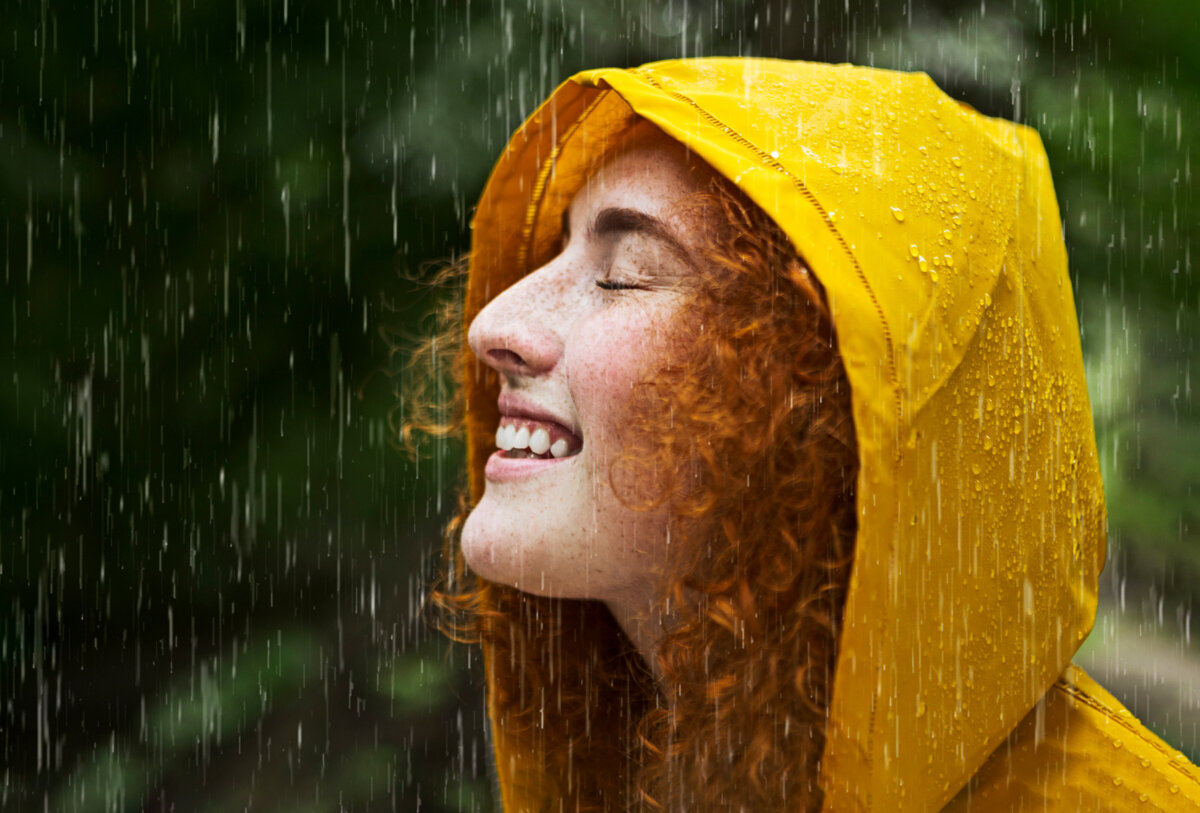
Some people see rain as an interruption. For others, it is a multisensory experience. The sound of rain, the cooling air, and the earthy scent create a pause—and something begins to shift inside them.
Rain’s natural stimuli reach the body and support well-being. Its restorative power lies in the way it engages multiple senses at once, changing what you hear and smell, and even the chemistry of the air.
“Nature can affect us profoundly—and rain is one aspect of this broader picture,” Trevor Harley, emeritus professor of psychology at the University of Dundee, told The Epoch Times.
The Sound That Calms Your Brain
The gentle, continuous sound of rainfall resembles what’s called “pink noise”: a steady blend of high and low frequencies that masks distracting background noise. Rain’s soft sound does the trick without requiring the listener’s conscious effort.
The sound relaxes your brain. The moment you hear rainfall, your brain’s electrical rhythms shift, increasing alpha waves. Alpha activity signifies relaxed wakefulness: a state in which the brain is calm but still fully alert. Sitting in meditation for a few minutes also increases alpha waves, leading to a calm, attentive state.
In a 2024 study, researchers fitted 25 people with EEG caps and played them a range of relaxing natural sounds. Of all the natural sounds they tested, rain produced some of the strongest alpha-wave activity.
Natural sounds are also emotionally grounding. In a 2026 study, researchers tracked brain activity in 40 psychiatric healthcare workers before and after listening to rain, birdsong, and insect sounds. Rain specifically helped participants feel mentally disengaged—shifting them toward a calmer, less wound-up mental state.
These effects, though modest, explain why “rain recordings are so widely used as ambient and sleep sounds,” Harley said.
Beyond its soothing sound, rain also has a pleasant smell.
The Smell That Triggers Memory
The earthy scent following rain showers is called petrichor. Geosmin, a microbial compound in the soil, is released into the air when raindrops hit dry ground. The human nose is remarkably sensitive to geosmin—detecting it at exceptionally low levels. Its unique odor may induce sensations of comfort or nostalgia, influencing your mood. This happens because odors trigger your brain.
Our sense of smell has a shortcut to emotion that other senses don’t. The simple act of smelling can almost directly activate the amygdala and hippocampus, the brain regions closely tied to emotion and memory. This is why a single smell can evoke memories and emotions. A smell linked to pleasant memories can increase positive feelings and reduce markers of stress and inflammation.
For many, the smell of wet earth is linked to childhood memories of gardens, holidays, and play, which may explain why it often boosts mood.
In a small study, participants mixed sterilized soil that either contained the petrichor-contributing bacterium Streptomyces rimosus or lacked this microbe for five minutes. The participants who handled soil rich in petrichor compounds showed higher serotonin in their blood and greater alpha activity.
Rain’s effects extend beyond sensory experience.
The Invisible Chemistry in the Air
Rain does not just clean and cool the air—it also changes its chemistry.
When raindrops hit the ground, they break and splash into tiny, mist-like particles, and some of those particles carry negative charge.
Gases in the air, such as oxygen and carbon dioxide, really like to pick up these spare electrons, forming what scientists call negative ions, Niek Buurma, a physical chemist at Cardiff University, told The Epoch Times. Splash-driven charging is known as the Lenard effect, and it is the reason the air near a waterfall, a forest, or a fresh rain shower feels different to breathe.
Negative ions are abundant in cleaner natural places like waterfalls, forests, and rainy environments, and researchers have studied them for decades with mixed results. The mechanisms behind why negative ions may improve health remain unclear, though research suggests they may influence multiple body systems, including inflammation, cognition, and cardiovascular function.
One study found that short-term exposure to negative air ions was associated with higher heart-rate variability (HRV)—the differences in time between heartbeats. Higher HRV usually reflects that the heart can adjust its rhythm more flexibly in response to stress and recovery.
Higher levels of negative air ions have been linked to improvement in seasonal depression symptoms than lower levels, although the mechanism remains unclear. Some evidence also suggests that negative ions may help reduce inflammation.
What underlies rain’s restorative effects?
Why Rain Feels Restorative
Beyond physical sensations and atmospheric chemistry, rain may make us feel good for a simpler reason: It gives the busy mind a break.
Psychologists call this “soft fascination”—the gentle, effortless attention we give to clouds, water, or falling rain that engages us without draining us mentally.
A related stress reduction theory suggests that being around natural settings helps the body and mind become less stressed because natural scenes are usually perceived as non-threatening. “Exposure to natural scenes can therefore reduce physiological arousal, including heart rate, blood pressure, and other markers of stress,” Harley, also the author of “Head in the Clouds: How the Weather Affects Our Minds and Mental Health,” said.
Rain, like many other natural phenomena, can also evoke an emotion beyond relaxation: awe.
Experiences of awe have been associated with “greater wellbeing, humility, and a stronger sense of connection with other people and the natural world,” Harley said. Watching dark clouds gather, rain sweep across a landscape, or sunlight break through after a shower can remind us that “we are part of something much larger than ourselves.”
For centuries, cultures and traditions have seen rain through the lens of awe, renewal, and connection.
Modern routines can make sunshine seem preferable and rain something to be avoided—“but emotional wellbeing may benefit from embracing the full range of weather,” Harley said.
Rather than labeling sunshine as “good” weather and rain as “bad,” it may be healthier to see each as inviting a different state of mind, he said.
Making Rain Healing
Rain is “not universally therapeutic” because its effects depend on personality, culture, previous experience, and circumstances, Harley said. “Just as we have different personalities, we also have different ‘weather personalities.’”
For most people, a few minutes of deliberate attention is enough to feel the difference. Next time it rains, Harley suggests practicing a simple “rain mindfulness”:
-
The soft rhythm of rain on a window, roof, or leaves
-
The earthy scent of wet soil
-
The cooler air against your skin
-
The shifting reflections in rain puddles
Gentle attention can encourage present-moment awareness, he said.
In short, rain does not have to be a proven medical cure to be meaningful. Its value lies in the way it changes our sensory world—giving us a reason to pause, redirect our attention, and step away from the day for a moment.
Making weather part of the experience, rather than an obstacle, is the key, Harley said.