



Dr. Nicholas Norwitz writes a best-selling science newsletter, StayCurious Metabolism, where he strives to empower readers with deep knowledge of cutting-edge health science.
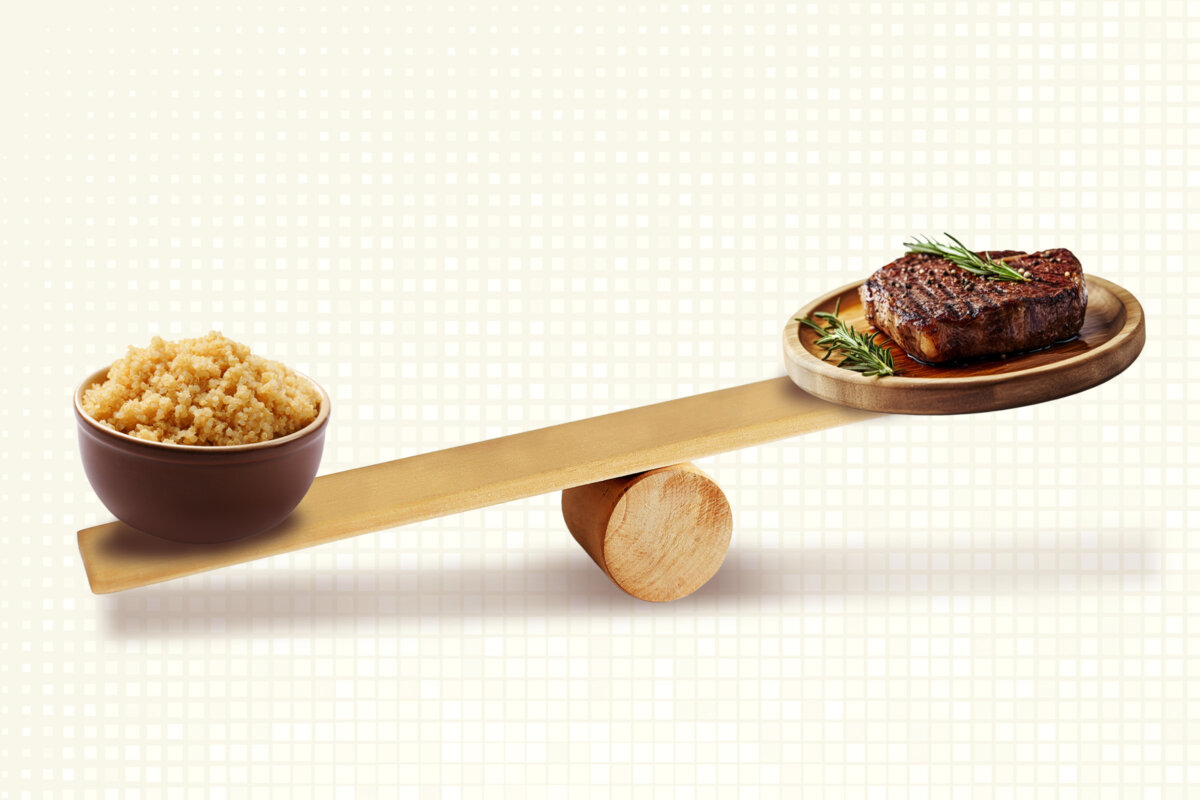
What’s healthier for your heart and liver: bacon and eggs, or oatmeal and quinoa?
It seems like a bizarre question, and it certainly offends conventional wisdom about what makes up a “healthy diet.”
However, a major six-month randomized controlled trial just published in a top science journal pitted versions of these diets head-to-head.
The study compared:
-
A low-carb, high-fat ketogenic diet (4 percent calories from carbs)
-
A Mediterranean diet (50 percent calories from carbs)
-
A low-fat plant-based diet (70 percent calories from carbs)
This was unusually rigorous for a nutrition trial.
Researchers recruited participants with obesity, provided all their meals, designed each diet to cause the same amount of weight loss, and followed them for six months.
They performed a battery of metabolic assessments, including MRI and DEXA scans and advanced metabolic challenges you can’t get at your average doctor’s clinic.
And the Winner Is …
I’ll reveal the punchline to you:
Across several important cardiometabolic outcomes, the low-carb, high-fat ketogenic diet won.
All three diets caused similar weight loss—approximately 10 percent. However, the ketogenic diet produced greater reductions in:
-
Liver fat
-
Triglycerides (fat in the blood)
-
Inflammation markers
-
Insulin resistance scores
The authors concluded: “These results demonstrate that a very-low-carbohydrate diet has greater cardiometabolic benefits [as compared to a Mediterranean or very-low-fat diet] … in people with metabolically unhealthy obesity.”
To pick out just one metabolic marker, the ketogenic diet caused a 21-point improvement in lipoprotein insulin resistance (LP-IR), compared with only a 7-point improvement with the Mediterranean diet and a 3-point improvement with the low-fat diet.
LP-IR is an incredibly powerful marker of cardiovascular risk. In fact, in another large cohort study, LP-IR is approximately14 times more strongly associated with cardiovascular risk than LDL cholesterol.
To simplify and clarify the takeaway here: If you were to eat a diet low in carbohydrates but rich in cholesterol and saturated fat, and as a result your LP-IR improved substantially while your LDL cholesterol went up a little bit, it would be reasonable to say that, overall, you were still improving your liver, heart, and metabolic health.
That said, I’ll note that in this randomized controlled trial, no diet improved LDL or ApoB more than any other.
Here’s where the study gets almost comical.
What Did the Groups Actually Eat?
In the methods section, the researchers report:
-
The ketogenic diet group ate meals including omelets with bacon and sausage, cheesy beef, pulled pork, and pecan-crusted tilapia.
-
The Mediterranean diet included meals such as chicken pesto pasta, quinoa with beans and corn, and minestrone.
-
The low-fat, plant-forward diet included meals such as apple-banana oatmeal, fruit smoothies, and red beans and rice.
So yes, in this rigorous six-month, weight-loss-matched, randomized controlled trial, the diet that included bacon, sausage, and cheesy beef produced better results in cardiometabolic health than diets built around foods we conventionally call “heart healthy.”
Talk about a spicy conclusion.
The Real Takeaway
Now, we could end here, but I think you deserve some further nuance to help reconcile these results with what you might have been told before. Because I actually think the conclusion is fairly straightforward—and it’s not to literally trash the quinoa and load up on bacon. Rather, it’s that metabolic context matters.
What I mean by metabolic context is: Who is eating the diet, and what are their metabolic needs? Here, the participants were people with overweight or obesity, which describes a majority of Americans. This is where the biology of obesity becomes really important.
Here’s what happens:
-
The liver is already carrying too much fat. Insulin sensitivity is impaired, making it harder for the body to handle incoming carbohydrates.
-
So when you eat carbohydrates, they are broken down into glucose, which enters the bloodstream.
-
Insulin rises to manage the glucose. Normally, insulin helps move glucose out of the blood and into cells where it can be used or stored. However …
-
Insulin resistance gets in the way. Glucose is harder to clear, insulin levels rise higher, and the already-overloaded system struggles to handle the incoming fuel.
-
The liver is also prone to turn more of those carbohydrates into new fat, a process called de novo lipogenesis.
The result: too much sugar and too much fat accumulating in the system and circulating in the blood. I think of this as “milkshake metabolism.”
Here’s the counterintuitive part: the solution is not to stop eating fat simply because there’s too much fat in the liver.
If impaired carbohydrate handling is a major part of the metabolic problem, dramatically reducing the carbohydrate entering the system can reduce the body’s glucose load and lower insulin exposure. That can help reduce liver fat and improve insulin sensitivity, even when the diet itself contains substantial amounts of fat.
That explains the results of the trial where a low-carb, high-fat ketogenic diet—even one where bacon, sausage, and eggs were happily laid on the table—beat a Mediterranean diet and plant-based diets higher in carbs.
This is why metabolic context matters so much.
For someone with obesity, fatty liver, and insulin resistance, reducing carbohydrates can provide a distinct metabolic advantage, sometimes even when that means cutting foods we ordinarily consider “healthy,” such as fruit or carbohydrate-rich whole foods like quinoa.
The lesson isn’t that bacon is healthy, and quinoa is unhealthy. It’s that foods don’t enter metabolic vacuums. They enter people. The metabolic state of that person can completely change the equation.
So stop asking, “What’s the healthiest diet?” Start asking, “What’s the healthiest diet for whom?” Or, better yet, “For you?”
All that said, I definitely give bacon the edge over quinoa when it comes to taste. No question.
Views expressed in this article are the opinions of the author and do not necessarily reflect the views of The Epoch Times. Epoch Health welcomes professional discussion and friendly debate. To submit an opinion piece, please follow these guidelines and submit through our form here.