



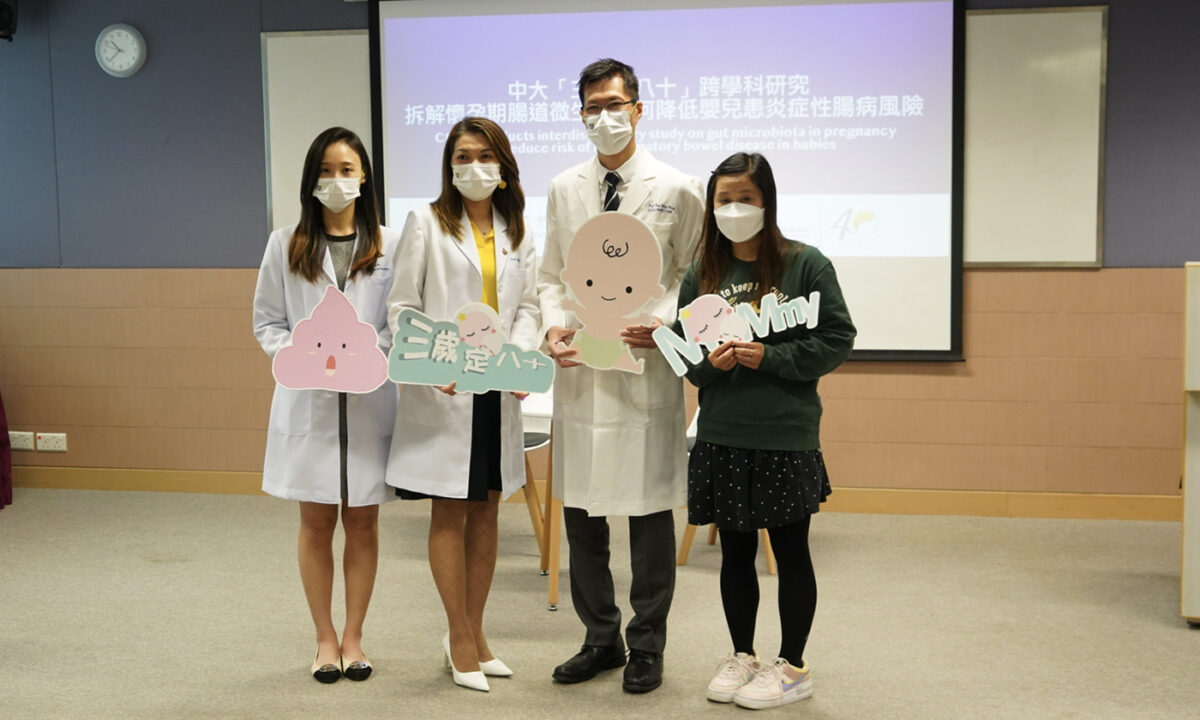
A research team from the Faculty of Medicine of The Chinese University of Hong Kong (CUHK) held a press conference Dec. 12, to talk about a clinical study it is conducting to assess how various factors, from fetus to infant, affect children’s long-term health, including the mother’s gut microbiota (range of microorganisms) during pregnancy. The researchers are urging mothers with inflammatory bowel disease (IBD) to join the study that could reduce the risk of related diseases in the next generation.
The research team said that infancy is the golden period for regulating the intestinal microbiota to prevent diseases, and the intestinal microbiota is one of the key factors of IBD (including Crohn’s disease and ulcerative colitis). Pregnant women with IBD usually have an altered gut bacterial mix and an imbalanced gut microbiota.
The research team pointed out that Crohn’s disease generally occurs during childhood and early adulthood. The cause of the disease is not yet completely clear, but more and more evidence points toward the health of pregnant women, factors of perinatal exposure, and factors during infancy and early childhood affecting gut flora, and all have an important and long-term impact on children’s immune and metabolic systems, which may make them more susceptible to Crohn’s disease or other immunity-related diseases.
Preliminary data shows that mothers with IBD have a lower diversity of gut microbiota compared with healthy mothers, the team said. In addition, the team also discovered some microorganisms that can be passed from mother to child during pregnancy. For example, mothers with IBD are more likely to pass pathogenic bacteria and fungal pathogens to fetuses, which increases the risk of intestinal inflammation and future IBD in babies.
The research team is also developing new health interventions to modulate the gut microbiota to reduce the risk of disease in infants.
Pregnant women with inflammatory bowel disease, their husbands, and their babies are being recruited for this study. The team will follow up with the participants’ infants for up to 18 months and collect a wide range of relevant clinical data and a series of samples, including parental stool, saliva, placenta, umbilical cord blood, meconium, infant stool, and breast milk.
Target Is to Turn Gut Microbiota into ‘Medicine’
Professor Siew Ng pointed out that the intestinal microecology of newborn babies has already begun to colonize with bacteria while in the mother’s womb, which affects their risk of developing diseases such as IBD in the future. Therefore, researchers are actively exploring the sources of these microorganisms.
Professor Ng added that the research goal is to transform the intestinal flora into medicine, thereby reducing the pain and burden caused by certain diseases. The most advanced technology is being applied to improve the care available to mothers during pregnancy to better monitor the health of the fetus.