



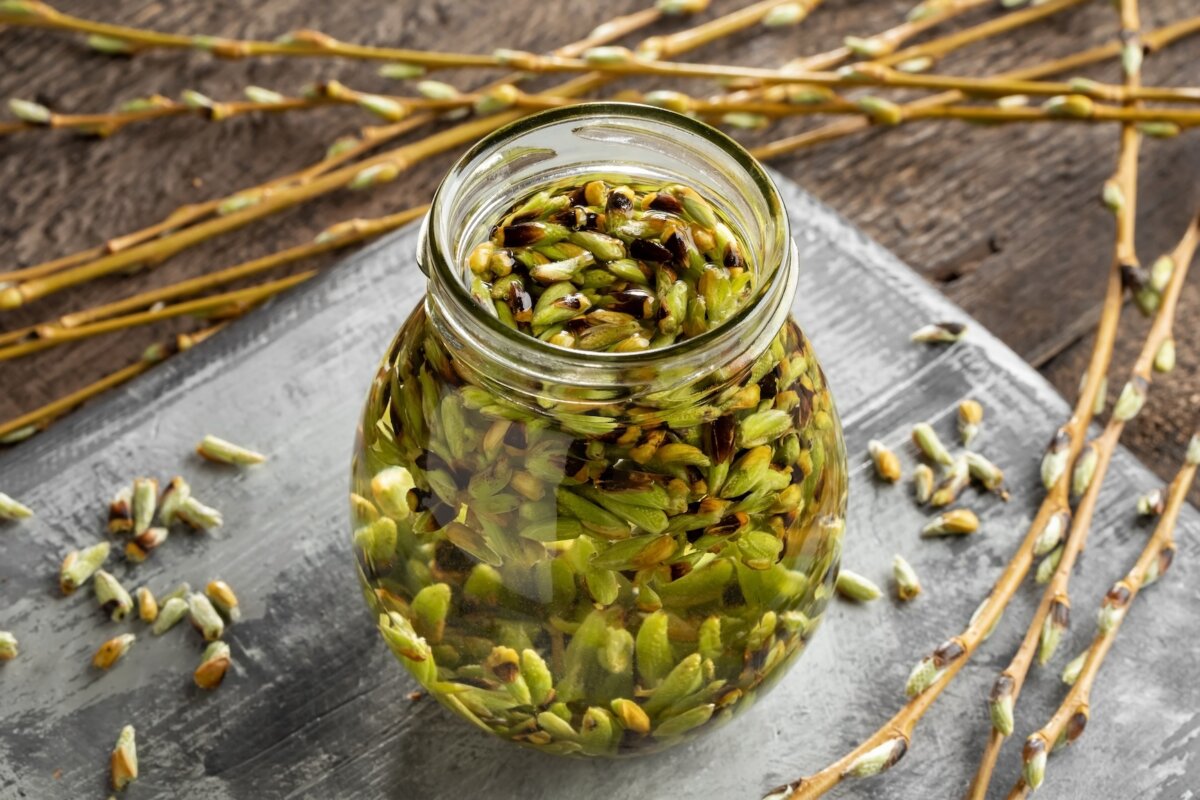
Those who have discovered the healing power of plants will be enthused to learn about gemmotherapy. Generated from tree or shrub buds, these remedies can be sprayed directly into the mouth, where tender mucus membranes absorb their medicinal qualities. The tonic’s ease of use makes it appropriate for everyone, including children and the elderly.
In the European alternative health industry, gemmotherapy is prized alongside other plant-derived medicines (phytotherapies) and aromatherapy, with about 3.4 million euros (approx. $3.7 million) in sales in France in 2021 alone and growing popularity in Germany, Switzerland, Austria, and Romania.
The Efficacy of Plant-Bud Medicine
Gemmotherapy—derived from the Latin word “gemmae” (buds)—is a natural immune booster, according to a 2023 article in the journal Antioxidants, which notes its antifungal, antimicrobial, anti-inflammatory, and antioxidant agents depending on the buds used. It also has hepatoprotective, detoxifying, and neuroprotective properties, which aid in cognitive function, neuronal stimulation, and an improved ability to focus.
Gemmo products can also aid skin health, may have anti-aging effects, and are soothing to the skin—all depending on which tree or shrub buds are used in the production of the tonic.
How Does Gemmotherapy Work?
Gemmotherapy preparations contain active plant metabolites, which are compounds involved in the growth and development of the plant, as well as their survival specific to the plant’s environment. High amounts of proteins and amino acids in the growing tips of the plants turn the macerations (extractions) into a source of phytochemicals (bioactive plant compounds), which are medicinal agents that promote health in various ways.
Another competitive advantage of bud derivatives compared to other herbal products is that young shrub or tree buds haven’t yet been exposed to as many environmental toxins.
Bud Derivatives as Future Generation Nutraceutical
In 2020, Cambridge Scholars Publishing released a book titled “Gemmotherapy, and the Scientific Foundations of a Modern Meristemotherapy.” In it, the authors reveal that the therapy’s significance lies in the astonishing plant exploits, which are based on special “totipotent” cells named “meristem.”
In the author’s view, bud derivatives are the “future generation of food supplement[s].” People should value them for their capability to continuously produce new identical cells through “the miracle of mitosis.”
Bud extractions are seen as a highly efficient nutraceutical to address issues such as “heart- and cardiovascular disease, memory and cognitive problems, as well as joint, articular, neuromuscular pathologies,” according to one of the book’s diagrams.
Relatively New Plant Product
In the grand scheme of alternative medicine, the herbal extraction of buds is a relatively recent technique.
Renowned Belgian doctor Pol Henry developed gemmotherapy in the 1950s. In 1965, the improved method was added to the French Pharmacopoeia and listed under “glycerol macerates,” as glycerin and alcohol are used for the extraction. Dr. Henry called his practice “Phyto-Embryotherapy,” as the buds of a plant contain the complete embryonic plant tissue.
Gemmotherapy belongs to a newly researched category of plant products. Despite being developed in the ’50s, research was relatively scant before a 2017 study published in the Journal of Chromatography.
Newer Research—Gemmotherapy ‘Most Recent Therapeutic Technique’
In a 2023 animal study, an extract of black currant buds was analyzed for its antioxidant, anti-neuroinflammatory, and anti-neurodegenerative properties. With nearly 133 phytonutrients, black currant buds were found to be specifically unique, leading researchers to suggest that they could be a valuable source for alternative therapies.
Corylus avellana, the common hazelnut, displayed promising results in another animal study published in Biomedicines. The model examined mice suffering from liver fibrosis and diabetes. Treatment with bud derivatives was able to “significantly restore the liver architecture,” enhance liver function, balance antioxidants, and lower collagen deposits in the organ. The research team concluded that hazelnut’s “gemmotherapy extract may have anti-fibrotic effects and could be useful in the prevention and treatment of liver fibrosis.”
A group of 14 scientists examined the extracts of buds from olive, sweet almond, and black mulberry and “identified 42, 103, and 109 phytonutrients,” respectively. In the study, flavonoids accounted for the largest amount of metabolites found in the extracts, which by themselves contain anti-cancer, anti-inflammatory, antioxidant, neuroprotective, cardioprotective, and antiviral properties.
Gemmotherapy in Obstetrics
A 2021 paper published in the Journal of Medicine and Life evaluated several phytotherapy techniques founded in evidence-based medicine, including gemmotherapy. The team of researchers argued that during pregnancy especially, there is no room for error. To place their trust in herbal medicine, pregnant women and obstetricians need a scientific basis for phytopharmaceuticals.
Five plant gemmo macerations were specifically mentioned for beneficial use during pregnancy:
1. Raspberry: With its high phytochemical content, Rubus idaeus is one of the most valuable remedies during pregnancy.
2. Viburnum: This flowering shrub is used similarly to raspberry, and may protect against premature birth.
3. Crabapple: This “acts on the hypothalamic-pituitary-adrenal gland and ovarian axis, having a progesterone-like effect,” according to research cited in the Journal of Medicine and Life in 2021. It can be used as a progesterone supplement, as well as an effective treatment against heartburn.
4. Black currant: This well-studied bud derivative has antiallergic properties, has been found to enhance the immune system, and works as an anti-inflammatory agent, especially in the respiratory, urogenital, and digestive systems.
5. Linden/Basswood: This extract works via the autonomic system and has a calming effect, especially when insomnia or anxiety are present.
Plant Selection Based on Healing Properties
Immune Boosting
Most bud derivatives are immune stimulators because they are high in nutrients such as vitamins, trace elements, and minerals.
However, during pollen and allergy season, a combination of the gemma-macerations of birch, which functions as an antihistamine, and black currant, which lowers inflammation, may be an especially useful home remedy.
Anti-inflammatory/Arthritis/Gout/Rheumatism
Gemmotherapy with a blackberry tonic is indicated for the elderly and those suffering from lung disease and bone disorders. In addition, the maceration can help alleviate pain connected to arthritis, ease chronic bronchitis, and work against shortness of breath.
A maceration of ash buds is helpful for people suffering from painful and swollen joints, as well as gout. It also strengthens kidney function.
Poplar is used for people who suffer from frequent cold feet or rheumatism. For the latter, a poplar salve could aid as an external agent combined with the internal use of gemmotherapy.
Detoxification
Stimulation of the excretory system furthers the elimination of toxins, which leads to a rekindled sense of vitality, providing a kick-start for new healing. Plant remedies of birch, ash, and hazelnut help accomplish this goal.
Birch could be used as a four-week “spring cleansing regimen” with two to three sprays of gemmotherapy tonic directly into the mouth each morning and evening.
Skin Health
Macerations of elm and walnut buds can help with skin problems such as acne, psoriasis, eczema, and atopic dermatitis.
Be aware though that walnut should always be taken as a single-preparation, meaning not in combination with other remedies. Wait at least 30 minutes before adding another tonic.
Making Your Own Gemmotherapy Tonic
Spring is the perfect time to go outside, gather buds, and make medicine.
Gathering the Buds
Note that the quality of the finished product is affected by a couple of factors:
- The quality of the raw products—in this case, where the tree or shrub is growing. Be aware not to gather buds from plants that are directly located next to a busy street or in an area of high environmental pollution.
- The appropriate time of collection. As for the correct time, the stage of the buds should be right before opening. It is OK if there is already a little green showing, but the bud must still be closed.
Different trees and shrubs can also vary in their time of “bud ripeness.” For example, elms, birches, and hazelnuts are on the earlier side of the gathering window, whereas basswoods and walnut trees bud later.
Depending on spring’s weather and your location, the gathering time of tree and shrub buds can start as early as January in warmer climates. For those further north and in colder zones, it can start as late as March. A good rule of thumb is to keep a watchful eye on the plants that you would like to harvest from.
Another tip is to familiarize yourself with the plants that surround you when they still carry leaves. This ensures that you correctly identify trees or shrubs. You could even tag the tree in the fall, which is a helpful way of knowing exactly what plant to harvest from in early spring when they look very different.
After locating the correct buds at the perfect gathering time, simply use two fingers to gently pinch them off. Allow at least one bud from each bud cluster to remain on the branch to safeguard the tree and guarantee its continued growth.
In case of doubt, for gemmotherapy, you can choose flower or leaf bud material—both carry the embryonic material and medicinal qualities of the entire plant.
Preparation Techniques
Ensure quick processing of the gathered material. If that is not possible, you could freeze the buds and process them at a later point. However, in this case, fresh maceration is preferred and strongly recommended.
- One gram of budding material suffices for the preparation of a home remedy. Depending on the size of the buds, this can be as little as one bud (or even half of it) or many tiny little ones. Use entire bud(s) or cut or crumble them into smaller pieces.
- Add 10 milliliters (ml) of glycerin and 10 ml of alcohol (70 percent) to a small amber-glass bottle—macerating (allowing it to extract) at a ratio of 1 part buds to 20 parts liquid.
- Set the mixture in a warm area without direct sunlight and shake it at least once a day for three weeks.
- After the three-week maceration period, dilute at a 1:10 ratio in 16 percent water, 34 percent alcohol, and 50 percent glycerin to create the finished gemmotherapy remedy, mixing with a plastic spoon.
- Fill into a dark glass spray bottle for ease of use.
- Remember to label your preparation—and only produce one preparation at a time. No mixing of plant material (buds) in this technique!
Usage
Take your gemmotherapy maceration two to three times per day—adults two to three sprays, children (7 and up) one to two sprays. As mentioned earlier, you can spray the remedy straight into the mouth, or mix it alternatively into a small glass of water, and sip it slowly.