



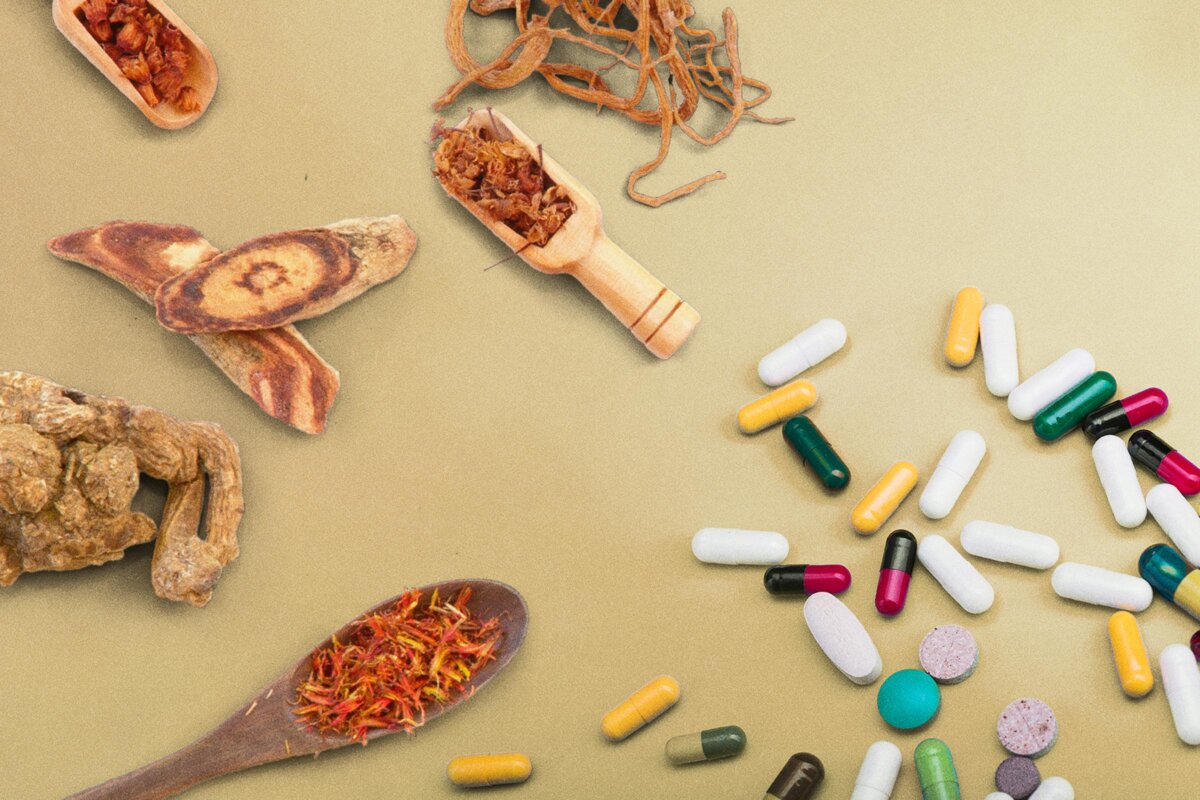
At first glance, herbal medicine may seem very different from conventional medicine. Nevertheless, both approaches often complement each other in modern health care settings.
Within the integrative medicine service at Memorial Sloan Kettering Cancer Center (MSKCC), for example, the worlds of herbal and cutting-edge conventional medicine work together. There is a board-certified clinical herbal pharmacist who works directly with physicians and patients to assist with all herbal questions and recommend herbal treatments. The pharmacist also manages the herbal formulary list, which consists of several traditional Chinese medicine (TCM) herbal formulas used to manage symptoms of disease, along with several other supplements such as turmeric, ginger, and turkey tail mushrooms.
“Both pharmacists and herbalists are deeply patient-centered, with a shared goal of supporting the well-being of those they serve,” Yen-Nien (Jason) Hou, a pharmacist, TCM herbalist, and coordinator of the MSKCC Herb Information Center, told The Epoch Times.
Combine Herbal Benefits
Although some research suggests that combining herbal and conventional medicines can benefit patients, Hou noted that more industry funding is needed to determine how these combinations might help specific groups of people with chronic diseases.
He cited studies assessing the combined benefits of herbal and prescription treatments.
For instance, a review authored by Hou and his team examined four observational studies published between 2014 and 2023 that investigated breast cancer risk in women with menopausal symptoms and other associated conditions who were administered conventional treatment and TCM. The studies demonstrated that TCM herbal use was significantly linked to lower risks of developing breast cancer.
Moreover, three studies investigated survival in newly diagnosed breast cancer patients administered TCM herbs, finding that adding TCM herbs to conventional medicine practices lowered death risk compared with using conventional medicine alone.
“In Taiwan—where universal health coverage includes both [herbal and conventional medicine]—clinicians have reported improved prevention and survival outcomes among breast cancer patients using a combined approach, as opposed to conventional only,” Hou said.
He emphasized that more rigorous clinical trials in the United States are needed to confirm these findings, which are currently mostly based on observational studies.
Research Backs Herbal Treatments
Naomi Kilbreth, a clinical herbalist and owner of Laurel Tree Wellness in Hebron, Maine, also noted the potential benefits of using both herbs and conventional medicine.
“There are a number of studies demonstrating that certain herbs can be combined with certain medications to increase their effectiveness and may minimize potential side effects.”
She mentioned the essential oil oregano as an example. In a landmark cell study, investigators found that using oregano essential oil plus certain broad-spectrum antibiotics such as fluoroquinolones and doxycycline can make these drugs more effective at lower doses. This effect is known as synergy, which simply means the two substances work better together than they would on their own.
In other words, patients might experience fewer adverse effects—such as dizziness, nausea, vomiting, or light sensitivity—due to lower exposure to antibiotics. The authors noted that this was the first time that oregano essential oil proved effective against a strain of resistant bacteria called ESBL-producing E. coli, which is responsible for urinary tract infections, pneumonia, and blood infections.
Kilbreth noted that turmeric, black cohosh, Baikal skullcap, and astragalus have been found to have synergistic effects with certain chemotherapy drugs, increasing their effectiveness in treating certain cancers. Furthermore, ginger has been found to reinforce the effects of diabetic medications.
In addition to combining certain herbs with specific medications for their synergistic effects, it can also be beneficial to work with herbs that have high concentrations of nutrients to support other affected organs, Kilbreth said. One example is nettle, which has high levels of iron for conditions such as anemia. Another example is hawthorn, which is high in antioxidants and supports heart health when used with hypertension drugs.
Working with relaxing nervines can safely help those who struggle with stress because of their illness, she said. Nervines are herbs that support and soothe the nervous system, such as chamomile and lemon balm.
Manage Herbal Risks
It is integral for both pharmacists and herbalists to watch for potential interactions between medications, supplements, and herbs.
“When a person is aware of those interactions, they can confidently choose herbs that will support their bodies and not interfere with the work of the medications,” Kilbreth said.
The National Center for Complementary and Integrative Health at the National Institutes of Health covers various drug-herb interactions.
Common herbs can interfere with medications in several ways. St. John’s wort, used for mild depression, speeds up the liver’s processing of drugs, making antidepressants, blood thinners, and heart medications less effective. Ginseng can interfere with blood pressure and heart medications.
“The two primary concerns to keep in mind when combining medications and herbs are whether those herbs will increase or decrease the effectiveness of the medications,” Kilbreth said. This effect can be used positively.
She noted that some herbs can boost how well certain medications work, which may allow patients to take lower doses while still achieving the desired results.
Kilbreth also highlighted instances in which the patient is taking multiple medications, limiting the scope of herbal options.
“If a change of regimen is desired, this person should have a conversation with their prescribing doctor and others on their health team to make an informed decision and make any transition carefully.”
In such instances, the addition of nutritional herbs that have very low toxicity levels and support overall health can be considered, she said.
Build Medical Bridges
Sometimes the relationship between pharmacists and herbalists, as well as physicians, leads to strain, Hou said. This tension is often due to miscommunication or differing perspectives on evidence and treatment approaches.
“Bridging these gaps through respectful dialogue and collaboration can lead to a more integrative and comprehensive model of care, ultimately benefiting patients.”
Hou noted that many cancer patients seek a sense of control over their well-being, and in some cases, herbs or supplements may be appropriate.
“Simply advising against the use of herbs or supplements due to limited evidence is often not enough, as patients may continue using them regardless—either assuming natural products are inherently safe or believing their health care provider lacks knowledge in this area. This can sometimes lead to use patterns that inadvertently compromise their treatment.”
By working collaboratively, pharmacists and herbalists can help select safe, individualized regimens that support quality of life and enhance the patient’s adherence to treatment, he said.
At MSKCC, every visit on the integrative medicine service begins with a patient survey that asks about the herbs and supplements they are currently taking. The clinical herbal pharmacist then checks for brands and their quality, all while comparing herbal medications against current medications and cancer treatments. During the initial consultation, the pharmacist discusses patient health goals and whether herbal medications can help them meet these goals. If goals aren’t met, the team and patient can reassess whether to stay on herbal treatments.
Patients should be able to comfortably share with their health team their relationships with herbs and medicines to reduce the risk of negative interactions, Kilbreth said.
She noted that some patients allow their health care providers to discuss their cases directly, which helps improve care—a practice she believes will become more common as people become more educated, self-aware, and involved in making informed decisions about their health.
One useful resource for patients and health practitioners alike is the MSKCC “About Herbs” section, a sprawling database of more than 300 monographs. It contains entries on commonly used herbs and supplements, along with summaries of their purported uses, current evidence, mechanisms of action, potential adverse events, and herb-drug interactions.
Hou also recommended that people who are particularly keen on combining traditional and conventional approaches should seek out specialized pharmacists. He noted that some pharmacists have dual degrees in herbology, which allows them to offer a well-rounded perspective and team-based approach to care.