



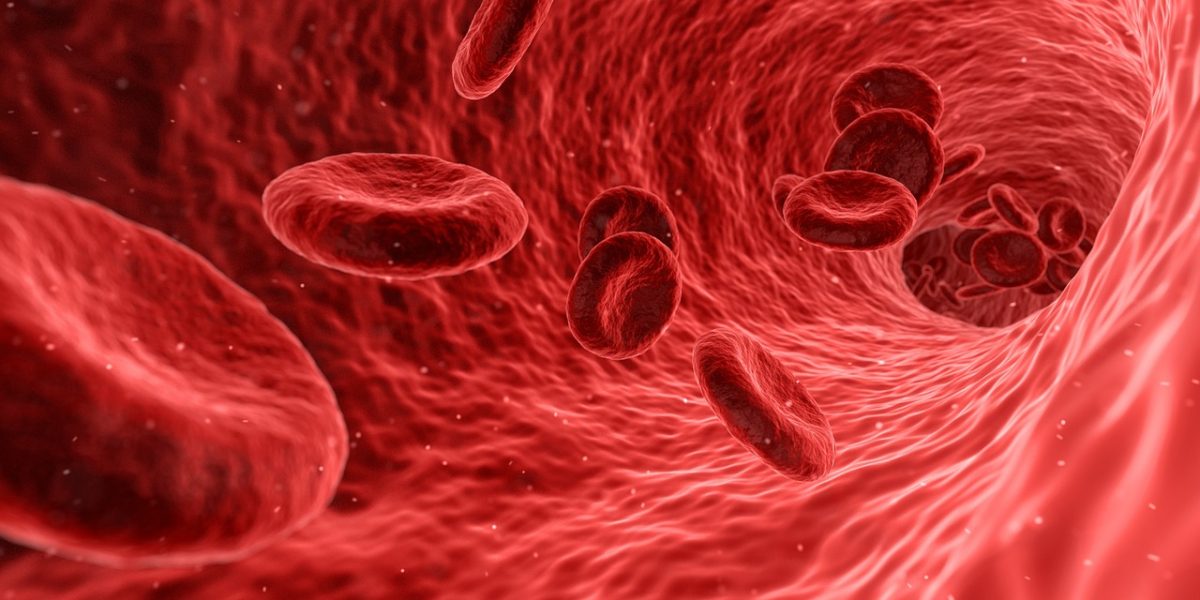
In modern medicine, blood is understood to be the nutritious red liquid that runs through our bodies and maintains their physiological activities. In traditional Chinese medicine (TCM), there are two primary components of blood: nutrient qi (vital energy) and body fluid.
Nutrient qi can be transformed into blood. Body fluid serves primarily as a neutralizer, which finds its way into the blood vessels, where it may also become blood through chemical reactions.
This article explains TCM’s concept of blood.
Production of Blood
The raw materials required to produce blood are a combination of water and grain essence, and kidney essence.
1. Blood From Water and Grain Essence
The transformation of water and grain essence into blood requires action from the spleen, stomach, heart, lungs, and other viscera. When food is transformed by the spleen and stomach, the water and grain essence (including nutrient qi and body fluid) are transferred to the heart and lungs. The water and grain essence combination mix with inhaled air and are converted into the substance of blood, which enters the blood vessels.
2. Blood From Kidney Essence
The liver and kidneys can also transform kidney essence into blood.
Kidneys store essence, and essence produces marrow. Essence and marrow are the essential substances for making blood.
While the kidneys store essence, the liver stores blood. Liver blood can nourish the kidney essence, and the kidney essence, in turn, can transform the liver blood in a repeated cycle. These three elements all need one another. That is why in TCM, people often say the liver, kidney essence, and blood all belong to the same source.
In addition, the warmth of the kidney yang promotes the function of the spleen and stomach, enabling it to produce the essence of water and grain, which then transforms the substance into blood within the heart.
Blood Circulation Pathways
Blood runs through the body inside the vessels, where its circulation continues perpetually. The heart governs the pulse and is the driving force behind blood circulation. Vessels (meridians) are channels for blood circulation. The heart and vessels together form the cardiovascular system.
Originating from the heart, blood circulates into the meridians to collaterals, from collaterals to minute collaterals, and then spreads to all tissues to nourish the body. Once the blood is spent, it flows from the minute collaterals back to the collaterals, then to the meridians, and finally returns to the heart, where the process starts all over again.
Factors Affecting Blood Circulation
The specific functions of the viscera include the following:
- The heart governs the blood vessels, and the heart qi is the fundamental driving force behind blood circulation.
- The lungs are linked to hundreds of blood vessels. In this way, the lungs govern the qi and assist blood flow through the heart.
- The liver governs catharsis, regulates the movement of qi, and, in turn, promotes blood circulation. It also stores blood and regulates blood flow according to the body’s real-time needs.
- The spleen governs blood status and blood’s movement within the vessels.
In these ways, the heart, lungs, liver, and spleen work in unison to ensure the normal flow of blood.
The Role of Qi
Qi and blood go hand in hand. The propelling effect of qi is what powers blood circulation. It also plays the role of anchor, keeping the blood running within the vessels. Qi generates heat, which makes the blood flow smoothly without causing cold stagnation due to changes in outside temperature.
Blood circulation requires a certain stable temperature to run smoothly inside the vessels. If it is too low, the blood will stagnate, resulting in undesirable pathological changes in blood stasis. If it is too high, the blood flow will gain speed, causing it to flow indiscriminately, resulting in pathological changes, such as bleeding.
Smooth vein passage is the basic condition for maintaining normal blood circulation. If it becomes anything like sticky phlegm and blocks the veins, it may lead to poor blood flow or blockage.
Functions of Blood
Blood functions in the following ways:
1. Nourishes the Body
Blood runs through the body via the vessels, nourishing the viscera, meridians, body parts, and tissues so they can perform standard physiological activities.
The effects of properly nourished blood will be evident in the complexion, muscles, skin, hair, senses, and movement.
If blood is sufficient and carries nutrients properly, the complexion will be rosy, the muscles strong, the skin will appear dense, the hair will be hydrated, the senses will be quick, and the movement agile.
On the contrary, deficiency of blood and poor ability to nourish will lead to sallow complexion or chlorosis, muscle atrophy, dry skin, dull hair, numb limbs, inflexibility, and disease.
2. Basis of Cognitive Activity
One’s spiritual and emotional activities are the external manifestations of the viscera’s functional activities, and these are based on qi and blood. The mental and emotional activities can only be normal when the viscera governing the mind are nourished by blood.
If the blood supply is sufficient and the spirit is adequately nourished, one’s mind will be energetic, clear, responsive, and quick. On the other hand, in the case of blood deficiency, mental exhaustion, forgetfulness, insomnia, inability to concentrate, irritability, palpitations, and even delirium, coma, and other diseases will start to emerge.
Views expressed in this article are the opinions of the author and do not necessarily reflect the views of The Epoch Times. Epoch Health welcomes professional discussion and friendly debate. To submit an opinion piece, please follow these guidelines and submit through our form here.