


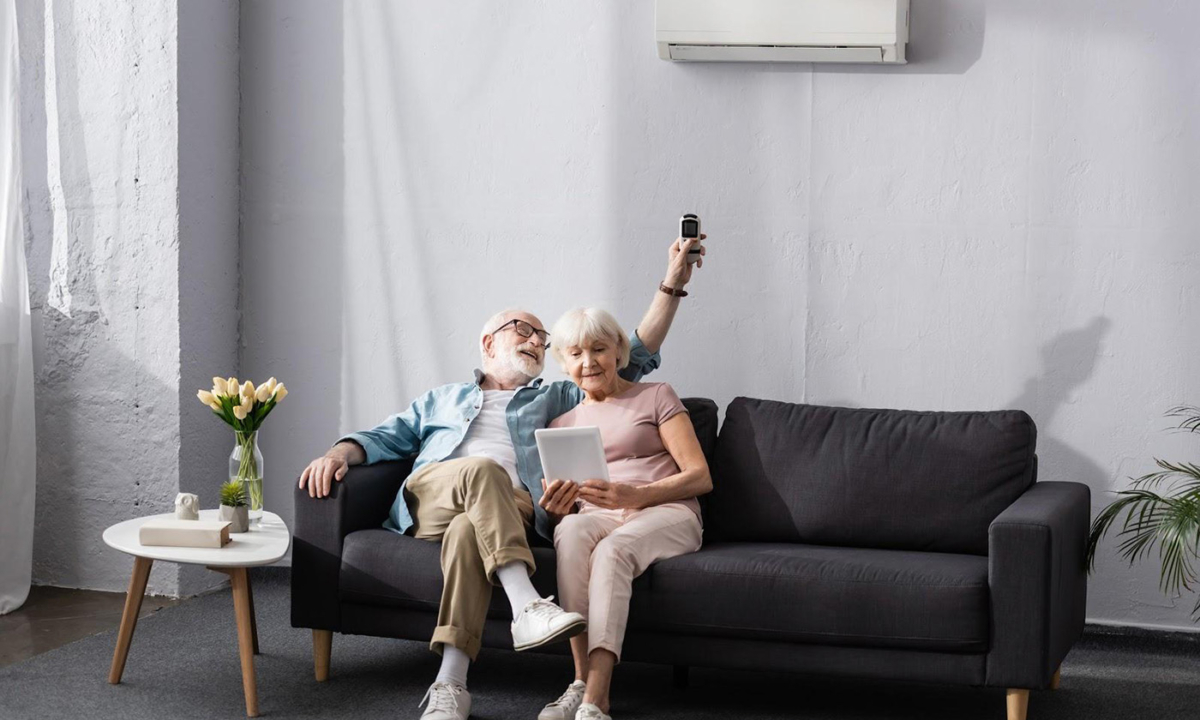
Hot summer days and nights can sometimes feel tamed by being near an air-conditioner. However, cold air blowing directly on the head or back can cause stiffness and headaches, and over time, even increase susceptibility to fatigue and premature aging.
Sleeping in an air-conditioned room can be even more harmful to the body. So, how do we direct an air-conditioned breeze to prevent sickness, while still deriving some respite from intense heat?
4 Tips for Healthy Air-Conditioning
1. Avoid direct airflow onto the body
When blowing cool or cold air from air-conditioning (A/C) vents or electric fans, the air stream must not flow directly onto the body.
The traditional Chinese medicine (TCM) classic text “Yellow Emperor’s Canon of Internal Medicine” says, “Avoid the evil and the wind at all seasons,” which means, try to avoid the wind, cold, and other external “evils,” and do not let them invade the meridians, bones, and muscles.
Many people enjoy letting the cool and sometimes cold breeze from an A/C vent blow directly on the head or back, which can result in headaches, stiff shoulders, neck pain, and physical fatigue.
According to TCM, the back of the human body is where the Du meridian and the Bladder meridian pass, and these two meridians are in charge of people’s yang (aspects that are moving, outward, ascending, warm, and bright)—in other words—if the back is blown cold for a length of time, it will damage the yang energy passage, weaken immunity, and even cause repeated colds and allergies.
Some wake up on summer mornings burdened with headaches, sore muscles, and bones—they are prone to cramps in their feet, and even stiff necks and back pain—all of which are related to having a cold breeze blowing directly on their bodies overnight.
2. Control temperature and air flow
The temperature of the air conditioning should not be too low and is kept best around 79°F (26°C). It is also better to adjust from 79°F to 82°F (26°C to 28°C) while sleeping at night.
When the air conditioner is blowing, there will be a certain area of the room that is particularly cold. A circulation fan can move the air in the room in all directions so that the temperature is distributed more evenly.
3. Wear a long-sleeved shirt
Cold air will cause the skin to lose moisture, gradually becoming dry and dull. If you usually have air-conditioning at home or in the office, you can always put on a light, long-sleeved shirt or sweater to protect your skin.
It is also recommended to wear a thin long-sleeved pajama when sleeping to protect the bones, joints, and muscles from cold, this will also keep soreness, cramping, and premature aging at bay.
4. Set a timer to turn off the air conditioner
When sleeping, the body temperature drops—and its defense capacity also declines—so air-conditioning should not be on all night.
Most air conditioners come with a timing device, and it is recommended to set it to turn off automatically after 1 to 2 hours, which is how I keep my own at home.
Massage the Chize to Improve Shoulder and Neck Stiffness
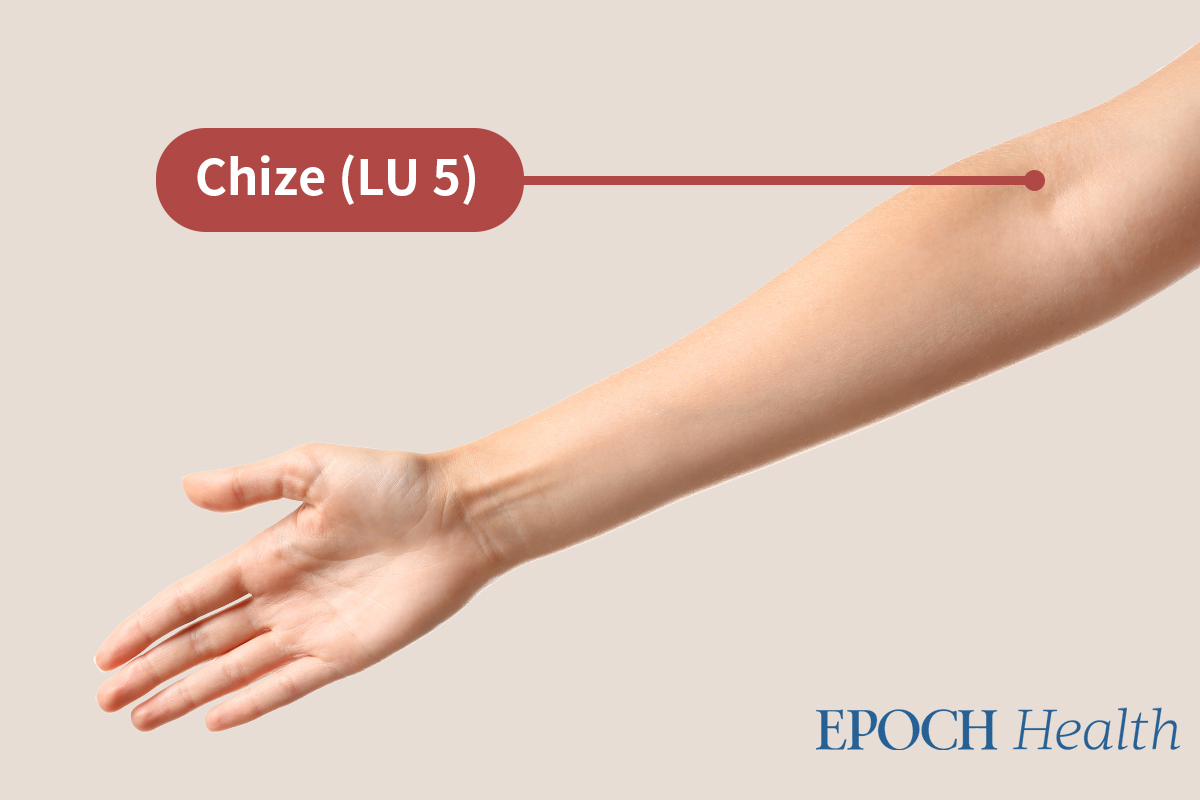
Massaging the Chize acupoint can improve shoulder and neck stiffness and headaches caused by air-conditioning.
Location:
On the cubital crease of the elbow, on the edge of the bicep’s tendon, in the depression on the side near the thumb. It hurts when pressed, so press gently, and then shake the neck—the soreness and stiffness will be slowly relieved.
Hot Porridge and Sweating to Reverse Effects of Cold Air
TCM offers special wisdom in the treatment of disease. For example, many diseases can be treated by letting off sweat. If you have been in an air-conditioned room for a long time and feel unwell, a doctor may give you a certain prescription. But you may also achieve the same effect by eating a bowl of hot porridge and sweating a little bit.
About forty years ago, a colleague of mine had a problem with his face: one side was cold and the other side was hot. He came to ask me what was going on. I was a neurology student then, and at first glance, I knew that this was an imbalance between the sympathetic and parasympathetic nerves. When the sympathetic nervous system is hyperactive, there are chills but no sweating, while hyperactivity in the parasympathetic nervous system will result in fever and sweating.
His condition could have come about because while in his office, he was sitting in a position where the air-conditioning blew directly onto his face. After a certain time, health problems began to arise. He had contacted quite several doctors but to no avail, so he came to me seeking answers and treatment.
I was just at the beginning of my studies in TCM at the time, so I took the chance to practice what I had learned. I suggested he make an herbal concoction called “Guizhi (Cinnamomi ramulus) Decoction” to aid in some sweating. However, he said that he had no space in his home to prepare the decoction. I then made the following suggestion: “I then suggested that he take some aspirin with hot water, and after a while cover himself with a thick blanket so as to sweat to relieve the symptoms.” He followed the instructions and in fact, found relief.
Another simple remedy for the same quick and easy result is to eat a bowl of hot porridge in place of taking the aspirin and follow the directions as above.
Views expressed in this article are the opinions of the author and do not necessarily reflect the views of The Epoch Times. Epoch Health welcomes professional discussion and friendly debate. To submit an opinion piece, please follow these guidelines and submit through our form here.