



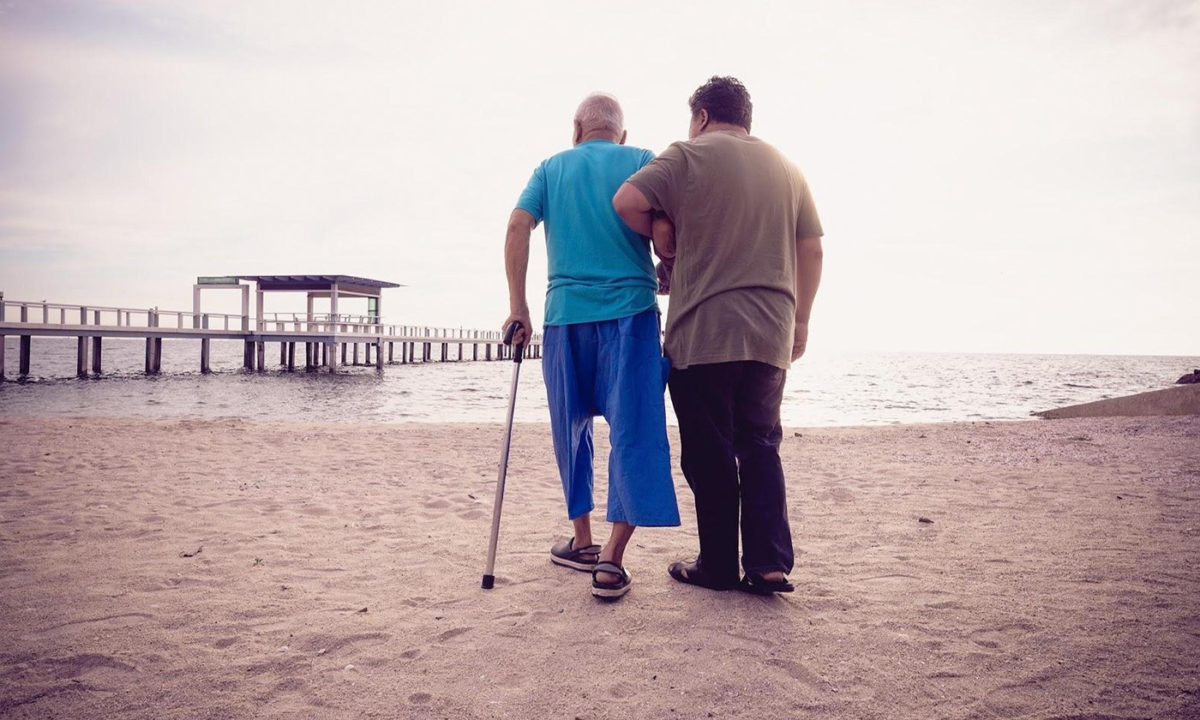
Parkinson’s disease is a movement disorder caused by the loss of nerve cells in certain parts of the brain. According to the American Parkinson’s Disease Association, more than 10 million people worldwide live with Parkinson’s, including about 1 million in the United States. Parkinson’s disease is especially common in people over 50. These patients often fall while walking, which may cause serious injuries. It is essential to improve the environments of Parkinson’s disease patients and provide them with ways to reduce fall risks. Studies have shown that practicing tai chi can reduce the number of falls patients suffer.
Why are Parkinson’s disease patients prone to falls? High muscle tension in the front torso causes the person to lean forward, throwing off balance. Parkinsonian gait, as it is called, makes a person take small and unsteady steps. In turn, patients speed up their pace, thus making them easier to fall. Moreover, people with Parkinson’s disease often have eyesight problems, with double or blurred vision that makes it difficult to see the path in front of them. As the disease progresses, their body’s physical activities decrease, and their muscle strength weakens.
Apart from slowed movement, the patient’s brain also declines in regulating the autonomic nerves, resulting in abrupt changes in blood pressure. In addition, taking anti-Parkinson’s drugs can also cause blood pressure to drop, easily causing fainting during sudden changes in posture.
How to prevent patients from falling? You can start by changing the environment and learning self-training strategies.
Environmental Aspects
Certain environments can be particularly challenging for people with Parkinson’s disease. Before you can practice exercises to reduce the chances of falls, you must set yourself up for success by adjusting your environment to suit your needs.
- The living environment should be bright with sufficient lighting.
- Rearrange the layout of furniture and facilities to avoid them getting in your way. Put objects that could trip someone, such as children’s toys, away.
- The floor’s texture should not be slippery, and always clean up spills or slick surfaces.
- Wear well-fitted, flat, non-slip shoes.
- Install anti-slip mats and handrails in bathrooms and toilets.
- Avoid excessive bed rails or obstacles that pose challenges for individuals with limited mobility.
Self-Training
The following steps can help you or your loved ones with Parkinson’s disease reduce the risks of falls.
- Exercise to keep muscles and joints flexible. Even if a patient cannot move easily, it is important to assist them in moving their joints through external force or passive range of motion exercises. This helps prevent joint stiffness and contractures, which can occur when the joints remain immobile for extended periods.
- Practice “mindful walking.” Devote your full attention to the task of walking. While walking, keep your body upright, look forward, and take controlled steps. Be aware of the size of each step, and be consistent. Be focused and avoid thinking about other things while walking.
- Utilize a mirror while walking to assist in self-correction. If you or the patient starts leaning to one side and does not lift the foot high enough, it will be visible in the mirror and can be promptly corrected.
- Keep all movements slow and steady when changing body position, such as from sitting to standing or standing to lying down.
- If needed, get assistance with crutches, a walker, or a wheelchair.
- During the early stages of Parkinson’s disease, while the symptoms are milder, practicing tai chi can help train your body to maintain a better balance.
A randomized controlled clinical trial published in The New England Journal of Medicine in 2012 found that practicing tai chi can reduce patients’ risk of falls with initial to mid-stage Parkinson’s disease. The study randomly divided 195 patients into three groups: One group practiced tai chi, one received load-bearing resistance training, and the third performed stretching exercises. Twenty-four weeks later, practicing tai chi resulted in patients having more solid postures and improved mobility and balance.
TCM’s Take on Parkinson’s
The cause of Parkinson’s disease is not well understood. It can be caused by cerebrovascular disease, carbon monoxide poisoning, lack of essential nutrients in the brain, and other environmental or genetic factors.
From traditional Chinese medicine’s (TCM) perspective, the viscera are an interconnected system, and Parkinson’s syndrome is closely related to the liver and kidneys. You can seek help from an experienced TCM physician to receive long-term care using Chinese medicine or acupuncture. Clinical studies have found that patients with Parkinson’s disease who receive acupuncture combined with Western medicine treatments can significantly improve their symptoms compared to those who only receive Western medicine treatments.
In addition, many drugs for treating Parkinson’s disease have side effects, and the interactions between different drugs can be complicated. You should consult a doctor about reducing the number of prescriptions or altering dosages.