



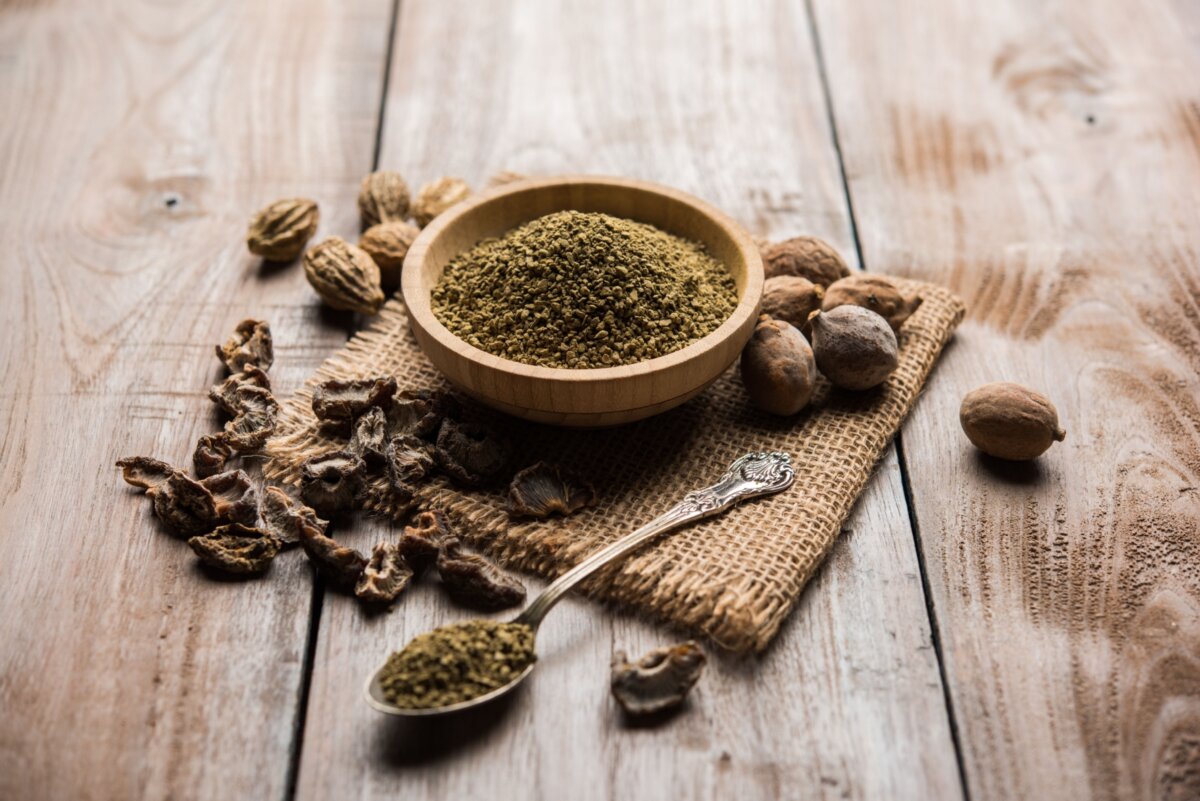
A popular Ayurvedic herbal remedy packed with polyphenols has a healing effect on the gut, in part by increasing beneficial bacteria.
Triphala, a combination of three dried fruits, promotes the growth of Bifidobacteria and Lactobacillus, both of which are beneficial gut bacteria that can keep balance in the microbiome—the total community of microbes, many of which live in the colon. These commensal bacteria help minimize systemic inflammation.
The herbal tonic also has antioxidant properties that can help modulate the body’s molecules by scavenging free radicals, which are created in cell metabolism and can cause problems if they outnumber antioxidants. Too many free radicals can lead to oxidative stress, a major contributor to cancer and other diseases.
Bifidobacteria and Lactobacillus bacteria also create short-chain fatty acids, metabolites that leave the gut and enter the bloodstream to perform health-protective jobs throughout the body. They also increase immunity and modulate inflammation.
While inflammation is a necessary part of the healing process, certain lifestyle factors such as diet, viruses, aging, and toxins can create chronic inflammation. Johns Hopkins Medicine describes inflammation as swelling, redness, pain, and heat—the body’s response to injury—and systemic inflammation as the reaction to those lifestyle triggers that can cause disease and be addressed through diet.
Studies show that Triphala helps a number of diseases including heart disease, cancer, cataracts, dental caries, diabetes, and obesity. For the gut, it has an antibacterial effect on problematic bacteria such as Escherichia coli. It’s been used therapeutically for a range of gut issues, such as constipation, abdominal pain, flatulence, hyperacidity, and inflammatory bowel conditions.
“As both Ayurveda and Western medicine agree that health and disease begin in the gut, Triphala represents an essential foundational formula as it promotes efficient digestion, absorption, elimination, and rejuvenation,” a 2017 review in the Journal of Alternative and Complementary Medicine states. “Triphala can be considered for use in the very young, the infirmed, and the elderly.”
Natural Laxative and Antioxidant
Triphala is exalted for its laxative effects and anti-inflammatory properties, which have earned it a reputation for improving general gastrointestinal health.
A 2011 study in the Journal of Ayurvedic Alternative Medicine noted a significant increase in bowel movements after two weeks of using Triphala, as well as less time spent on the toilet, improved stool consistency, less straining, and other signs of improved functional constipation.
The 2017 Journal of Alternative and Complementary Medicine review highlighted notable gastrointestinal research involving Triphala, including:
- A human trial that showed that Triphala reduced constipation, abdominal pain, mucus, hyperacidity, and flatulence while also improving consistency, frequency, and yield of stool
- A rat study indicating that Triphala had a gastroprotective effect on stress-induced ulcers
- A rodent study showing that Triphala replenished protein in intestinal villi and improved glutathione levels, which help the body repair itself
- A mouse study of Triphala that reduced colitis, or inflammation in the bowel
The review pointed out that Triphala’s polyphenols—beneficial plant compounds such as quercetin and gallic acid—are capable of promoting the growth of Bifidobacteria and Lactobacillus. That change in microbial makeup is what creates an antioxidant, anti-inflammatory, and immunomodulating gut environment.
“Triphala-derived polyphenols such as chebulinic acid are transformed by the human gut microbiota into metabolites such as urolithins, which have the potential to prevent oxidative damage,” the review states. “The authors speculate that the bioactivity of Triphala is elicited by the gut microbiome to generate a widened spectrum and abundance of anti-inflammatory compounds.”
Three Fruit Formula
Ayurvedic practitioners often promote Triphala—a Sanskrit word that means three fruits. The formula is described as a “rasayana,” or rejuvenator, and contains equal amounts of the fruits amalaki, bibhitaki, and haritaki.
Amalaki: Known for increasing secretions, amalaki helps with fat digestion, making it beneficial for liver and gallbladder health, according to John Immel, founder of the Joyful Belly School of Ayurveda.
“It is an anti-inflammatory for the gut. One of the special things about amalaki is it dilates capillary beds,” he told The Epoch Times. “It does generally rejuvenate gut tissue. It improves digestion by improving blood flow.”
Haritaki: Haritaki increases enzyme secretions and saliva. Immel said it’s good for a person suffering from dry digestion, constipation, gas, and bloating. It does this with a laxative effect, pushing food through the digestive system and depressing fermentation.
Bibhitaki: Capable of cleaning up mucus, bibhitaki is a bit more harsh and drying.
“Sometimes I tell my more delicate clients to take biphala instead of Triphala—two fruits instead of three—and cut out the bibhitaki,” Immel said. “It’s harsh and more of a diuretic to drain excess fluids.”
One common side effect of Triphala can be the need to urinate in the middle of the night. Also, because of the laxative effect of Triphala, anyone already experiencing diarrhea should be cautious.
Pregnant women are sometimes advised to avoid laxatives because they may induce labor. But Immel pointed out that constipation is often common in pregnancy, and the herbal tonic can help alleviate discomfort if used cautiously.
How to Take Triphala
Dosing is typically one teaspoon daily, but a lower dose might also be beneficial, according to Luke Coutinho, a nutrition expert, author, teacher, and influencer in India. Triphala comes in powder form—and may taste bitter or sour—but can also be taken by capsule.
Coutinho suggests a popular way of eating it: Blend it with equal parts raw honey and ghee and take it first thing in the morning. It can be taken daily, but he suggests carefully observing how the body and digestion respond, perhaps starting with one-quarter teaspoon or a small pinch mixed with water.
“By the third day, you’ll find this amazing energy that gets you through your day, this lightness,” Coutinho said in a YouTube video called “The Power in Triphala.” “Your stools get better, your bloating reduces, acidity gets better … You still have to make other lifestyle changes. It’s not magic.”
Immel advises taking Triphala seasonally—usually in the spring and fall when seasonal allergies can be bothersome. The goal, he said, is to return the body to a state of proper functionality that doesn’t need support—herbal or otherwise.
He said that Triphala not only decongests the lungs but also generally cleanses and helps reset the body.
“What we are trying to do is strengthen the body so that the body does what it’s supposed to do and maintains health,” Immel said.
Helpful as they might be, herbs aren’t typically advised for long-term use, he said, adding that the more an herb seems necessary, the more likely it’s not doing its job to solve the underlying problem.
When Triphala begins to taste more sweet, Immel said that’s usually a sign that your body has come into balance.
[series_posts_list][/series_posts_list]
A Revered Tool
Immel said he has seen the herbal blend work to alleviate a number of health symptoms, which is why it’s considered one of the top Ayurvedic tools. Haritaki fruit on its own is considered an Ayurvedic cure-all—found in both hands of the “Medicine Buddha,” an important icon in South Asia.
“Triphala as a formula deserves more attention. It’s an all-around wonderful tonic for the body,” Immel said. “It really is a panacea herb that I think deserves more attention.”
[note label=”Next” title=”Part 2 – A Frugal Yet Remarkable Gut Health Solution From Your Lawn” hyperlink=”https://cmsapi.theepochtimes.com/health/a-frugal-yet-remarkable-gut-health-solution-from-your-lawn-5647080″ description=”In many cases of mild digestive distress, there’s a good chance the dandelions in your yard can help ease the symptoms. “][/note]