



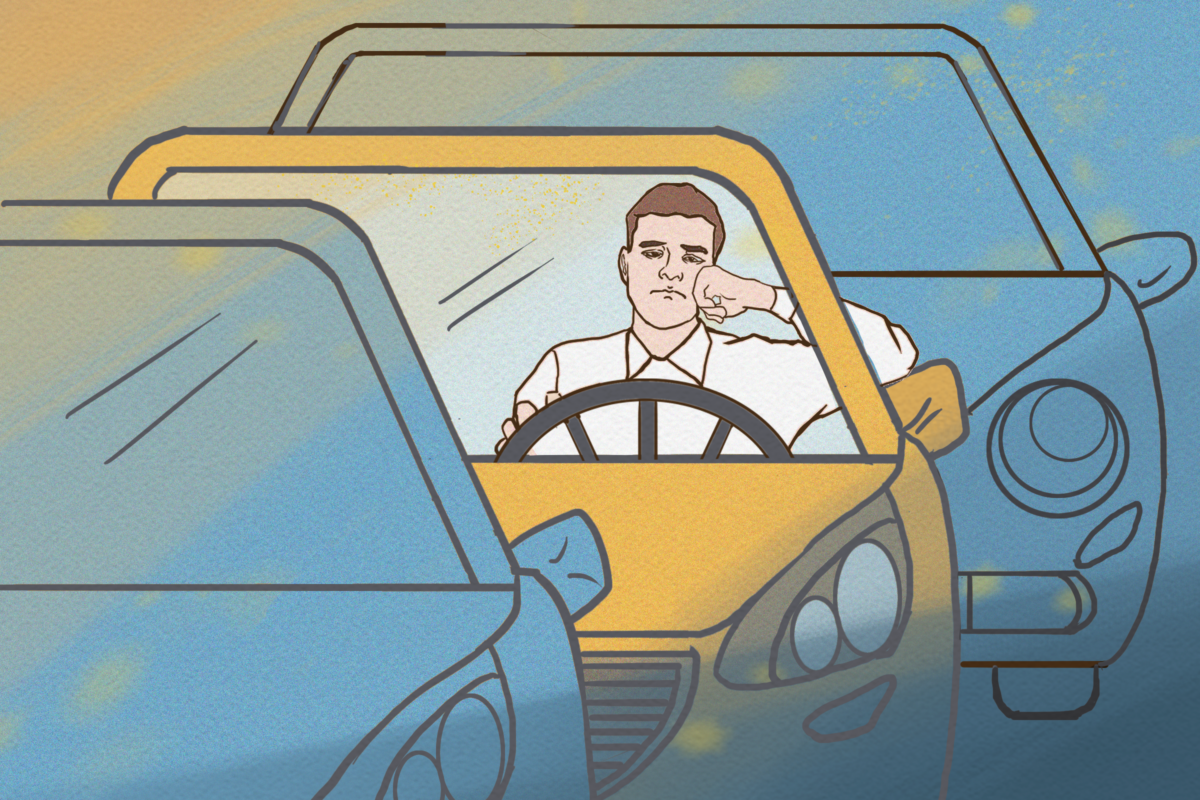
I have a theory about traffic.
That theory is that traffic becomes a living force in your world when you live in a city that is larger than you can drive out of within 15 minutes. You have this background sense of being trapped within the grip of an ever-present congestion that constantly weighs on your psyche.
Traffic has a major impact on our mental health, research suggests. That research supports the key point of this newsletter—factoring in our essential daily commute is one of the most important things we can do to improve our quality of life and overall well-being.
A systematic review published in 2022 looked at dozens of studies around the effects of traffic on our mental well-being and found reliable evidence to affirm what most of us already know: More traffic means more anger and stress, a lower quality of life, and reduced mental well-being. Poor road conditions can make it worse. And for those hoping to escape through public transit, a similar pattern emerges. If you live close to reliable, comfortable transit, you will likely enjoy better mental well-being than if you have to squeeze onto a creaky old bus on an unreliable schedule.
“My most anxious moments often aren’t at work, but when I’m on the train at midnight and it stops moving,” a New York colleague told me recently. For her, the hardest part was not knowing when the train would start again. A huge improvement came when the conductors started announcing why the train stopped and when it might resume.
For those who rely on transit, such uncertainty can be excruciating. It throws any schedule into potential chaos and requires constant vigilance for potential route changes or erratic schedules.
Research also links the noise of traffic congestion to increased rates of anxiety and depression, though there is a bit of debate about that.
A somewhat dated study published in Social Science & Medicine used data from Los Angeles collected in 2002 and concluded that people “who reported the most traffic stress also had the lowest health status and greatest depressive symptoms.”
Of course, not all of us are affected by traffic in the same way. My wife can hum away in a traffic jam or crank up a podcast and never be bothered by it, though she generally prefers I do the driving. Most of us, however, are affected by the noise, smells, and uncertainty of a long or difficult daily commute.
If you can alleviate that burden in any way, it’s well worth the effort. If your commute happens during rush hour each day, for example, consider asking your employer about off-setting your start and end times to gain a quieter commute.
Whenever my wife and I have lived in a larger city, our commute was always the key criterion in deciding where to live. I prefer transit to driving but only when I can avoid any transfers. Transfers are when you have to get off one bus or subway and onto another. Every transfer increases the uncertainty of your final arrival time. To me, paying a bit more for housing or even living in a less attractive home are small prices to pay for getting hours of my day back and avoiding a major frustration of city living.
If you can avoid city living and relocate to a smaller locale, all the better. That’s obviously not an option for everyone.
If there’s nothing you can do to adjust your commute, one of the best things you can do is use the time well.
That might mean listening to podcasts or audiobooks, if reading isn’t feasible, or using the time to make phone calls (assuming you have reception). Drives are my favorite time to catch up with family and friends or carve out a sustained period for deep self-reflection.
If your commute time feels useful, you won’t be as annoyed by interruptions or delays. And if you can use those frustrations as a way to temper your patience, you might even become a better person along the way.
Views expressed in this article are the opinions of the author and do not necessarily reflect the views of The Epoch Times. Epoch Health welcomes professional discussion and friendly debate. To submit an opinion piece, please follow these guidelines and submit through our form here.