



When Kuo-Pin Wu’s young son suddenly turned pale in the back seat of the car—dizzy, nauseated, and on the verge of vomiting—there was no pharmacy in sight.
“He said he felt carsick,” Wu, a 20-year traditional Chinese medicine (TCM) practitioner and director of Taiwan’s Xinyitang TCM Clinic, told The Epoch Times. “I reached down and pressed a point on his foot. The area was very tight, like a knot. After a few minutes of gentle massage, his nausea and dizziness disappeared, and his color returned.
“The whole thing took less than three minutes.”
The point he pressed is one of many acupoints used in TCM to quickly calm the stomach and restore internal balance.
What exactly happens when acupoints are pressed—and is there any science to back their efficacy?
How Acupressure Works
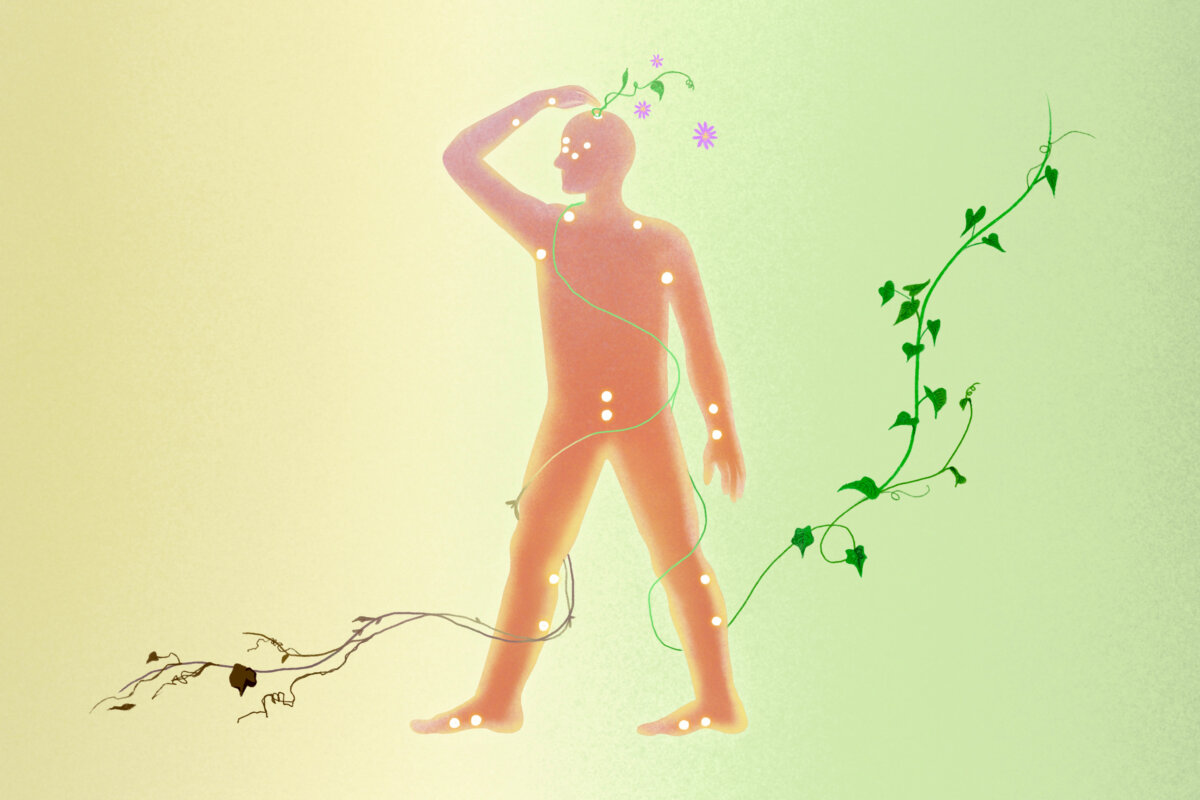
From a TCM perspective, the body is crisscrossed by an invisible network called the meridian system. The meridian network connects internal organs with the surface of the body and serves as a highway for two key substances: qi, the body’s vital energy and “driving force,” and blood, the nourishing substance that supports all tissues and functions.
Along the meridians are specific acupoints—tiny functional “hubs” that can be stimulated with needles (acupuncture) or pressure (acupressure) to influence qi and blood flow.
When qi and blood become unbalanced—too concentrated in one area or blocked in another—symptoms appear. Fatigue, sleep problems, chest tightness, or chronic pain can all reflect internal imbalance.
TCM practitioner Yingta Lee explained the concept with a simple image.
“It’s like a boat carrying 100 passengers: If 90 of them rush to the bow, the boat tips forward,” she said. “When the passengers spread out again, the boat becomes stable. Acupressure works in a similar way—by redistributing qi and blood so the body can regain balance.”
Acupoints are often found in areas rich in nerves, blood vessels, and fascia. Pressing these points can:
- Regulate the autonomic nervous system—shifting from fight-or-flight toward rest-and-digest
- Improve microcirculation
- Influence pain pathways in the brain and spinal cord
“From the perspective of conventional medicine, acupressure helps regulate the autonomic nervous system,” Grace Zhang, a TCM practitioner and licensed acupuncturist at Northern Medical Center in Middletown, New York, told The Epoch Times. “When specific acupoints are pressed, people often notice their bodies gradually relaxing and their mood lifting. This happens because activating the parasympathetic nervous system (the rest-and-digest system) improves blood circulation and triggers the body’s natural relaxation response.”
Do Meridians Really Exist?
Meridians cannot be seen the way arteries and veins can, which has led to skepticism. However, new imaging methods are revealing intriguing patterns.
In a 2021 study, researchers from Harvard Medical School and China Academy of Chinese Medical Sciences injected fluorescent dyes into acupoints on the pericardium meridian. The dye slowly migrated along a line matching the classical meridian pathway in most participants—an effect not seen when the dye was injected into nearby non-acupoint areas.
“These lines cannot be attributed to blood vessels or lymphatics,” the researchers wrote.
Instead, they appear to follow linear routes similar to the meridians.
Acupressure in Real Life
Learning a few well-chosen acupoints can turn your hands into a simple self-care toolkit for common, non-emergency symptoms.
[shortcut_anchor id=”anchor_1780174011341″ label=”Calm the Gut”]1. Calm the Stomach and Gut[/shortcut_anchor]
Nausea is highly responsive to acupressure. Both TCM and modern research show that certain points can quickly calm the stomach and regulate gut-brain signaling. Areas that feel unusually tender or tight may indicate imbalance, and gentle, steady pressure is usually most effective.
Grandfather-Grandson (Gongsun)
Grandfather-grandson was the point Wu pressed on his son’s foot when he felt sick. When Wu pressed this point, he noticed that it felt unusually tight, indicating internal imbalance. Gently massaging the acupoint can help release stagnation and restore the smooth flow of qi and blood, rapidly easing symptoms.
Location: On the inner edge of the foot. Behind the joint of the big toe, the point lies in a small hollow just below and in front of the metatarsal bone.
Main Effects
- Relieves nausea, motion sickness, and car sickness
- Eases abdominal bloating and discomfort
- Supports digestive function
Inner Pass (Neiguan)
Inner pass is one of the most studied anti-nausea points. A randomized trial among gynecologic surgery patients found that acupressure at the inner pass significantly reduced postoperative nausea and vomiting and improved comfort compared with controls. Systematic reviews and meta-analyses have also found that stimulating this point can lessen chemotherapy-related and postoperative nausea and vomiting.
Many commercial wristbands used to ease motion sickness target this point.
Location: On the inner forearm, three finger-widths above the wrist crease, between two prominent tendons.
Main Effects
- Relieves nausea, vomiting, and motion sickness
- Eases chest tightness and palpitations
- Calms anxiety and stress-related stomach upset
[shortcut_anchor id=”anchor_1780174025249″ label=”Relieve Headaches”]2. Relieve Headaches[/shortcut_anchor]
Clinical trials have shown that acupuncture protocols, including hundred convergences, can reduce the frequency and severity of migraine and tension-type headaches compared with sham acupuncture or conventional care.
Hundred Convergences (Baihui)
Hundred convergences is a crucial point at the top of the head, as it is the meeting point of the body’s yang meridian channels. It’s widely used in acupuncture protocols for headaches and neurological conditions.
It’s also very helpful when you want to stay alert and clear-minded.
Location: On the crown of the head, at the intersection of the body’s midline and a line drawn between the tips of both ears; often felt as a slight depression.
Main Effects
- Helps relieve headaches and dizziness
- Restores alertness and clears the mind
[shortcut_anchor id=”anchor_1780174062844″ label=”Revive Alertness”]3. Revive Alertness[/shortcut_anchor]
In TCM, hundred convergences and shoulder well form an energetic pair—one “above,” one “below.”
“When hundred convergences point is stimulated, qi rises; when shoulder well point is pressed, qi descends,” Lee told The Epoch Times. “Stimulating both is like opening both ends of an electrical circuit—this allows energy to move and consciousness to clear.”
Shoulder Well (Jianjing)
Shoulder well sits at the highest point of the shoulder, in a small hollow that looks like a well.
In kung-fu movies, a “knife-hand” strike to the shoulder often makes a character faint. Laughing, Lee said, “The idea is that shoulder well point is shocked, causing qi to suddenly drop and blood flow to the brain to briefly decrease, leading to loss of consciousness.”
Location: At the midpoint of the shoulder, on a line between the prominent neck vertebra and the tip of the shoulder.
Main Effects
- Relieves neck and shoulder tension
- Helps restore alertness and combat drowsiness or fatigue
- Assists in clearing “stuck” qi in the upper body
Caution: Because vigorous stimulation at this point may induce uterine contractions, traditional texts advise pregnant women to avoid having this point pressed or patted.
[shortcut_anchor id=”anchor_1780174470687″ label=”Aids Insomnia”]4. Aids Insomnia[/shortcut_anchor]
Spirit gate—a small hollow on the inner wrist—is a key point for insomnia.
A longitudinal study of long-term care residents found that acupressure at the spirit gate point improved sleep quality and reduced insomnia, with benefits lasting several weeks after treatment ended. A systematic review of randomized trials likewise concluded that stimulating spirit gate appeared effective and safe for managing insomnia.
Spirit Gate (Shenmen)
Spirit gate serves as the “gateway” through which the heart meridian’s qi enters and exits. Because it can calm the spirit and steady the mind, it was named “gate of the spirit.”
Location: On the wrist crease at the pinky side, in the small hollow just inside the tendon, aligned with the junction between the little and ring fingers.
Main Effects
- Promotes restful sleep
- Eases anxiety and panic
[shortcut_anchor id=”anchor_1780174481102″ label=”Ease Eye Strain”]5. Ease Eye Strain[/shortcut_anchor]
Wu noted that acupressure around the eyes can be highly effective for relieving eye discomfort.
Eye strain rarely comes from a single point. Prolonged screen use can strain the muscles, nerves, and circulation around the entire eye socket. For this reason, TCM uses several complementary areas to promote blood flow and relaxation. Use light, circular movements with the pads of the fingers for 30 seconds to 60 seconds on each point.
“Many people press too hard,” he said. “The tissues around the eyes are extremely delicate. Excessive pressure can increase tension rather than relieve it. Gentle, circular movements work best.”
Wu suggested an even simpler approach.
“You don’t need to memorize individual points,” he said. “Slowly massaging around the eye socket in small circles—both clockwise and counterclockwise—is often enough to ease fatigue and restore comfort.”
Tear Container (Chengqi)
Location: Directly below the pupil, in a small hollow along the orbital bone when the eyes look straight ahead.
Main Effects: Promotes blood flow around the eyes
Bright Eyes (Jingming)
Location: Slightly above the inner corner of the eye, in a small hollow of the orbital bone.
Main Effects
- Alleviates eye fatigue and soreness
- Helps with blurred vision and early nearsightedness
Bamboo Gathering (Cuanzhu)
Location: In the hollow at the inner end of the eyebrow.
Main Effects
- Relieves eye strain and frontal headaches
- Eases tension in the brow area
Silken Bamboo Hollow (Sizhukong)
Location: In the depression at the outer end of the eyebrow.
Main Effects
- Relieves eye dryness, fatigue, and blurred vision
- Eases temporal headaches and dizziness
[shortcut_anchor id=”anchor_1780174497608″ label=”Relieve Fatigue”]6. Relieve Fatigue[/shortcut_anchor]
In TCM, primordial qi is considered the body’s deepest reserve of life energy—the power source for all physiological functions. Two key points on the lower abdomen are viewed as “charging ports” for this system.
Gate of Origin (Guanyuan)
Location: About four finger-widths below the navel on the midline.
Main Effects
- Strengthens primordial qi and overall vitality
- Warms and supports digestive function
Sea of Qi (Qihai)
Location: About two finger-widths below the navel on the midline.
Main Effects
- Supports energy, especially in chronic fatigue
- Regulates the movement of qi in the abdomen
Zhang recommends massaging the lower abdomen in slow, clockwise circles, following the natural direction of intestinal movement.
[shortcut_anchor id=”anchor_1780174505811″ label=”Soothe Tired Legs”]7. Soothe Tired Legs[/shortcut_anchor]
After exercise, hiking, or long walks, many people instinctively reach for ice packs. TCM practitioner Ye Qi-min told The Epoch Times that, in cases of qi and blood stagnation, cold can make symptoms worse by constricting circulation and trapping the stagnation in the tissues.
Instead, he uses acupressure combined with gentle warmth to encourage circulation and relieve soreness.
Gushing Spring (Yongquan)
Location: On the sole of the foot. When the toes are slightly curled, the point lies in a small depression at the junction of the front one-third and back two-thirds of the sole.
Main Effects
- Reduces fatigue and leg heaviness
- Eases lower-limb swelling and soreness
- Calms the mind and supports sleep
Supporting Mountain (Chengshan)
Location: On the back of the lower leg, in the V-shaped hollow just below the bulge of the calf muscle when the leg is straightened or the heel is raised.
Main Effects
- Relieves calf tension and cramps
- Promotes blood and qi circulation in the legs
Middle of the Crook (Weizhong)
Location: At the midpoint of the back of the knee, in the deepest point of the crease behind the knee.
Main Effects
- Helps resolve blood stasis in the legs
- Relieves hamstring tightness
Ye often combines these points with warm air from a hair dryer—which can touch a larger area if you have a hard time finding the exact spots.
“A hair dryer can mimic the warming effect of moxibustion [a gentle heat therapy using dried mugwort],” he said. “Keep the dryer steady over the point—not waving back and forth—and always test the heat with your own hand first. For older adults with poor circulation, it’s safer to warm through clothing to avoid burns.”
How to Do Acupressure
Acupressure works best when you treat it as communication with the body, not forceful pressure. The goal is not to push through pain but to gently encourage circulation, relaxation, and nervous system balance.
Before you begin, sit or lie down in a comfortable position, take a few slow breaths, and allow your body to relax. A calm state helps acupressure’s effects take hold more quickly.
Choosing the correct technique depends on the nature of your symptoms and the area being treated. For tension, stress, or sensitive regions—such as the face, eyes, or abdomen—lighter methods are usually more effective. For deeper muscle tightness or long-standing stiffness, firmer techniques may be appropriate, as long as they remain comfortable.
Below are some basic techniques and when to use them:
- Rubbing: Place a finger or the palm over the point and make small, slow circles. Rubbing is ideal for relaxation, stress relief, eye strain, and abdominal discomfort.
- Kneading: Apply deeper, steady pressure with the fingertip or knuckle. Kneading works well for muscle tightness, shoulder and neck tension, or chronic stiffness.
- Pinching: Gently pinch the point using the thumb and index or middle finger. Pinching provides moderate stimulation and is often used for sluggish circulation or fatigue.
- Cutting: Use the edge of a fingernail for brief, precise stimulation. The cutting technique is used sparingly, usually for quick awakening or strong stagnation, and should not be applied to sensitive areas.
Apply each technique for about three to five seconds, and repeat three to five times. Use slow, even pressure and aim for a sensation that feels comfortably sore—not sharp or painful.
A mild feeling of soreness, warmth, heaviness, or tingling is normal and often a good sign. In TCM, tenderness at an acupoint often indicates that the area is out of balance.
Breathe naturally and relax the surrounding muscles while pressing.
If several minutes of acupressure do not improve the condition, you may be using the wrong point, or the issue may require a professional medical evaluation. If the effect weakens with repeated sessions, this may signal over-stimulation—allow the area to rest or switch to different points.
When to Avoid Acupressure
In certain situations, acupressure should be used cautiously or avoided altogether:
- Local skin infections, inflammation, or open wounds
- Extreme weakness or prolonged fasting
- Bleeding tendencies or use of anticoagulant medications
- Severe systemic inflammatory or autoimmune diseases—use only under professional guidance
- Pregnancy—avoid strong stimulation at the shoulder well, gate of origin, and sea of qi points.
Daily Self-Care
Acupressure is a powerful tool for daily self-care, Lee said.
TCM emphasizes maintaining health and preventing illness before it develops.
“You don’t have to wait until you are seriously ill—spending just a few minutes each day to regulate qi and blood can help prevent many small problems from becoming something bigger,” Lee said.
With a bit of practice, your fingertips can become a bridge between ancient medical wisdom and modern everyday life.
Illustrations by Lumi Liu, videos by Felipe Santiago
Views expressed in this article are the opinions of the author and do not necessarily reflect the views of The Epoch Times. Epoch Health welcomes professional discussion and friendly debate. To submit an opinion piece, please follow these guidelines and submit through our form here.