


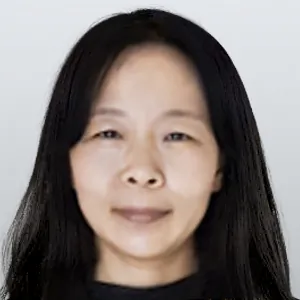
A restaurant owner in her early 50s visited Northern Medical Center in New York seeking an aesthetic treatment. She was sturdier and fuller-figured, with skin that appeared somewhat coarse and dull in tone. Her cheeks and chin appeared fuller, and she had visible crow’s feet and pronounced forehead lines.
She emphasized that she did not want any surgical procedures, nor was she interested in fillers or Botox, preferring a more natural approach to beauty.
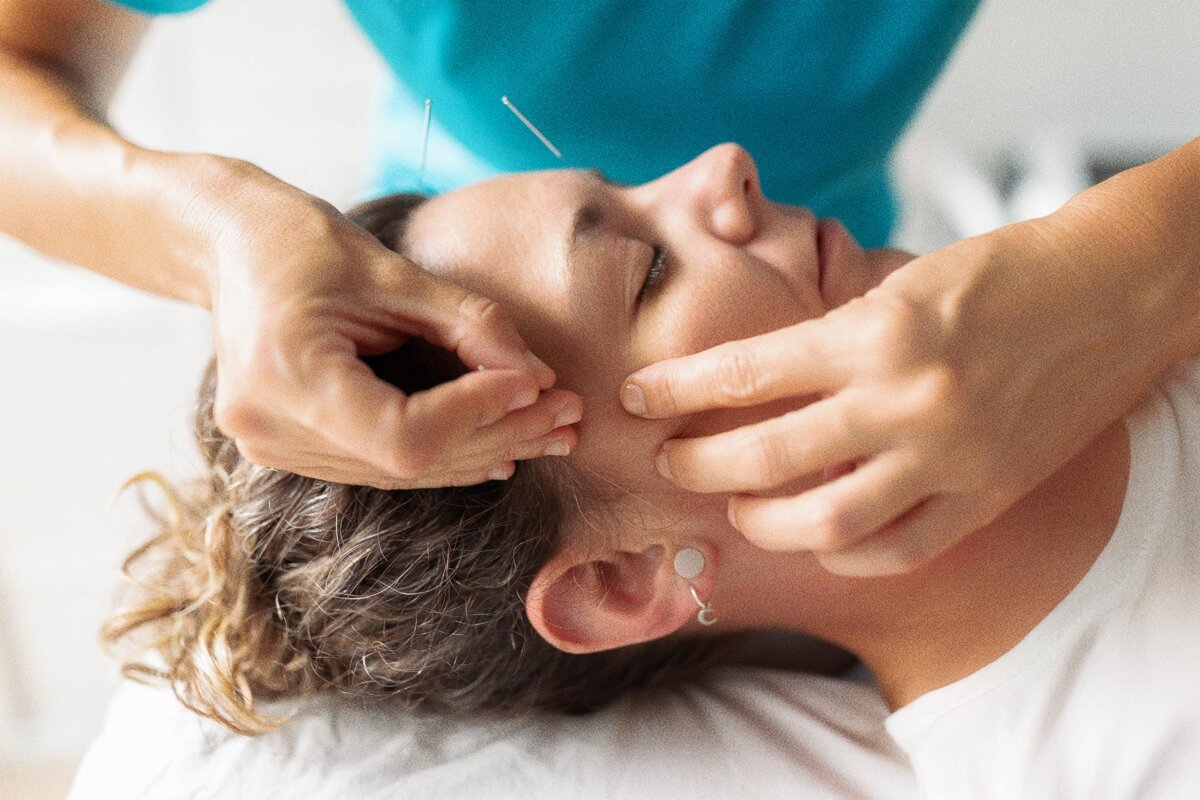
After weighing her options, she chose facial acupuncture, a needle-based approach that stimulates the acupoints on the face to promote skin rejuvenation rooted in traditional Chinese medicine (TCM). Instead of freezing or filling the face, the treatment aims to nudge the body to repair and rebalance itself.
Serene Feng, a TCM practitioner at Northern Medical Center, developed a personalized plan for the restaurant owner. The plan had two primary goals: facial rejuvenation and 20 pounds of weight loss.
Feng used photographs of the woman from several years ago as a reference, with the goal of restoring her facial appearance to its previous state. The woman committed to following Feng’s weight-loss guidelines, which included eating dinner before 6 p.m., going to bed before midnight, increasing water intake, and eating less oily foods.
During the treatment, Feng inserted needles finer than a strand of hair into the woman’s face and left them in place for 25 minutes. She slept soundly during the session and, upon waking, said, “It felt like I slept an entire night in just 25 minutes.”
Her complexion appeared more radiant, and compared with pre-treatment photographs, her chin looked noticeably firmer.
She then received weekly treatments for six weeks, followed by monthly maintenance sessions.
“Despite having difficulty losing weight in the past, she lost 20 pounds within three months,” Feng told The Epoch Times. “Her chin became more defined, her face looked firmer, and her complexion showed visible improvement.”
What to Expect from Facial Acupuncture
Some people may wonder how many facial acupuncture sessions are needed before results become noticeable.
“Generally, results can be seen immediately after just one facial acupuncture treatment,” Feng said. “We often observe muscle lifting and an improvement in complexion.”
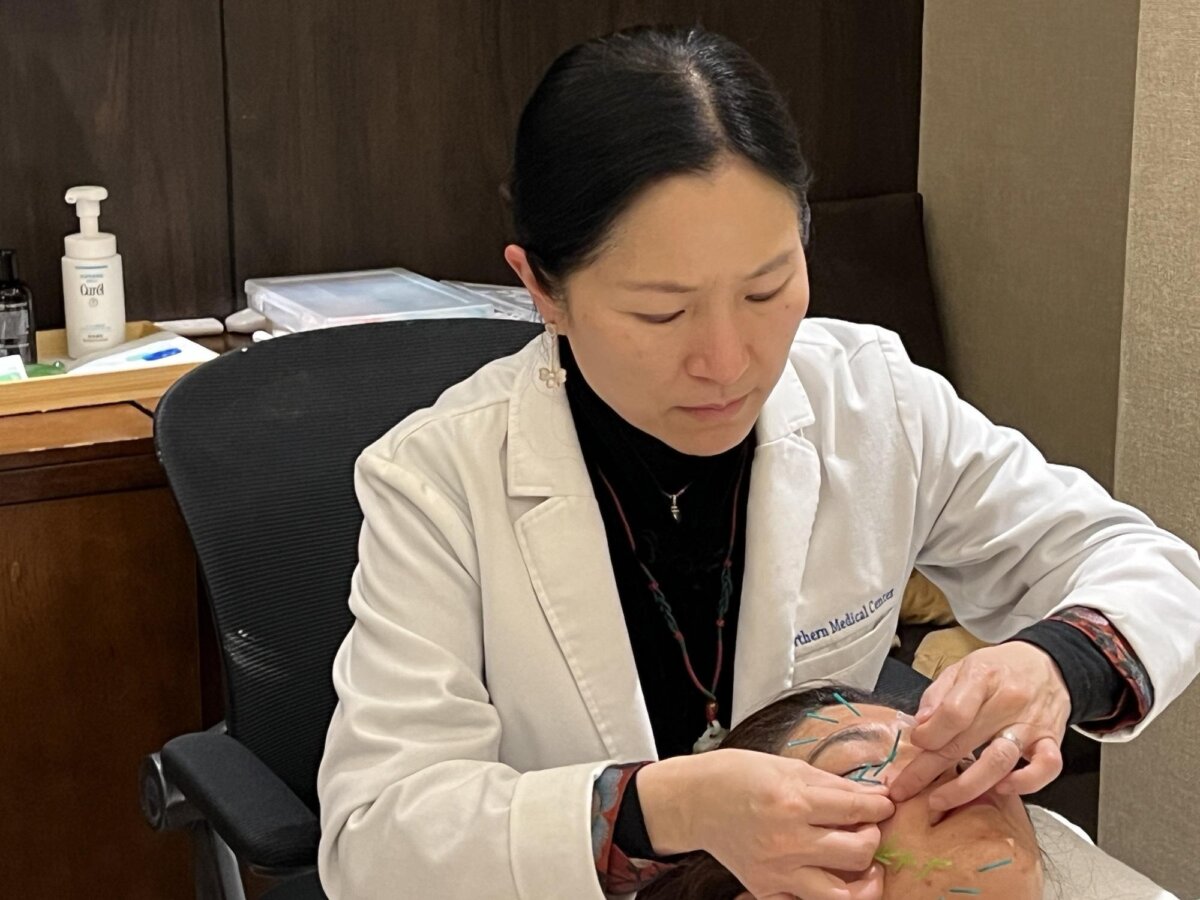
Based on a person’s physical condition, Feng typically recommends four to six sessions, performed once per week.
A 2025 randomized, waitlist‑controlled trial involving 72 women found that 12 sessions of combined facial and body acupuncture over six weeks significantly reduced glabellar frown line severity and improved quality of life, with very few minor side effects.
Another 2020 study suggested that facial acupuncture may help improve signs of aging, including sagging skin, wrinkles, muscle loss, and uneven skin tone. Most participants reported noticeable improvement, and adverse effects were minimal.
However, researchers noted that further studies are needed, as facial acupuncture is difficult to evaluate using controlled experimental designs.
Supporting Overall Health
Drawing on years of experience in facial acupuncture, Feng said the treatment does more than just restore a youthful appearance. Many patients also report improvements in headaches, sleep quality, and emotional well-being.
“The face is like a mirror,” Feng said. “It reflects the condition of the internal organs and the body as a whole. What needs to change is not the mirror, but what it reflects.”
From a TCM perspective, the face contains numerous acupoints that lie along meridian pathways—networks believed to connect the surface of the body with internal organs such as the liver, stomach, heart, and kidneys. Stimulating facial acupoints does not act solely on facial muscles or skin; it also sends signals along these pathways, helping regulate internal organ function.
In practical terms, Feng noted, facial acupuncture may influence the body through several overlapping mechanisms. Gentle needle stimulation can modulate the autonomic nervous system, helping shift the body out of a stress-dominant state and into one that supports rest, digestion, and repair. Improved local circulation in the face may also reflect broader improvements in blood and energy flow, which TCM associates with better organ nourishment and balance.
“In that sense,” Feng said, “facial acupuncture works from the inside out. When the body is more balanced internally, the face naturally looks healthier and more relaxed.”
Additionally, acupuncture may help alleviate certain side effects associated with cosmetic medical procedures, such as facial paralysis and other nerve-related complications.
Precautions
Facial acupuncture is a gentle, natural treatment that does not cause tissue damage, and patients can apply makeup immediately after a session.
Once inserted, the needles cause little to no pain, Feng said. Instead, many patients report a warm sensation in the face during treatment. They often fall asleep and wake up feeling relaxed and refreshed.
However, some patients do experience mild discomfort, Feng noted, particularly those with weaker physical constitutions. In such cases, the sensation is comparable to a light mosquito bite. People who regularly stay up late may feel more soreness or pressure, although this is generally not described as pain.
Overall, these sensations are far milder than those associated with cosmetic procedures such as mesotherapy or microneedling. After two or three treatments, these minor sensations typically subside as the body relaxes.
People with reduced blood vessel elasticity or clotting disorders may experience slight bleeding or minor bruising under the skin. These effects usually resolve on their own within a few days.
Other Complementary Approaches
Some people find facial acupuncture highly effective and wish to maintain the results over time. In such cases, Feng often incorporates additional therapies, tailored to a person’s constitution, to support internal health and further enhance the overall effects.
These approaches include body acupuncture, Chinese herbal medicine, diet therapy, and moxibustion.
For instance, if a TCM assessment indicates poor digestive function, these methods may be used to strengthen the spleen and stomach.
In TCM theory, the spleen and the gastrointestinal tract are considered part of the same energy system. Weak spleen and stomach function can lead to poor digestion and absorption, contributing to sagging skin and a dull complexion. Moreover, the stomach meridian is believed to run upward to the face. Pronounced nasolabial folds are often associated with digestive imbalances, as the area beside the mouth lies along the pathway of the stomach meridian.
Feng recalled a 40-year-old patient with prominent nasolabial folds. After treatment focused on strengthening the spleen and stomach, the folds became less noticeable. The patient remarked that her condition was “even better than when she was 30.”
Lifestyle and dietary changes are also essential during a course of facial acupuncture, and Feng encourages patients to support treatment with diet therapy.
For people with poor digestive function and sagging skin, Feng suggested Chinese yam and lotus root soup with pork ribs.
For those experiencing emotional strain and frequent late nights—factors that may affect liver detoxification—she recommended papaya soup with pork ribs.
Feng said she hopes that patients who undergo facial acupuncture will gain a better understanding of their individual constitutions through traditional medicine and adjust their lifestyle habits accordingly, allowing improvements to occur from the inside out.