



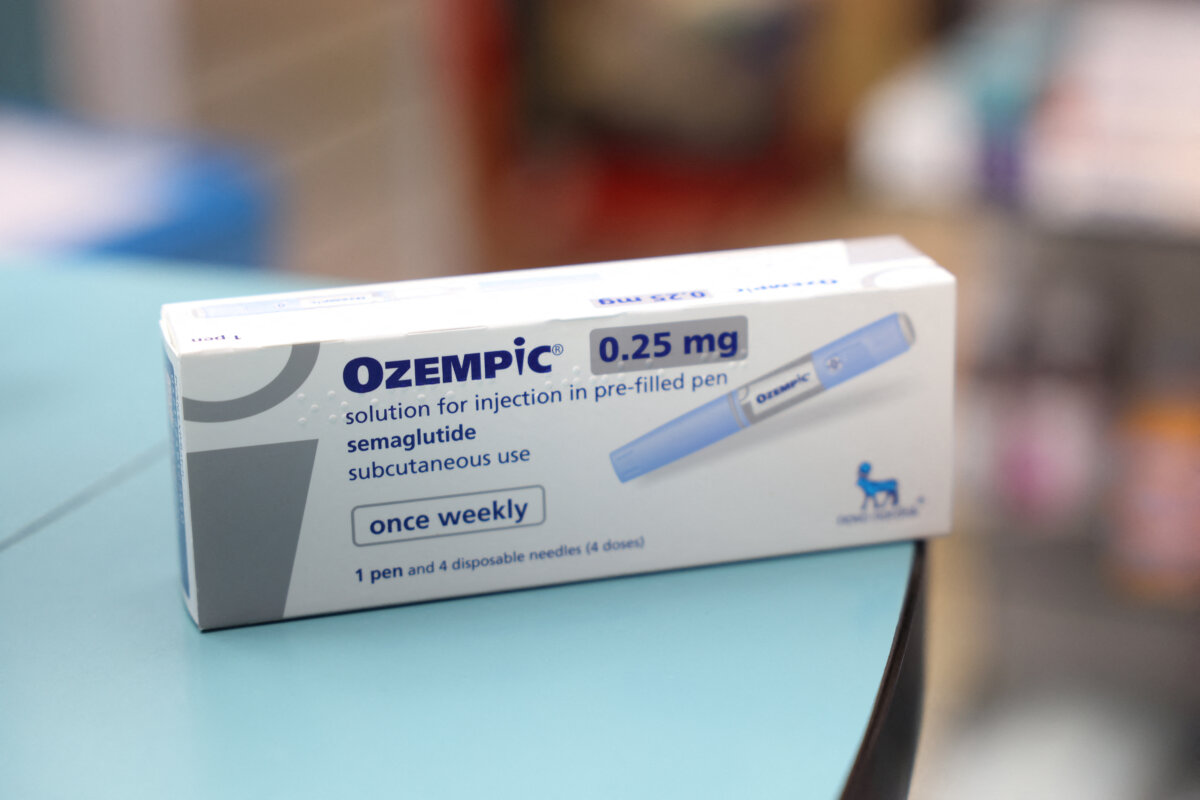
Individuals who administered commonly used weight management medications (WMM) regained weight in less than two years after they stopped using the drugs, according to a Jan. 7 peer-reviewed study published in the BMJ Journal.
The research involved studies that analyzed various types of WMMs, including “newer and more effective” incretin mimetics such as semaglutide and tirzepatide medications. Popular weight loss drugs Ozempic and Wegovy are semaglutide medications, while Mounjaro and Zepbound are tirzepatide-based.
When individuals stopped using weight-loss medicines, they were found to gain 0.4 kilograms per month in weight on average. Stopping semaglutide and tirzepatide medications resulted in a higher average rate of weight gain at 0.8 kg per month.
Within the first year, people who stopped any WMMs gained 4.8 kg, while those specifically taking “newer and more effective” incretin mimetics reported a weight gain of 9.9 kg, according to the study. It stated that the discontinuation of WMMs will bring people back to their baseline weight in 1.7 years for all WMM users, and in 1.5 years for users of semaglutide and tirzepatide medications.
Researchers compared the weight regained after ceasing WMMs against similar data from a previous review of behavioral weight management programs (BWMP). The 0.4 kg per month weight regained with WMMs was four times higher than the 0.1 kg per month estimated weight gained in people who quit BWMPs.
Moreover, there were changes in cardiometabolic markers after people stopped WMMs.
Among WMM users, the level of HbA1C, which measures the average blood glucose level, decreased by 0.9 millimoles per mole. When usage stopped, HbA1C rose at a monthly rate of 0.05 millimoles per mole.
In various studies, cholesterol and triglyceride concentrations, which fell during treatment, were found to have risen after treatment ended, according to researchers.
“The efficacy of the recent newer incretin mimetic treatments is likely to increase the prescription and use of WMMs, and it is important that individuals are aware of the risk of weight regain after stopping treatment,” the researchers wrote.
There is no evidence of WMM benefits 1.7 years after ceasing treatment, they said, adding that further research is necessary for effective long-term weight control, while emphasizing the importance of primary prevention.
The latest findings are the result of a meta-analysis of 37 trials and observational studies on WMMs that involved 9,341 subjects aged 18 and above who were overweight or obese.
The study received funding from the National Institute of Health and Care Research Oxford Biomedical Research Centre, with multiple researchers also receiving individual funding from various sources.
A few researchers declared competing interests, including the receipt of research grants from Novo Nordisk Foundation, which is linked to the Danish pharmaceutical company Novo Nordisk that manufactures Ozempic and Wegovy.
A previous study from May 2022, published in the National Library of Medicine, reached similar conclusions.
Participants who took semaglutide once a week and implemented lifestyle changes regained two-thirds of their prior weight loss just a year after ceasing treatment.
“Findings confirm the chronicity of obesity and suggest ongoing treatment is required to maintain improvements in weight and health,” the researchers said.
GLP-1 Side Effects
Drugs such as Ozempic, Mounjaro, and Wegovy are GLP-1 medications. GLP-1, or glucagon-like peptide-1, is a hormone naturally released by the body after eating food. The hormone helps in regulating appetite, slows down digestion, reduces blood sugar spikes, and stimulates insulin. GLP-1 drugs are synthetic medications that support GLP-1 in the body.
GLP-1 drugs have been associated with a wide range of side effects, including nausea, diarrhea, vomiting, gallbladder disease, pancreatitis, kidney problems, bone density loss, and suicidal behaviors.
A November 2024 article published in The Lancet Diabetes & Endocrinology journal raised concerns about skeletal muscle loss triggered by the use of GLP-1 drugs.
“Studies suggest muscle loss with these medications (as indicated by decreases in fat-free mass [FFM]) ranges from 25 percent to 39 percent of the total weight lost over 36–72 weeks,” it stated.
“In context, on an annual basis, the decline in muscle mass with GLP-1 receptor agonists is several times greater than what would be expected from age-related muscle loss.”
Many people quit taking GLP-1 medication after some time. According to a January 2025 study published in JAMA Network Open, an analysis of 125,474 patients who used these drugs showed that 46.5 percent of people with Type 2 diabetes discontinued the medication within a year. Among individuals without the illness, quit rates were higher at 64.8 percent.
According to the study, patients aged 65 or above were more likely to discontinue taking GLP-1 drugs.
Factors leading to discontinuation include gastrointestinal adverse events and affordability. A lack of tolerability to the drugs and failure to achieve desired weight loss through the medications are other potential reasons.
One in five American children and two in five adults in the country are estimated to be obese, according to a January 2024 report by the Centers for Disease Control and Prevention.
Obesity can be particularly harsh for children, leading to health conditions such as Type 2 diabetes and high blood pressure. Among adults, obese individuals have a higher risk of developing diseases such as Type 2 diabetes, heart disease, and certain cancers.