



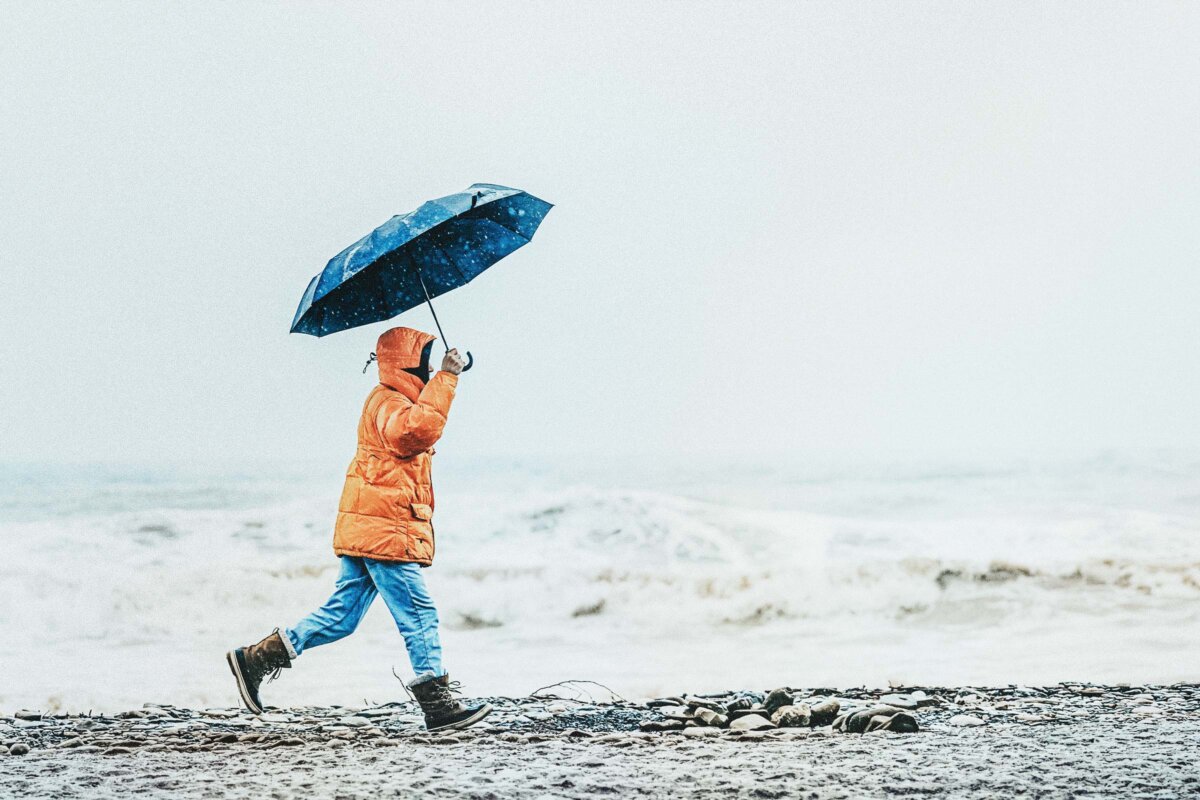
“Life is a storm, my young friend. You will bask in the sunlight one moment, be shattered on the rocks the next. What makes you a man is what you do when that storm comes.”—the film “The Count of Monte Cristo,” directed by Kevin Reynolds (Touchstone Pictures, 2002).
Every life ebbs and flows between calm waters, shifting currents, and, at times, tempestuous storms.
During times of ease, we often drift along with the current. Life may feel smooth and comfortable, wrapped in work, routine, entertainment, and the accumulation of things—and we may quietly assume that the calm will last.
In such periods, it becomes easy to overlook small compromises in our behavior, excuse harmful words or actions, and ignore the subtle signs that something is out of balance. When nothing challenges us, we seldom stop to consider our choices, habits, or the direction in which we’re heading.
But when the storm comes, everything changes. It interrupts our momentum, forcing us to stop and face it.
In the storm, we are often forced to face what we might otherwise avoid or ignore. It strips away the ego and life’s distractions, revealing patterns that we might miss and exposing the subtle truths about ourselves that everyday life often hides.
Whether it’s the literal storms of nature or the metaphorical storms of life—those that disrupt our work, finances, family, relationships, or health—storms are inevitable, and some are even life-altering. It is not a question of if they will come, but when and in what form. We cannot avoid them, and we are rarely able to outrun them.
Sometimes they come one at a time; other times, they converge, crashing down all at once, leaving us gasping for air in the deluge. What we once took for granted suddenly becomes uncertain or disappears; the familiar no longer reassures us.
In these moments, we may feel lost, shaken to our core—unsure of what to do next or what lies ahead. Yet, hidden within the storm is an unexpected gift for those willing to see it: The storm slows us, stills us, invites us to look again—with sincerity, honesty, and a fresh perspective.
In this way, the storm becomes our teacher.
Lessons From the Storm
Storms reveal the impermanence we live within. What once felt stable—our routines, our assumptions, our sense of security—can shift in an instant. Within this impermanence lies opportunity: the chance to see what truly matters, and to loosen our grip on what is temporary.
In the storm, we strengthen our resilience, courage, and adaptability. Storms push us beyond our comfort zones, forcing us to adjust, endure, and find new footing when the ground beneath us gives way. These insights are not just philosophical—they’re supported by science.
Research shows that cultivating resilience is linked not only to lower levels of stress, anxiety, and depression, but also to a reduced risk of physical conditions such as heart disease and diabetes. In other words, how we navigate life’s storms can shape both our minds and our bodies.
Resilience often becomes most visible in those who have endured life-altering challenges. Survivors of major disasters often experience post-traumatic growth, discovering new strengths, forming deeper connections with others, and gaining a renewed sense of purpose. The same is true for survivors of serious illness. For example, many long-term cancer survivors report a deeper appreciation for life, greater personal strength, and improved quality of life—even years after their diagnosis.
The storm also teaches humility—the recognition of our limits and the understanding that true strength lies in responding with patience, honesty, and grace. Storms deepen our gratitude. After enduring hardship, periods of calm are no longer taken for granted. We become more aware of peace when it returns and more appreciative of what truly matters: family, acts of kindness, and the everyday moments that once seemed ordinary.
Research shows that people who, in challenging times, draw on their faith find strength in it, often reporting a strengthened sense of meaning, renewed purpose, and reinforced belief.
Alongside these lessons, the storm teaches us the importance of how we respond. It is not the event itself, but how we face difficulty that shapes who we become. Some respond with anger, denial, selfishness, dishonesty, confusion, or resistance; others meet it with self-reflection, clarity of thought, forgiveness, the intention to improve, and steady, calm composure.
In confronting fear, uncertainty, or loss of control, we come to know ourselves more deeply—it is here that one’s character is revealed. Through mindful reflection and responses rooted in kindness and integrity, one’s character is gradually strengthened.
When the storm comes, we’re given the chance to pause, reflect, and view ourselves, others, or a situation in a new light—gaining awareness of where we can grow, improve, and act with greater wisdom.
Ancient Understandings
To the ancient Chinese, storms—whether in nature or in human life—were intimately connected, seen as reflections of the same underlying order. Severe storms were often interpreted as signs that balance had been disrupted among heaven, earth, and humanity. Both natural disasters and personal or societal upheavals were viewed as warnings that people had strayed from proper conduct or had neglected virtue. This perspective emphasized accountability: When harmony was broken by corruption, greed, or other moral failings, disorder appeared in both the natural world and human society.
In this way, storms served as reminders to restore balance, cultivate humility, and seek moral clarity. Confucian teachings reinforced this view, portraying hardship as a test of virtue—revealing whether a person could remain upright, disciplined, and humane in the face of challenging circumstances. Storms, therefore, required reflection and correction, not complaint.
In ancient Greece, Aristotle understood nature’s upheavals as part of the world’s inherent unpredictability, while human suffering revealed whether one had cultivated enough virtue to remain steady under pressure. For him, a good life was not one free from difficulty, but one in which a person learned to act rightly despite it.
Plato, meanwhile, suggested that disorder in the world often mirrored disorder in the soul. Turbulence—whether in the environment or in life—forced confrontation with truth and unexamined values. In this way, storms and suffering were regarded as necessary trials: forces that honed judgment, tested self-discipline, clarified priorities, and exposed illusion, ultimately strengthening moral character.
For the Stoics, life’s storms were likewise inevitable and necessary. Nature was governed by reason, and human beings could control only their responses, not external events. A life without hardship offered few opportunities to cultivate virtue; it was through adversity that character was tested, shaped, and strengthened. Through the storm, the soul learned to align with the natural order of the universe.
Across traditions, storms were never meaningless. They were lessons—sometimes even a form of repayment, reminders that our actions and choices carry consequences. When the storm comes, rather than asking, “Why is this happening to me?” ancient wisdom urges us to ask, “What is this teaching me?” Those who’ve lived long enough come to understand that it is usually in times of hardship that we gain our deepest insight.
So the next time the storm comes, let it slow you down. Let it humble you. Let it create the space for you to reflect, listen, and see things anew—it may very well be guiding you toward a wiser, truer version of yourself.
Remember that while calm waters may allow one to drift, it is the storm that teaches one how to stand.