



Confucius stated more than 2,000 years ago that “just as bitter medicine cures sickness, unpalatable advice benefits one’s conduct.”
Today, molecular biology is proving him right.
Modern science is increasingly validating traditional Chinese wisdom that emphasizes the health benefits of bitter foods. Recent research shows that bitterness in the diet plays a crucial role in metabolic health, preventing obesity, reducing inflammation, and improving digestion and detoxification.
Today’s Western diet, dominated by sweet and processed foods, may have quietly engineered out a class of compounds the body depends on. The absence of bitter compounds from our plates, research now suggests, may contribute to dysfunctional hormonal signaling that promotes fat storage and chronic inflammation.
Restoring bitterness through diet could revitalize signaling pathways, supporting metabolic health and reducing the risk of related chronic diseases.
Bitterness Is ‘Tasted’ Throughout Digestive System
The Confucian parallel on the benefits of bitter foods and truths is more than poetic. It reflects a sophisticated understanding of the body that modern science is now fully mapping.
“In traditional Chinese medicine, bitterness is linked to the fire element,” said Dr. Reuben Chen, board-certified physician, traditional Chinese medicine practitioner, and chief medical officer at Sunrider International.
In traditional Chinese medicine, bitter foods stimulate the intestines and the heart.
“It clears excess heat, drains downward-moving qi [energy], dries dampness, and removes toxins to restore balance among organ systems and promote smooth energy flow,” Chen said.
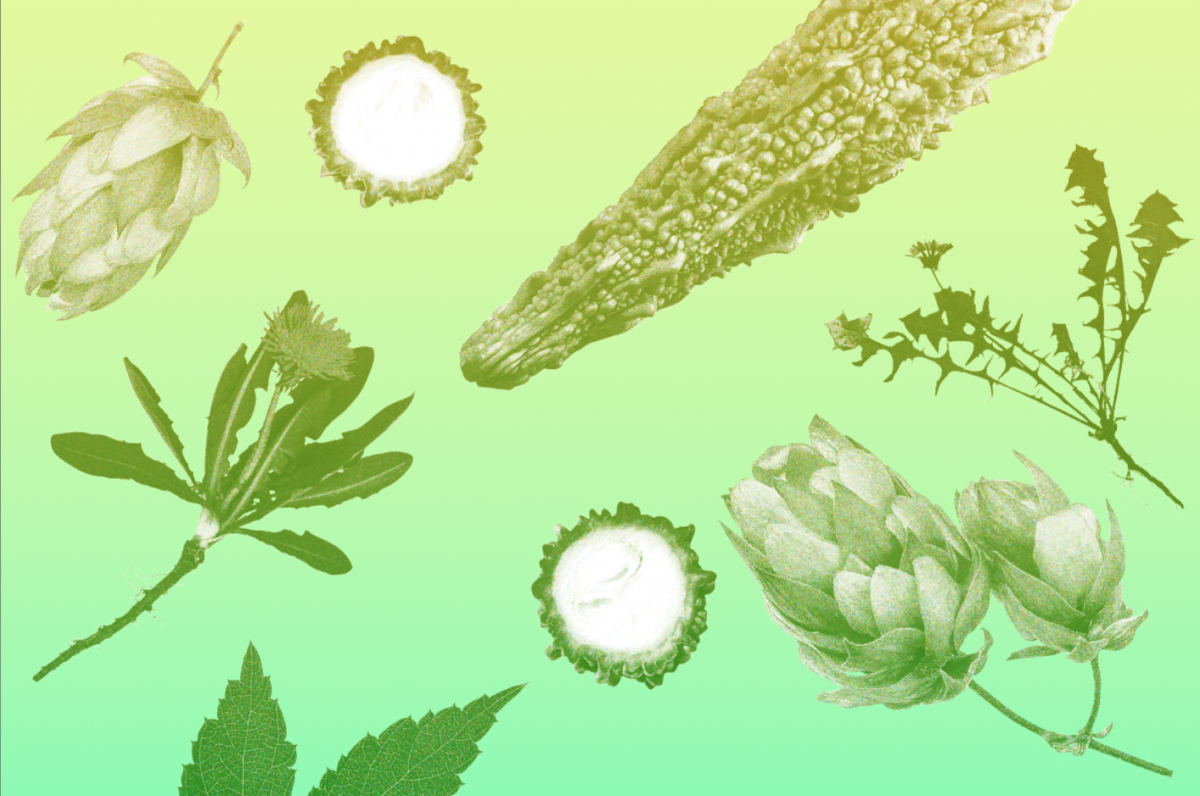
Modern science is now uncovering the molecular basis for these effects, demonstrating that bitter phytochemicals activate specific receptors that regulate gene expression and immune responses. At the 2026 Integrative Healthcare Symposium, Jeffrey Bland, often called the father of functional medicine, presented evidence that bitter compounds—found in foods such as hops, bitter melon, chicory, and dandelions—activate specific receptor sites in the body known as bitter taste receptors, or type two taste receptors.
These receptors are not limited to the tongue; they are also present throughout the digestive tract, where they serve as sensors that trigger hormonal responses. When stimulated by bitter phytochemicals, they promote the release of hormones that regulate inflammation, insulin sensitivity, and appetite.
Natural Anti-Obesity Effects
One of the key hormones affected by bitter compounds is glucagon-like peptide-1, the same hormone targeted by weight-loss drugs like Ozempic.
Bitterness activates type two taste receptors in the gut, which stimulate glucagon-like peptide-1 release and not only help control hunger, but also enhance metabolic processes related to energy expenditure and fat storage, according to Bland.
Research further indicates that phytochemicals present in bitter foods can improve gut permeability and support the healing of leaky gut conditions, while also interacting beneficially with the microbiome. Their anti-inflammatory effects are linked to their ability to activate immune cells via bitter receptors on white blood cells that kill pathogens, leading to a lower inflammatory state and increased immune resilience.
Recent research has linked consuming bitter foods to healthier fat distribution, favoring fat loss from abdominal stores while preserving muscle mass.
Kevin Conners, clinic director at Conners Clinic, a functional medicine cancer clinic in Minnesota, told The Epoch Times that different bitter foods can have distinct effects.
Research on berberine, a compound derived from bitter herbs, illustrates this well. It shows specific effects on glucose regulation and gut activity that support traditional teachings, Conners said.
Bitter foods and herbs contain an abundance of alkaloids, said Sharon Sherman, a licensed acupuncturist and Chinese herbal formulator who is board-certified in Oriental medicine.
“This implies that in the body these foods reduce acidity, heat, and inflammation,” she told The Epoch Times. “So the use of bitter substances [has] a clearing effect with regard to inflammation.”
Additionally, bitter foods activate bile.
“Bile contains cholesterol, which acts as a detergent in the body to break down and emulsify fats and to eliminate fats through the intestines,” she said, noting that the bitter quality also acts as a laxative or purgative.
“From a Western lens, this can be seen as … food or herbs of detoxification.”
The Case for Hops
Of the bitter foods, Bland focused on hops. Hops plants are traditionally known for their role in brewing beer, but the female hops plant’s reproductive organs contain phytochemicals that function as powerful signaling molecules in the body. These compounds—including chalcones, humulones, and isohumulones—stimulate bitter taste receptors, triggering hormonal responses that influence inflammation, insulin sensitivity, and appetite regulation.
Research has shown that hops contain a complex array of phytochemicals, each with distinct effects on cellular biology and metabolism. These compounds can modulate gene expression related to inflammation and detoxification, and they may help regulate hormones involved in satiety and energy balance.
Furthermore, in specific clinical studies, hop extracts have demonstrated the ability to promote fat loss—particularly from visceral fat—while preserving muscle mass.
The Importance of Balance
Bitter foods commonly found in supermarkets include leafy greens such as arugula, broccoli rabe, radicchio, spinach, chicory, and watercress. Bitter melon, also called bitter gourd, is a close relative of zucchini that can be found in many Asian supermarkets. It, too, has proven effects on diabetes.
Bitter melon, which is used in Chinese cuisine, has been shown to reduce blood sugar levels, Sherman said.
The Western palate’s aversion to bitterness is largely a product of conditioning. Because the Western diet overemphasizes sweet and salty flavors, we tend to be put off by bitter tastes because they are unfamiliar to our palates, Sherman said.
“Most of us could probably use the addition of a tad more bitterness in our diets,” she said.
She recommended pairing bitter foods with other flavors to reduce their perceived harshness, as well as cooking bitter greens to mellow their flavor.
That said, overcorrection carries its own risks. Although bitter foods can help reverse an acute imbalance, an overabundance will, over time, create a new one.
“The key is to treat the current imbalance decisively, then move into a balanced palette of foods that encourages all tastes and temperatures,” she said.
Chen framed it in terms that honor both ancient and modern frameworks: Bitterness plays a crucial complementary role in health, such as cooling excess, supporting heart function, and aiding detoxification, but it must harmonize with the other four tastes—sweet for tonification, sour for calming, pungent for dispersion, and salty for softening—to avoid imbalances and promote holistic well-being.
“Incorporating moderate amounts encourages long-term vitality rather than extremes,” he said.