



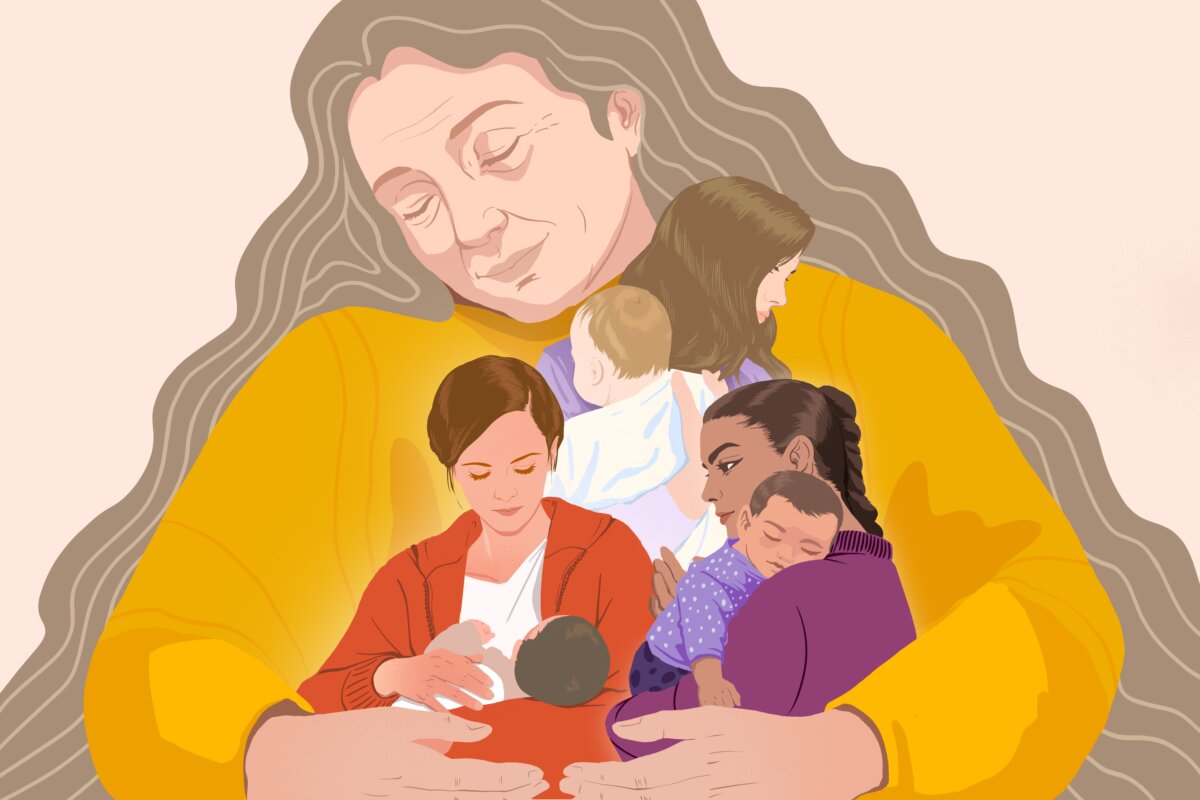
Maggie Gordon-Walker remembers crying every day after becoming a mother, but she kept it hidden.
She did not feel unwell, but she did not feel herself, either. A needy baby, sleepless nights, moments of doubt—these are easier to survive when they are shared. But Gordon-Walker had no one to help her make sense of the life-changing transition into motherhood.
For most of human history, motherhood was not something women learned about on their own. Child care was shared across families and communities. Grandmothers, aunts, siblings, and neighbors played active roles, creating a system in which knowledge was passed down through daily life. Mothers learned by being a part of the community.
The idea of a “village” is often used loosely, but in practice, it was made up of small, specific roles that shaped how families functioned day to day.
Women learned the basics of motherhood by being around it. Breastfeeding, childbirth, how to soothe a crying baby, how to manage a household with multiple children—these were not separate lessons but part of daily life. In larger families, which were the norm, there were always more hands. Older sisters learned to carry babies on their hips while caring for the toddlers. Younger children were given small, age-appropriate tasks. Cooking, cleaning, and organizing a household were divided up by age, sex, and ability. Everyone pitched in.
Extended family also played a central part. An aunt might take a baby for the afternoon so a new mother could take a much-needed nap. Grandmothers offered advice, both practical and emotional, that came from having parented many times over. Neighbors noticed when a child was late home from school, or stepped in when someone had to run an errand.
What made this system work was the accumulation of many small contributions. Household chores, caring for a new baby, or making dinner didn’t fall to one person. The work moved around, often in ways that were barely noticed but deeply felt and appreciated.
Today in the United States, the village-style environment is rare.
Families now stretch across cities and states, and many women begin raising children far from where they grew up. Parenting knowledge comes through articles, books, experts, and online advice rather than through years of proximity to older generations.
With multigenerational support no longer built into the family structure, much of the grind of motherhood falls on one person.
Postpartum depression rates have skyrocketed, with levels more than doubling in the past decade.
Katie Bodendorfer Garner, a researcher and executive director of the International Association of Maternal Action and Scholarship, has spent years interviewing mothers about this shift.
“Mothers were never supposed to mother solo,” she told The Epoch Times.
The 1st Year, Up Close
Dr. Susan Hatters-Friedman, a perinatal psychiatrist, told The Epoch Times: “Being a new mom is often romanticized in our society. Moms are expected to be happy.”
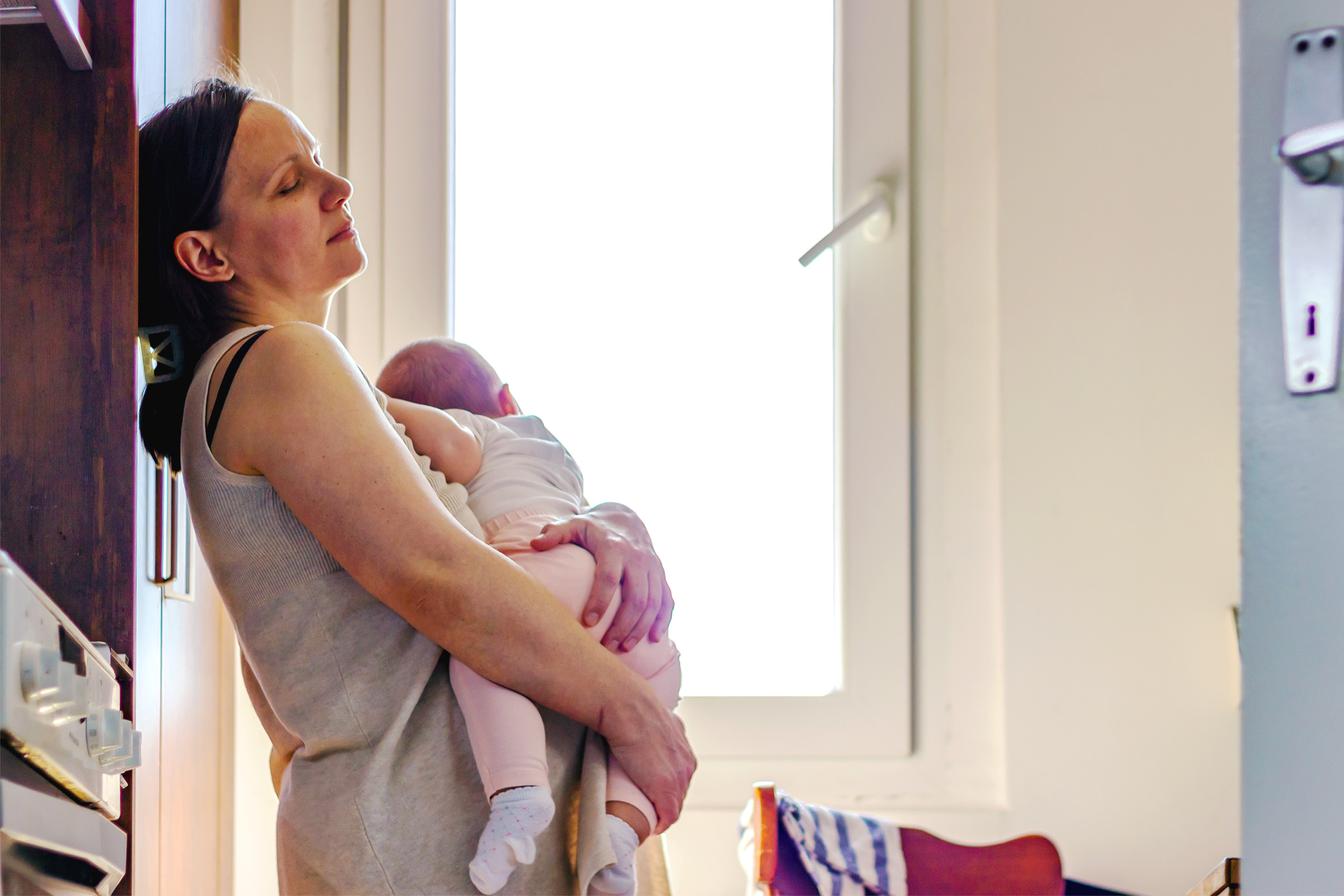 (Getty Images/Jelena Stanojkovic)
However, the reality is that a new baby needs something every few hours. Sleep is fragmented, the woman’s body is still recovering, and emotions can shift quickly from one moment to the next. The first year is a cycle of feeding, soothing, and figuring things out as you go, often without much time to process any of it.
“There are biological, psychological, and social changes happening all at once,” Anne Welsh, a clinical psychologist specializing in maternal mental health, told The Epoch Times. Learning how to care for a baby happens at the same time that a woman is adjusting to a new version of herself.
When other mothers are nearby, that experience is reflected through conversation and shared understanding.
“When there is no one there to mirror that experience, it can feel incredibly lonely,” Welsh, who runs the coaching program Ambitious Mothers Mastermind, said. “On the outside, things can look very capable and composed. On the inside, there is often exhaustion and a sense of being very alone in it.”
Loneliness carries clinical weight. Research has shown that when consistent support is missing, the risk of postpartum depression and anxiety rises. The absence of support forces many women to stay silent about how they feel.
That was what Gordon-Walker was like. On the outside, she was presenting the appearance that everything was fine, but on the inside, she was unraveling.
Rebuilding What Was Lost
Gordon-Walker eventually founded Mothers Uncovered, a peer-led mothers’ group.
What mothers’ groups offer is akin to the original village form. Conversations happen in real time between women in the same trenches, and they deal with what is working, what is not, and the questions that keep new parents up at night. It isn’t the same as generational wisdom, but it may be the closest thing to it.
Gordon-Walker is not alone in recognizing the need for community. Emely Darby started The Posh Mama Club when she found herself feeling isolated, unsupported, and on the brink of postpartum depression.
“Moms keep coming back because they feel seen, supported, celebrated, and truly valued,” Cindy Utterback, who leads the Fresno, California, chapter of The Posh Mama Club, told The Epoch Times.
Garner’s own experience points to the same hunger for a village. Years before her research career, she was a new mother with a colicky baby and no idea what she was doing. She found five women in similar circumstances. They met for coffee, for walks, for lunch.
“We were complete strangers on the first day and best friends a month later,” she said.
Familiarity creates structure. Women check in with each other, follow up, and remember what was said the week before. The exchanges are small, but they begin to form a connection with other moms that feels reliable.
“That comfort helps them step out of their shell, become stronger, more confident, and in many cases, some have even stepped into leadership roles within our community,” she said.
Why Peer Support Works–and Its Limits
Studies show that consistent peer support reduces the risk of mental health issues and strengthens a mother’s sense of confidence during the early months.
Specifically, when women have strong support systems in place during the last trimester and the first six months postpartum, they experience less stress and anxiety, manage the day-to-day demands of motherhood more consistently, and feel more stable in their new role. The work of caring for a newborn doesn’t change, but a new mom’s sense of herself and her situation is positively affected when she can rely on a larger community.
Welsh described peer support as a form of mirroring—seeing one’s own experiences reflected in other people helps normalize what might otherwise feel like personal failure. In difficult moments, instead of asking, “What am I doing wrong?” a mother begins to recognize that much of what she is experiencing is part of the process.
However, modern mothers’ groups have real limits.
The most immediate is that they require effort. Support has to be sought out, scheduled, and sustained during a period when time and energy are already limited. Those added steps can make consistency difficult to maintain.
Consistency, Hatters-Friedman noted, is precisely what makes support meaningful. Intermittent connection doesn’t carry the same protective effect as the steady, ambient presence that once came from living near family.
There is also a generational gap that groups cannot easily close. When families were larger and more embedded in communities, children absorbed knowledge slowly over years by watching their elders—an informal apprenticeship that no longer happens.
Besides mothers’ groups, mothers are thinking of different ways to rebuild their own villages.
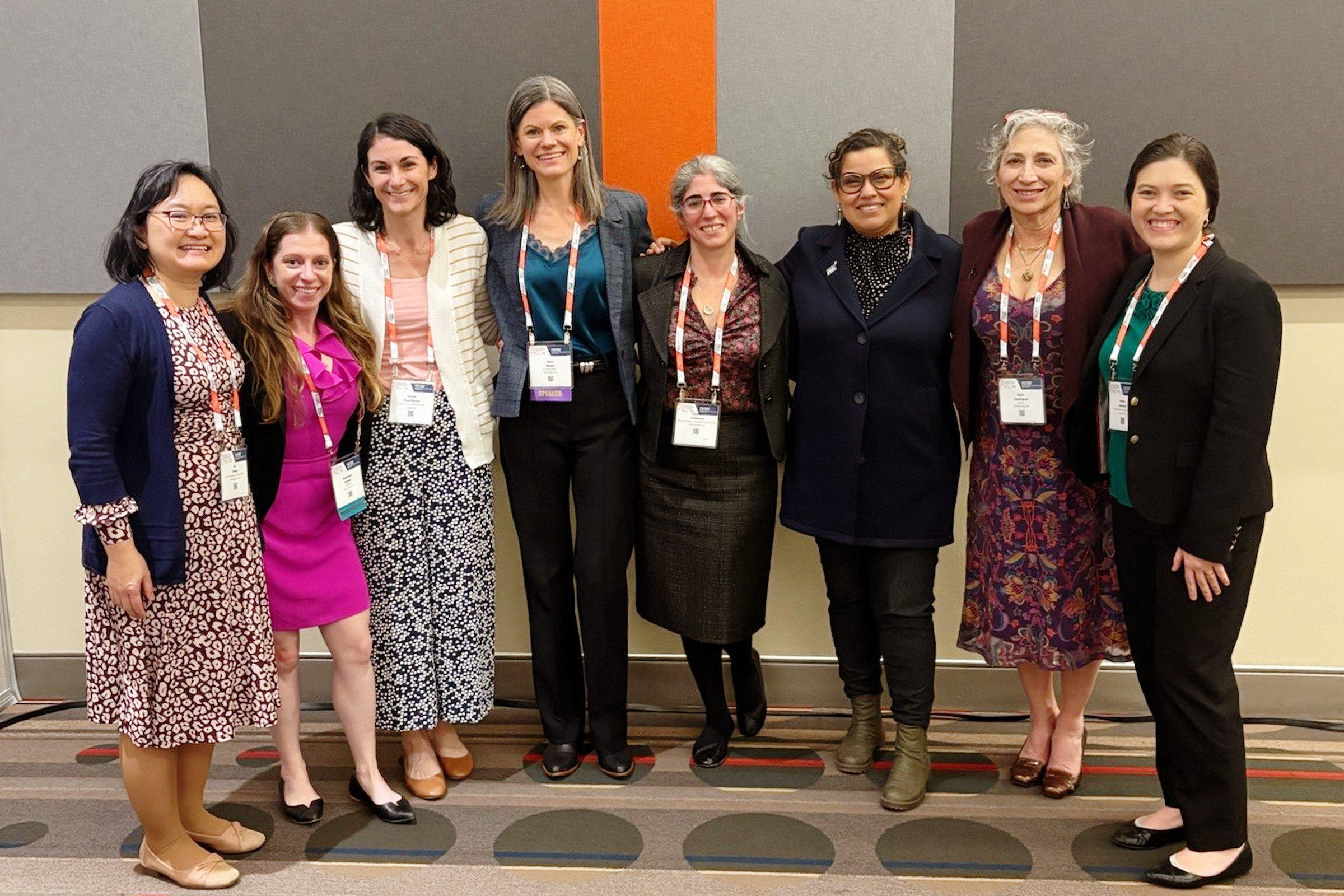 Anne Welsh (4th L) with her Ambitious Mothers Mastermind group. (Courtesy of Anne Welsh)
For some women, that begins with formal groups: church-based gatherings, neighborhood playgroups, and structured organizations such as Mothers Uncovered or The Posh Mama Club. For others, it is less formal. A small group of women who meet regularly, a few friends who commit to checking in, a scheduled weekly walk, or even a quick phone call can help build the level of consistency needed to help mothers find ways to cope.
Connection now moves more slowly, through smaller networks, without the structural support that once made it automatic.
Nonetheless, what once felt lost is beginning to reemerge and take hold.