




Eggplant may be best known for its culinary versatility, starring in dishes ranging from baba ghanoush and moussaka to ratatouille and classic eggplant parmesan. Beyond its ability to carry a hearty dish and soak up bold flavors, the vegetable is particularly rich in natural plant compounds, including phenolic compounds that can act as antioxidants in the body.
Whether you opt for a deep purple, white, green, or striped variety, this meaty vegetable offers a unique nutritional profile that may support metabolic health, help combat oxidative stress, and contribute to a healthy nervous system.
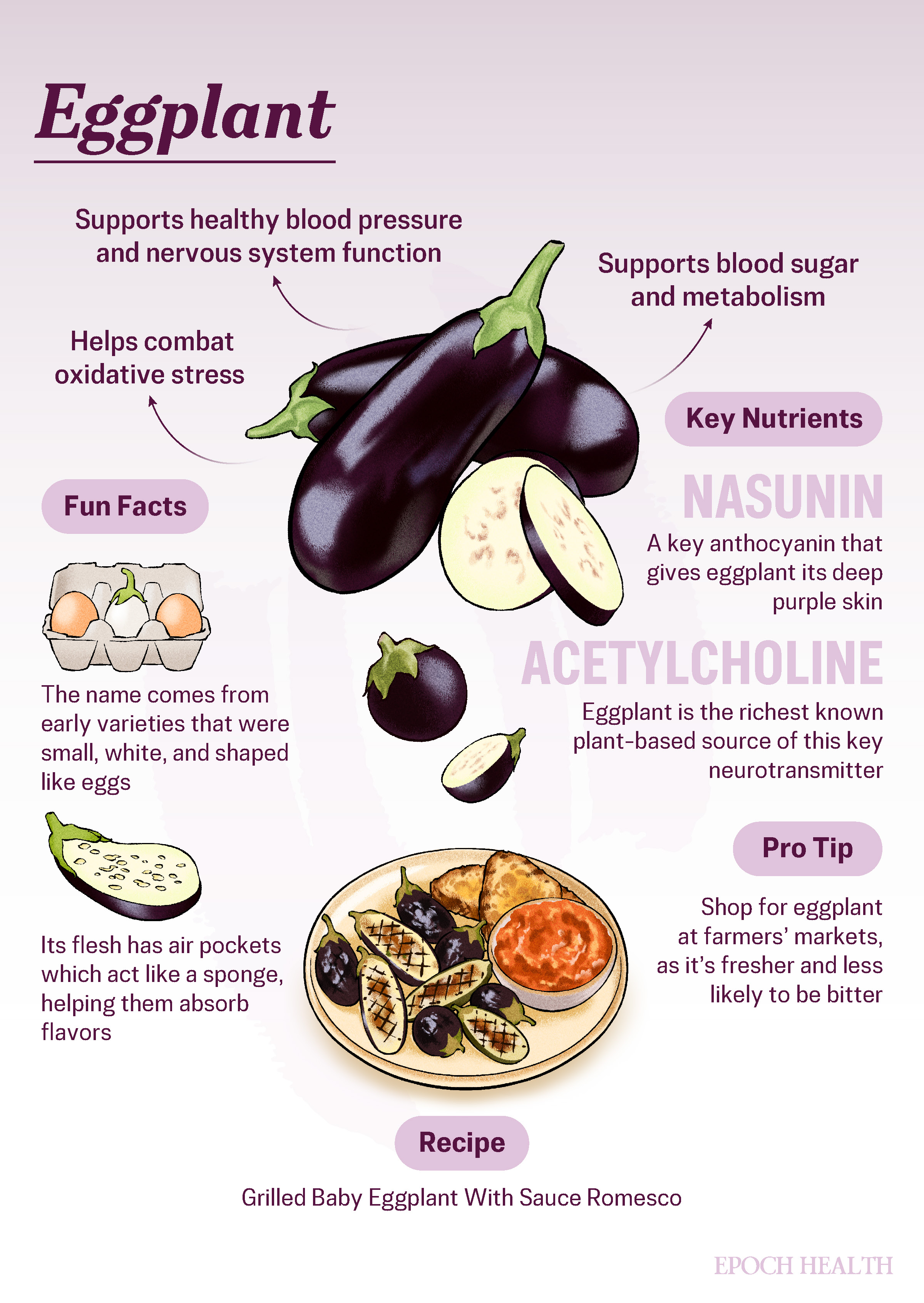 (Illustration by Ran/The Epoch Times)
However, beneath its high water content is a surprisingly diverse mix of nutrients and beneficial plant compounds, such as:
-
Phenolic Content: Phenolic compounds, including polyphenols, are natural plant compounds that can act as antioxidants in the body. Eggplant has a higher phenolic content than many common vegetables.
-
Chlorogenic Acid: A natural antioxidant polyphenol found in the flesh and accounts for 70 percent to 90 percent of the total phenolic content in eggplants.
-
Nasunin: The main in eggplant, a plant pigment that gives the vegetable its deep purple skin.
-
Acetylcholine: Eggplant is the richest known plant-based source of acetylcholine, a neurotransmitter—containing up to 2900 times more than other common vegetables.
-
Fiber: A single serving of one cup of raw, cubed eggplant contains 2.5 grams of fiber.
-
Potassium: A single serving of one cup of raw, cubed eggplant has nearly 190 milligrams of potassium.
Different colored eggplants contain different phytochemicals:
“The darker purple varieties will have a higher nasunin content, but other varieties are still packed with beneficial nutrients,” Tiffany Bruno, a registered dietitian, told The Epoch Times.
-
Purple is highest in anthocyanins such as nasunin.
-
White lacks anthocyanins but still contains chlorogenic acid and other phenolics.
-
Green and striped varieties have slightly different polyphenols.
“There are some variations in eggplant based upon phenolic compound levels and acetylcholine content, but there are no valid reasons to believe that one variety is better than another for medicinal purposes,” Lyons said.
[shortcut_anchor id=”anchor_1787338946718″ label=”Benefits”]Health Benefits[/shortcut_anchor]Eggplant’s real strength lies in its specialized plant nutrients, which may offer a range of health benefits.
Helps Combat Oxidative Stress
Eggplant’s high concentration of phenolic compounds acts as a front-line defense against cellular damage.
A 2018 review published in Food Chemistry found that these antioxidants scavenge free radicals, suppress pro-inflammatory pathways, and help protect tissues throughout the body from oxidative stress. Chlorogenic acid in the flesh and nasunin in the peel lower markers of free radical damage.
“[Nasunin] can help fight free radicals, minimize normal cell damage, protect the brain, and reduce oxidative stress,” Bruno said.
In fact, lab research has shown that nasunin in eggplant demonstrated particularly strong antioxidant activity, outperforming 15 other common vegetables in fighting free radicals.
Instead of just fighting off existing free radicals, lab experiments in rodents show that nasunin binds to iron to prevent their formation in the first place, helping shield brain cells from damage.
In laboratory models, eggplant extracts reduced experimentally induced DNA damage and mutagenicity.
Supports Healthy Blood Pressure and Nervous System Function
Eggplant may also play a role in cardiovascular and neurological health.
A 2019 study found that a concentrated eggplant preparation reduced blood pressure in people with normal to high blood pressure or mild hypertension. Researchers proposed that the benefits could stem from acetylcholine activating the parasympathetic state, the body’s “rest and digest” mode, while quieting the “fight or flight” sympathetic response that often raises blood pressure. The study participants also reported lower levels of tension, anger, and confusion.
A separate 2021 study in rats demonstrated how this activation of the parasympathetic state may be working. Orally ingested acetylcholine doesn’t need to enter the bloodstream to lower blood pressure. Instead, it binds to receptors in the gut, triggering the vagus nerve to send calming signals to the central nervous system.
Acetylcholine isn’t the only compound working in eggplant’s favor. Lab research has found that eggplant extracts can act as a natural ACE inhibitor—blocking the same enzyme targeted by common prescription blood pressure medications to help keep blood vessels relaxed and open. While the findings are interesting, eggplant is not a substitute for antihypertensive treatment.
“The studies related to acetylcholine in relation to eggplant were interesting, but preliminary,” Dr. Edmundo Rodriguez-Frias, double-board-certified in gastroenterology and geriatrics, told The Epoch Times in an email, adding that much of the research related to the mechanisms behind eggplant’s potential effects has been done in a laboratory or animal model setting.
“At this time, eggplant should augment proven dietary changes, monitoring, or prescription medications,” he said.
For those looking to add eggplant to a heart-healthy diet, certain varieties offer up more acetylcholine than others. A 2023 study published in the Journal of Food Composition and Analysis examined 100 varieties and found that round, green Asian eggplant contained the highest concentrations of acetylcholine, with levels up to seven times higher than those in lower varieties. Standard purple eggplants still averaged an impressive amount. Regardless of variety, the study noted that allowing eggplants to ripen fully can help them reach their full potential.
Supports Blood Sugar and Metabolism
Eggplant shows potential for supporting blood sugar control and metabolic health, in part due to its high concentration of chlorogenic acid.
“The body of evidence for chlorogenic acid is largest overall, even though much of the research has been conducted using food products which include eggplant, but not solely eggplant,” Rodriguez-Frias said.
Research suggests that chlorogenic acid helps moderate blood sugar responses, improve insulin sensitivity, and enhance cellular glucose uptake.
A 2021 review published in the Iranian Journal of Basic Medical Sciences highlighted how extracts from eggplant skin and pulp actively inhibit key digestive enzymes. By slowing the breakdown of carbohydrates in the gut, eggplant extract actively inhibits key digestive enzymes in laboratory studies, a mechanism that may help slow carbohydrate breakdown and blunt post-meal blood sugar spikes.
Additional Benefits
Eating eggplant also comes with digestive health benefits.
“Eggplant’s greatest contribution is through its addition of fiber and polyphenol compounds to the diet, which end up in the colon where they interact with colonic microorganisms,” Rodriguez-Frias said.
The fiber reaches the colon, where it can be fermented by gut bacteria. Its polyphenols may also interact with the gut microbiota.
“Research on plant polyphenols as signaling molecules for the gut microbiota is in an early stage and is exciting from a biological standpoint,” he added.
Eggplant also contains compounds that offer protection for the skin. A 2025 study published in Molecules showed that eggplant extracts neutralize a toxic byproduct of fat oxidation that causes age-related skin damage and shield human skin cells from daily oxidative stress.
[shortcut_anchor id=”anchor_1787338962334″ label=”Absorption”]How to Increase Absorption [/shortcut_anchor]To get the most nutritional bang for your buck from eggplant, how you prepare it matters. Simple choices can increase your body’s absorption of its key antioxidants and help preserve delicate nutrients.
Eat the Skin
The deep purple pigment in eggplant skin contains the vast majority of its anthocyanins and nasunin antioxidants. Stripping the peel removes these potent free-radical fighters.
“You will get more of those beneficial antioxidants if you keep the skin on,” Bruno said, adding that the skin also contributes to the fiber content.
“Since most Americans do not consume enough fiber, this is an easy way to increase your intake a bit,” she added.
Brighten With an Acid
Adding acidic ingredients such as lemon juice, tomatoes, or a splash of vinegar does more than enhance flavor—it can help protect anthocyanin structures during cooking. Acids help keep antioxidants intact and prevent excessive browning in the flesh, preserving both its appearance and nutritional value.
Lightly Salt to Improve Texture
Salting eggplant slices before cooking primarily alters their texture and draws out excess water, making the flesh less sponge-like so it absorbs less oil.
“Brief salting prior to rinsing should not significantly diminish the nutritional properties of eggplant,” Rodriguez-Frias said, however, he added, any unrinsed salt will increase sodium levels.
[shortcut_anchor id=”anchor_1787338971255″ label=”Storage”]Optimal Storage [/shortcut_anchor]For having such a tough skin, eggplants are surprisingly delicate to store:
Keep Eggplants Dry
Moisture is an enemy of eggplant. Store whole ones loose or inside a breathable paper bag, and wait to wash them until right before you plan to cook.
Store Away From Ethylene Producers
Eggplants are sensitive to ethylene, a gas released by certain fruits including apples, bananas, tomatoes, and melons. Exposure can accelerate rotting and bitterness.
Expect a Short Shelf Life
-
Whole: A whole, uncut eggplant stays fresh at room temperature for three to five days.
-
Cut: Once sliced, exposed flesh quickly oxidizes and browns. Store cut eggplant wrapped tightly with plastic or in an airtight container in the refrigerator, and use it within one to two days.
“Like potatoes, eggplants can quickly oxidize, with the cut part darkening when exposed to the air,” Jamie Simpson, the executive chef of the Culinary Vegetable Institute at The Chef’s Garden, told The Epoch Times in an email.
“To prevent that, you can cut the eggplant and immediately put it into a saltwater brine. That keeps them from darkening while handling other parts of the recipe,” he said.
[shortcut_anchor id=”anchor_1787338979101″ label=”Pro Tips”]Pro Tips[/shortcut_anchor]If you have ever had a bitter eggplant, age is usually the culprit.
“Eggplant seeds contain compounds that can become bitter with time, so an older or overripe eggplant might be a tad bitter compared to its fresh-picked state,” Bruno said.
Thus, buying eggplant from a local farmers market can mean less time in transit, resulting in a fresher vegetable that’s less likely to taste bitter.
Raw eggplant’s airy structure makes it an incredible vehicle for absorbing spices and marinades, but that also means it will soak up oil just as quickly.
“Deep frying this vegetable may result in turning what would normally be a lower-calorie vegetable into a calorie-rich dish,” Lyons said.
Don’t limit yourself to dips or the classic eggplant parmesan. Simpson recommends marinating raw slices and topping with sauce, braising them slowly, splitting them in half to grill cut-side down, or searing them in olive oil to build a golden crust.
Eggplant also develops a decadent velvety texture when cooked whole, due to a steaming effect.
“Its moisture causes it to expand and swell inside,” Simpson said. “That’s because the water inside the flesh has reached a boiling point, and the interior eggplant is effectively being steamed.”
Another technique? “Eggplants pickle well, and that can be kind of fun,” he added.
[shortcut_anchor id=”anchor_1787338985118″ label=”Recipe”]Recipe[/shortcut_anchor]
Grilled Baby Eggplant With Sauce Romesco
Recipe by Jamie Simpson, executive chef of the Culinary Vegetable Institute at The Chef’s Garden
Prep Time: 40 minutes
Total Time: 1 hour 25 minutes
Servings: 6
Special Equipment: Food processor
Little eggplants are best showcased whole or halved and grilled. Serve them on plates as a side dish or as a communal starter on a platter, with the romesco sauce in the center and eggplant arranged around it. Invite people to pick up the eggplant and spoon the sauce on top.
Ingredients
-
6 red bell peppers
-
7 ounces bread, such as focaccia, torn into bite-size pieces
-
1 1/2 cups extra-virgin olive oil, plus 2 tablespoons, divided, and more for rubbing
-
1 pound small eggplants, such as fairy tale, Indian, or Thai varieties
-
2 teaspoons salt, plus more to taste
-
Freshly ground black pepper to taste
-
4 1/2 ounces marcona almonds
-
3 to 4 large garlic cloves, roughly chopped
-
1 teaspoon paprika oil extract, optional
Instructions
-
Over a gas burner, grill, or hot coals, cook the peppers, turning frequently, until blackened all over; there should be no red spots. As soon as the peppers are done, transfer them to a bowl and cover with plastic wrap. Let them sit to steam for about 30 minutes.
-
Meanwhile, preheat the oven to 300 degrees Fahrenheit. In a bowl, toss the bread with 2 tablespoons of the olive oil until lightly coated. Transfer to a large baking sheet and bake until crunchy, about 25 minutes.
-
Remove all of the peels and seeds from the roasted peppers.
Chef Tip: Cut the peppers in half lengthwise, remove the seeds, then turn the peppers skin side up. Use a chef’s knife to pull off the skin in one swoop. -
Preheat a charcoal or gas grill to medium-high and oil the grates. Keep your smallest and thinnest eggplants whole and halve any larger or fatter ones lengthwise. Generously rub the eggplants with olive oil and season with salt and pepper. Arrange the eggplants on the grill and cook until charred but not completely blackened on the bottom, five to 10 minutes.
-
Flip and grill until the eggplants are charred in spots and softened but not completely mushy, about three to five minutes longer, depending on the eggplant varieties.
-
If you’d like to make grill hatch marks, grill the eggplants cut sides down until the marks form, two to three minutes, then turn 90 degrees with the cut sides down and continue grilling two to three minutes longer.
-
In a food processor, combine the peppers, toasted bread, almonds, garlic, salt, and paprika oil extract, if using, and pulse until coarsely chopped. Add half the oil and pulse to incorporate. Add the remaining oil and pulse just until the sauce comes together, and the large chunks of bread and almonds have mostly dispersed. The ingredients should maintain some of their individual textures, and the sauce should be slightly broken or split.
-
Serve immediately or store in the refrigerator.
[shortcut_anchor id=”anchor_1787342593622″ label=”Precautions”]Precautions[/shortcut_anchor]Eggplant is a member of the nightshade family, alongside tomatoes, peppers, and potatoes, and contains alkaloids including solanine that can occasionally trigger mild sensitivities or inflammatory responses in some people.
“It may contribute to some autoimmune symptoms, but it will depend on the individual and how their body responds,” Bruno said. However, that clinical evidence remains limited, she added.
“That being said, some folks do find that it triggers symptoms. If you’ve noticed a clear pattern of a food giving you any type of unpleasant symptom, it’s worth avoiding it for a bit and trying to reintroduce it later to see if those symptoms return,” Bruno said.
A true eggplant allergy is extremely rare, according to Lyons, though allergic reactions can occur in people with other allergies to plant-based foods.
Raw eggplant can be tough on the digestive system, causing bloating or mild abdominal discomfort. Gentle cooking methods help make it easy to digest.
[shortcut_anchor id=”anchor_1787339000154″ label=”Fun Facts”]Fun Facts[/shortcut_anchor]
-
There are more than 1000 types of eggplants worldwide.
-
The name “eggplant” comes from early varieties that were small, white, and shaped like eggs.
-
Black magic eggplants can have up to three times the antioxidants as the other types.
-
Eggplant is technically a berry.
-
Eggplant flesh has air pockets that act like sponges, helping them absorb flavors.
[shortcut_anchor id=”anchor_1787339004218″ label=”Tips for Kids”]Tips for Kids[/shortcut_anchor]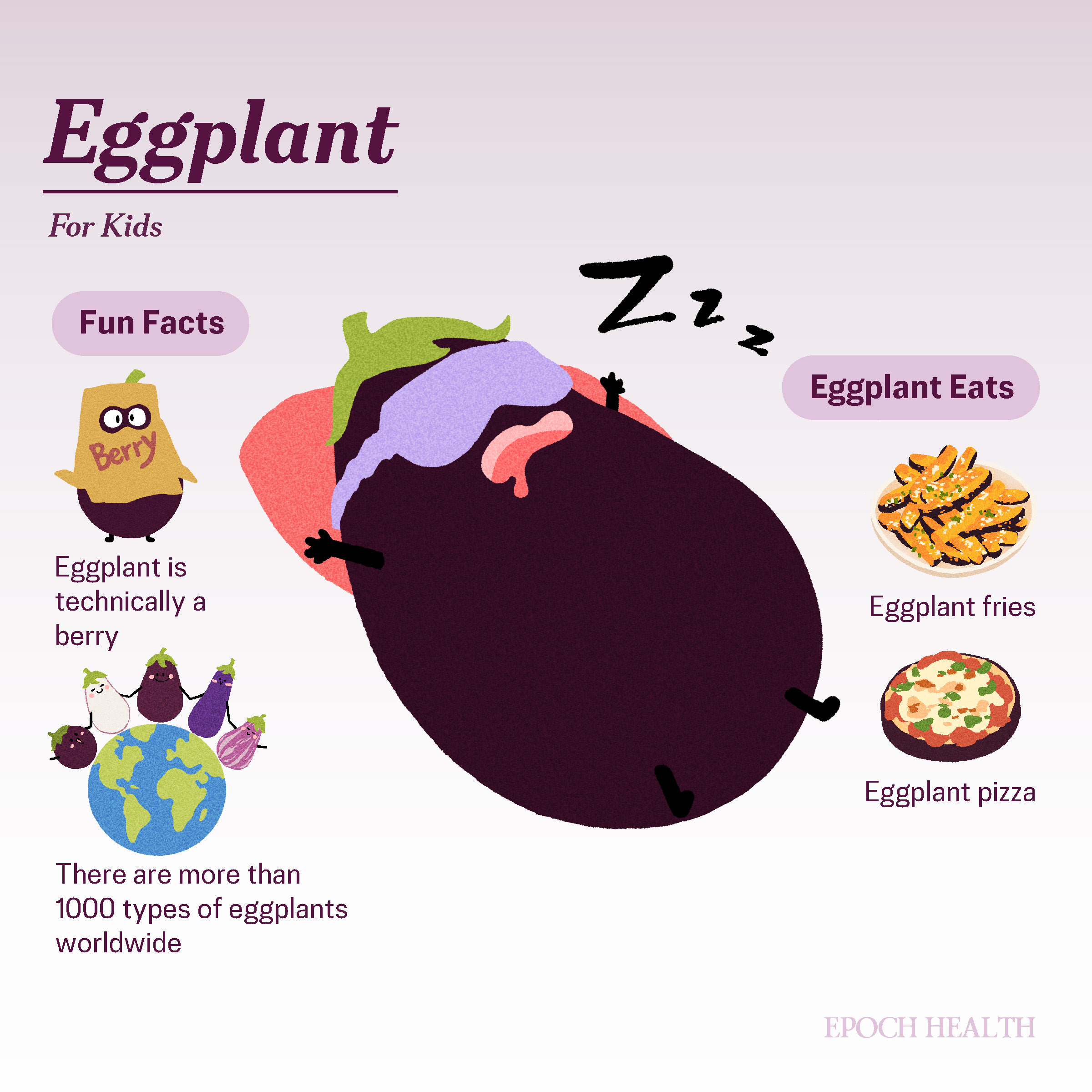 (Illustration by Ran/The Epoch Times)
If mushiness is the dealbreaker, try aiming for crunch. Cutting eggplant into fries, breaded sticks, roasted cubes, or air-fried bites with a panko or parmesan crust can help change the sensory experience for little ones.
Smaller-sized options such as Japanese, Italian, or fairy tale eggplants are also much easier on young palates because they have more tender skins, fewer seeds, and usually a milder flavor than larger eggplants.
Another fun trick is turning eggplant into pizza by using thick, roasted slices as mini pizza crusts, topped with warm tomato sauce, melted mozzarella, and kids’ favorite toppings.
When all else fails, blending cooked eggplant is an easy workaround.
“Try blending cooked roasted eggplant into tomato sauce, meatballs, etc., or use it as a base ingredient to make various ‘hummus’ style dips,” Lyons said.
“It is likely that the soft texture of the pureed eggplant will be less intimidating for children than eating it in a solid form,” he added.