




Jen Weaver started taking a GLP-1 medication to lose weight and was surprised to find that it also relieved her joint pain.
Weaver has had rheumatoid arthritis for years. Twice a night, she woke with aching, sometimes stabbing, pain in her shoulders and hips, and it would take 30 minutes to fall back asleep. What’s worse, her limited ability to exercise and the side effects of medications caused her to gain 70 pounds.
She needed to lose weight, but more than that, she wanted to be free of pain so she could get to the floor and play with her grandchildren again.
Research presented at the American College of Rheumatology’s annual meeting stood out to her—suggesting that GLP-1 drugs not only reduce weight but can also reduce rheumatoid arthritis flares.(Tatsiana Volkava/Getty Images)
That “something else” is what’s been making headlines in the last two years. Studies are finding that GLP-1 drugs may fight a growing list of diseases and conditions: inflammation, metabolic dysfunction, heart disease, dementia, and even cancer. The popular weight-loss drug is now gaining recognition as a drug with far-reaching potential.
But is it too good to be true?
GLP-1 Mimics Natural Compound
There is something different about GLP-1.
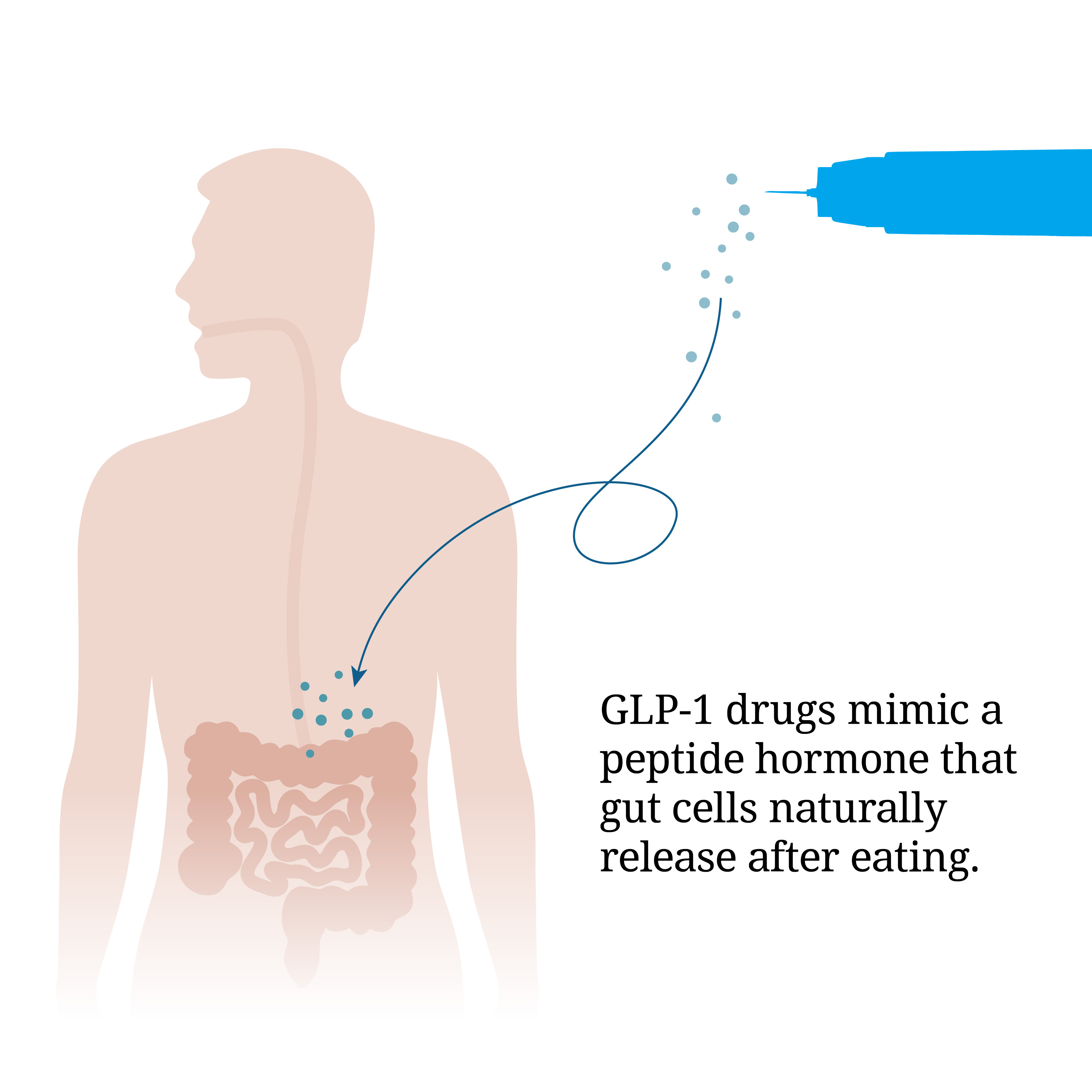
GLP-1 drugs mimic a peptide hormone naturally released by gut cells after we eat, helping reduce blood glucose levels.
Because it’s naturally occurring, GLP-1 and its drugs act on the same receptor. Dr. Jens Juul Holst, one of the pioneering scientists behind the discovery and development of GLP-1 drugs, said on JAMA’s “Healthy Dialogue Podcast.” The receptors are widespread in the body—in the brain and across various organs—so GLP-1’s effects go beyond weight loss.
 (Illustration by The Epoch Times, Shutterstock)
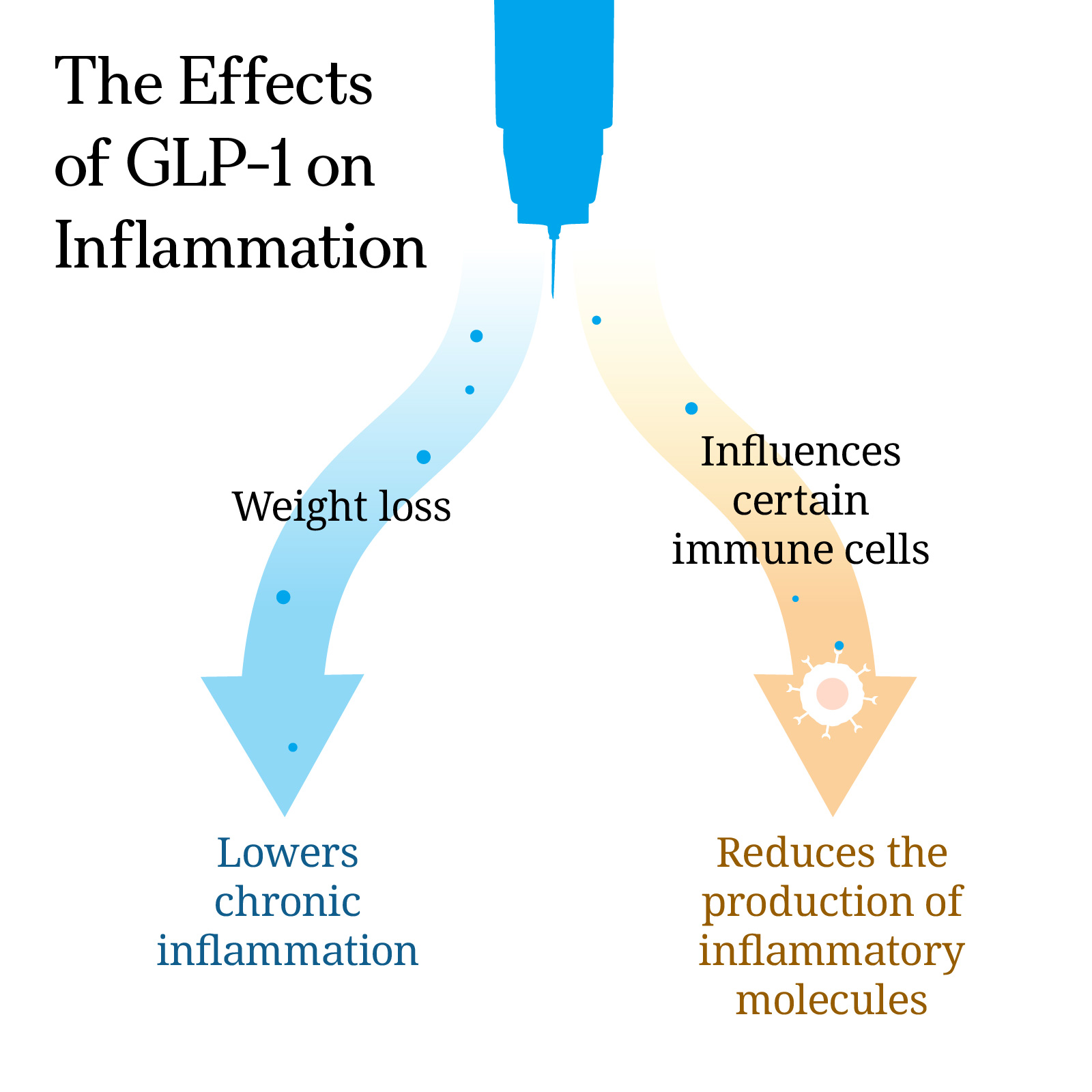
GLP-1 drugs appear to fight inflammation in at least two ways. The first is indirect—through weight loss itself. Carrying excess weight drives chronic, low-grade inflammation, so losing weight tends to calm it down. The second is direct, because immune cells carry receptors that GLP-1 drugs can bind to. In simple terms: the drug may tell immune cells that make inflammatory molecules to stand down.
 (Illustration by The Epoch Times, Shutterstock)
That direct, anti-inflammatory effect is what patients like Sarah Landstrom noticed outside the context of any disease they were being treated for.
Landstrom was using Wegovy for weight loss, but over nine months in 2022, the painful, swollen boils and abscesses of a condition called hidradenitis suppurativa—which had flared for years—stopped appearing. Notably, she had lost weight before, through diet and exercise alone, without any change in her skin condition. She told The Epoch Times that her dermatologist now suspects something beyond weight loss is at work. When her hidradenitis suppurativa flared again, he suggested she get back on a GLP-1 drug.
Research published in JAMA Dermatology found that for those who were overweight or obese, GLP-1 drugs cut skin flares by half. The authors noted that the effect could be due as much to anti-inflammatory action as to weight loss.
GLP1’s inflammation-fighting effect connects to something bigger: metabolism. Metabolism turns food into usable energy to fuel every chemical reaction in the body. It’s linked to diabetes, heart disease, depression, dementia, and, increasingly, cancer.
GLP-1 drugs work differently than older weight-loss drugs, which mostly suppressed appetite. Appetite-suppressing drugs can curb hunger in the short term, but they don’t fix the underlying metabolic problem. GLP-1 drugs instead target the hormones that regulate blood sugar and insulin, which may address metabolic dysfunction more directly.
That matters because metabolic dysfunction is widespread: one-third of Americans have metabolic syndrome, a figure that rises to 62 percent among those 60 and older. Dr. Florence Comite, a Yale- and National Institutes of Health-trained physician-scientist who’s been using GLP-1s for patients since 2005, calls the drugs the antibiotics of our era. While lives may not be extended in quite the same way, she said correcting metabolic health improves our health span.
Inflammation is deeply connected—along with uncontrolled insulin and glucose—to poor metabolic health, she said. Inflammation can result from eating too much food and too many processed foods, compared to our ancestors, who lacked unlimited food and therefore had something we don’t regularly experience: unplanned metabolic breaks.
Another factor influencing our metabolism today is added sugar and excess starch. “Most disorders of aging are a result of how our system, our genes, and their variants interact with sugar,” Comite said. “I’ve not studied a single patient—out of thousands—who has perfect metabolic health.”
Cutting Cancer Risks
Weight loss on its own is already linked to a lower risk of 13 cancer types, which together account for about 40 percent of all cancer cases. Beyond that established link, researchers are exploring whether GLP-1 drugs directly target cancer.
Researchers found the spread of cancer was lower among six cancer types in patients taking GLP-1 drugs—a statistically significant reduction in non-small cell lung, breast, colorectal, and liver cancer specifically, according to a large observational study of more than 10,000 cancer patients.
Another large observational study, covering more than 217,000 women, found breast cancer incidence was 30 percent lower over three and a half years among women taking GLP-1 drugs compared with those who weren’t.
Physicians and patients are increasingly clamoring for pharmaceutical guidance amid speculation that GLP-1 drugs could be a “magic bullet for cancer prevention,” the authors wrote. “There is perhaps no singular preventative intervention with such broad potential to improve women’s health,” they said.
Smaller studies in laboratory animals show that GLP-1s may alter tumor metabolism and the body’s immune response, inhibit some tumor cell growth in certain cancers, and directly reduce inflammation.
Mental Health, Dementia, and Beyond
Because of widespread receptors in the body, with some of the most concentrated areas being in the brain, the drug has also had some effects on mental health and brain-related conditions.
A study published in The Lancet Psychiatry found that taking semaglutide significantly lowered risks of worsening mental illness. Results had previously been mixed, something the authors said could be explained by the drug type. In their study, people taking two other types of GLP-1 drugs didn’t experience a lowered risk of worsening mental illness, and those taking liraglutide had moderately lower risks.
A study published in Alzheimer’s & Dementia found GLP-1s lowered the risk of developing Alzheimer’s disease compared with a Type 2 diabetes drug that works in part by blocking the enzyme responsible for the rapid degradation of the GLP-1 hormone. One reason posited is lowering neuroinflammation.
Other research suggests GLP-1s may also benefit renal health, strengthen the gut barrier in inflammatory bowel disease, and directly or indirectly target respiratory disorders such as asthma, sleep apnea, and chronic obstructive pulmonary disease.
Not the Only Player
GLP-1s aren’t the only drug with potential for far-reaching, unexpected effects.
SGLT2 inhibitors, Type 2 diabetes drugs such as dapagliflozin or empagliflozin, work by removing extra sugar from kidneys. Research has found they also improve cell energy, reduce inflammation, turn genes on and off, and promote cell cleanup, with potential benefits for the kidneys, liver, and heart. They’ve been shown to be even more effective than GLP-1 drugs for reducing rheumatoid arthritis flares.
Most of us have never heard of SGLT2 inhibitors or similar drugs because they are not in the spotlight. Obesity drugs are in high demand—displacing cancer drugs in the No. 1 slot of forecasted sales and accounting for 25 percent of the pharmaceutical market, compared to just 1 percent in 2022. Obesity research trials are also up; obesity leaped over seven spots to go from ninth to second among diseases studied in 2024.
Still, GLP-1 research comes with a caveat: More studies are needed, particularly double-blind, placebo-controlled trials to confirm whether GLP-1s are safe and effective for a growing list of conditions—meaning it’s far from a slam-dunk.
Dr. Amar Rewari, chief of radiation oncology at Luminis Health and adjunct assistant professor at Johns Hopkins School of Medicine, told The Epoch Times that he is “cautiously optimistic.”
He said none of the newer findings on cancer are sufficient to change how doctors practice medicine.
Other drugs, such as the anti-inflammatory colchicine, offer cautionary tales. Some colchicine trials showed promise in reducing inflammatory markers, but a large clinical trial of 7,062 people published in The New England Journal of Medicine found that colchicine didn’t prevent events. There was no reduction in death from cardiovascular causes or recurrent heart attacks and strokes.
Doctors are also concerned about other issues with GLP-1s.
The Risks
One key difference between GLP-1 drugs and the natural GLP-1 our body makes is that natural GLP-1 is very short-lived and degrades rapidly. GLP-1 drugs are engineered to last days or weeks, rather than minutes. In other words, the drugs match what’s become ordinary: a lifestyle of larger, more frequent meals and snacking.
GLP-1 drugs are not risk-free, and doctors are wary of the current enthusiasm outrunning the evidence. Here are some things to watch out for:
-
Known Side Effects: They include gallbladder disease, pancreatitis, and gastrointestinal problems.
-
Long-Term Effects: These drugs haven’t been used widely for long enough to know what happens after years of continuous use, according to Dr. Craig Backs, internist and founder of The CureCenter for Chronic Disease.
-
Duration: More than half of Americans who start a GLP-1 drug quit within a year.
-
Knockoffs and Scams: Due to the popularity of GLP-1s, compounded and gray-market versions have created an opening for disreputable sellers, and patients have received compromised or ineffective products as a result, Comite said.
Doctors are explicitly warning against self-prescribing. It’s too soon for broad off-label use of GLP-1 drugs, Rewari said.
“If you’re otherwise healthy and you don’t have high risk factors, it’s better to do the lifestyle modifications and not just pop a pill, or do an injection for no reason,” Rewari said.
 As demand and use for GLP-1 drugs grow, patients should weigh the benefits and risks and consider the uncertain long-term effects with a doctor.(Tatsiana Volkava/GETTYIMAGES)
Why Habits Still Matter
Backs, whose clinic focuses on lifestyle modifications to lower inflammation and who isn’t a fan of GLP-1s, doesn’t discourage patients who want to use them. However, rather than prescribing them himself, he refers them to a weight-loss specialist for that part of treatment. He works with the patients taking GLP-1s who are willing to fix poor diets and address other root causes of dysfunctional metabolism.
“I try to be flexible and meet people where they are, and if they’re bound and determined [to use GLP-1s], it’s not either/or, it’s both,” he told The Epoch Times.
The strategy may have merit in light of one study’s findings published in Food Quality and Preference that only the amount of food—not the desire for specific foods—changed among those taking GLP-1s, suggesting habits play a bigger role than some realize.
Also, our body can generate its own GLP-1 through a variety of ways.
Nutritionist and Epoch Times reporter Sheridan Genrich wrote about how nutrient-rich foods such as fiber, protein, and healthy fats each play a unique role in hormone release—including GLP-1—that helps regulate appetite and satiety.
However, the benefits fade soon after you give up your healthy diet, just like they do when you stop taking GLP-1 drugs, Backs said. Quitting the GLP-1 quickly reverses cardiovascular benefits, according to a study published in BMJ Medicine. Among 132,551 GLP-1 users who stayed on the medication for three years, an 18 percent reduction in cardiovascular events was almost nullified after a year and became a higher risk two years after stopping the drug.
Whether you take GLP-1s or not, a diet of chips and soda isn’t protective of disease, said Lotte Bjerre Knudsen, a Danish professor and a GLP-1 pioneering scientist, on JAMA Multimedia.
She said the medications act as a stopgap measure, and other solutions are needed to address poor lifestyle. “I would just hate to see us walk away and just say, ‘Oh, the medicines are … all we need to do.’ We need to get to the other problem around how to make the world healthier.”