



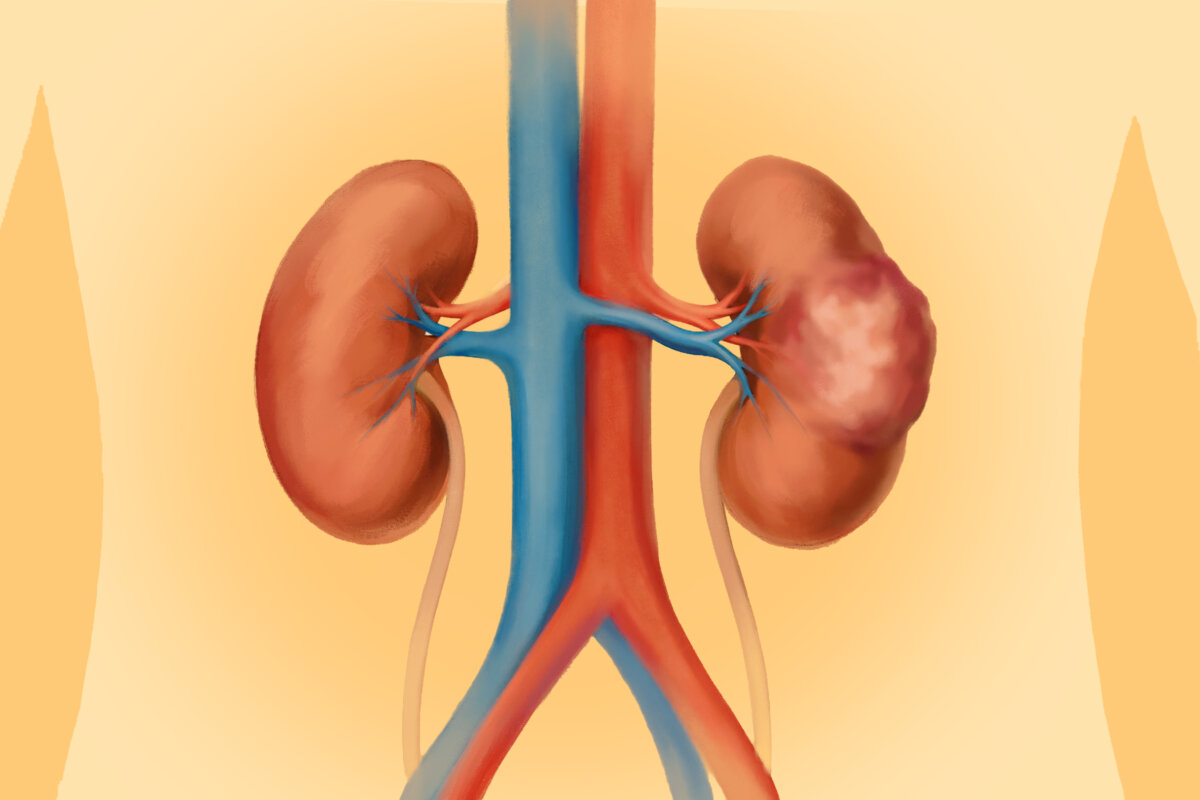
Your kidneys work constantly to filter waste from your blood, balance fluids and electrolytes, and help regulate blood pressure and red blood cell production. Because they perform these vital functions largely unnoticed, cancers that develop in them can remain silent for a long time.
Kidney cancer accounts for 3 percent to 5 percent of all cancer cases. It is among the top 10 most common cancers.
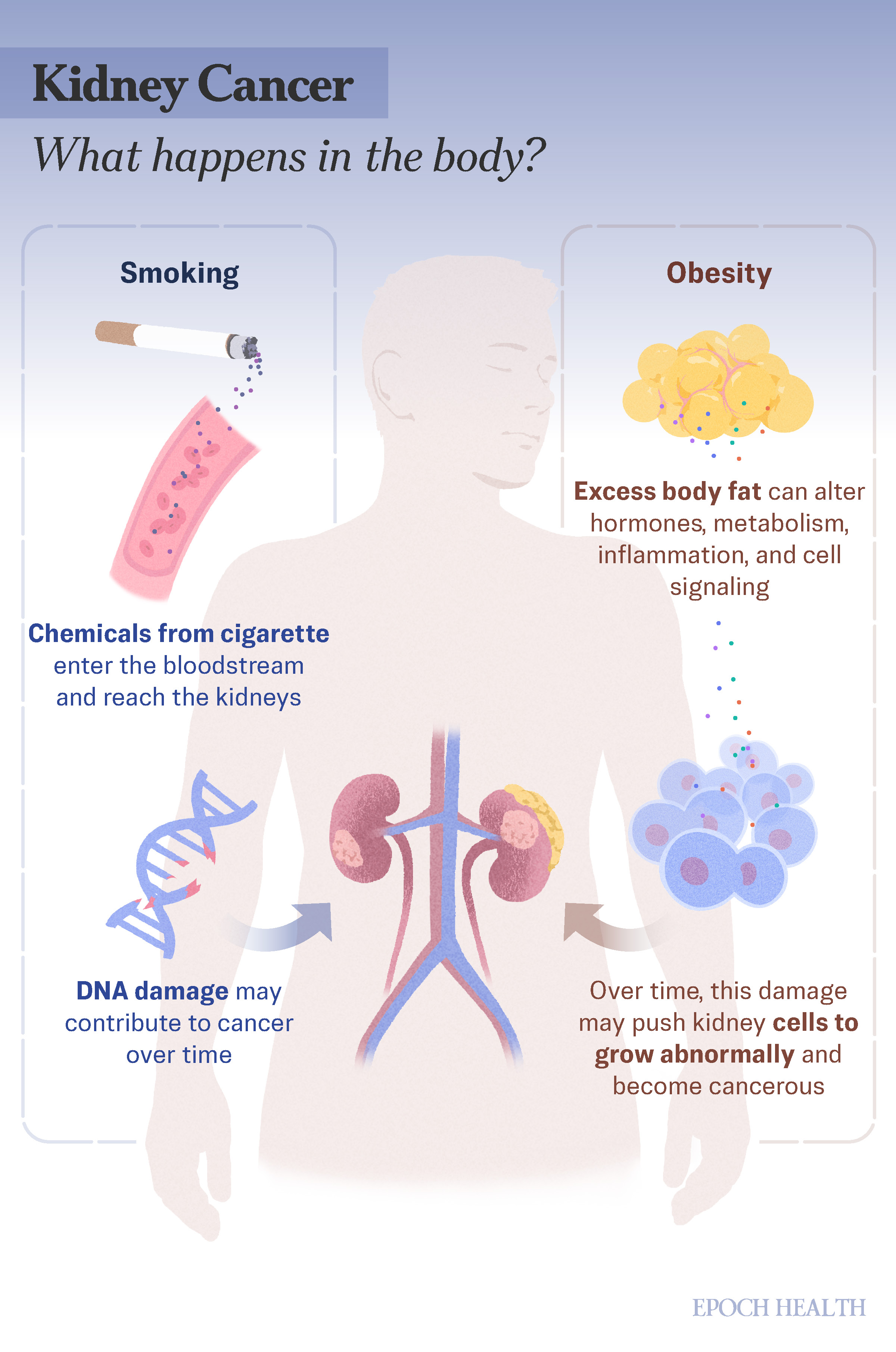 (Illustration by Ran/The Epoch Times)
Symptoms usually appear as the tumor grows and presses on nearby tissues and organs or disrupts the kidney’s hormonal roles. They can overlap with other conditions like urinary tract infections or kidney stones. Some possible symptoms include:
-
Hematuria: The most common symptom is blood in the urine. It may come and go and be visible to the eye or detected only through a urine test.
-
Flank Fullness: A feeling of pressure, swelling, or a mass (tumor) in the side of the abdomen.
-
Flank Pain: The pain is in the side of the abdomen, where the kidneys are located.
-
Lower Back Pain: It can happen as the tumor grows and presses on nearby tissues.
-
Early Satiety: Feeling full after eating very little. A large kidney tumor or a tumor that has spread may compress nearby abdominal organs, such as the stomach or upper digestive tract.
-
Swollen Vein in the Scrotum (Varicocele): A tumor can grow into the renal vein and obstruct the normal drainage of blood from the testicle through the testicular vein.
Symptoms related to changes in red blood cells and blood pressure:
-
Anemia: Too few red blood cells; causes include blood loss in the urine, chronic inflammation from cancer, and reduced erythropoietin production—a hormone that signals the bone marrow to make red blood cells—by damaged kidneys.
-
Polycythemia: Too many red blood cells; kidney cancer can sometimes cause increased erythropoietin production, which can stimulate the production of too many red blood cells, thickening the blood. This can disrupt normal blood flow and may cause symptoms such as headaches, dizziness, and vision changes.
-
High Blood Pressure: The kidneys produce renin, a hormone that helps regulate blood pressure, and a kidney tumor may increase renin production, contributing to hypertension.
-
Fatigue: Can result from anemia, polycythemia (abnormally high red blood cells), or the body’s general response to cancer.
Symptoms affecting the whole body:
-
Swelling in the Legs and Ankles: This may occur when kidney function is impaired, and the kidneys cannot remove excess fluid from the body.
-
Night Sweats: Inflammatory chemicals released in response to the tumor can interfere with normal temperature regulation.
-
Unexplained Weight Loss: Cancer can cause metabolic changes that increase energy expenditure and change how the body uses nutrients. Reduced appetite can also contribute to weight loss.
-
Fevers: Recurring low-grade fevers may occur without an apparent infection.
Symptoms of metastasis (spread of cancer):
Kidney cancer that has spread to other parts of the body may cause additional symptoms, such as difficulty breathing, coughing up blood, and bone pain.
Not everyone with kidney cancer will experience all of these symptoms. Only 10 percent to 15 percent of patients have the “classic triad” of flank pain, hematuria, and flank fullness. More than 60 percent of patients have also had blood in the urine without other symptoms.
[shortcut_anchor id=”anchor_1791616671173″ label=”Causes”]What Causes Kidney Cancer?[/shortcut_anchor]The kidneys are a pair of bean-shaped organs, each about the size of a fist. They are located along the back wall of the abdomen, one on each side of the spine, protected by the lower ribs. An adrenal gland sits on top of each kidney.
The kidneys have several important functions in the body. They filter the blood to remove excess water, salts, and waste products, which form urine. The urine collects in the renal pelvis, travels through the ureters, and is stored in the bladder until urination. The kidneys also help regulate blood pressure by producing renin (an enzyme that helps manage blood pressure) and support red blood cell production by producing erythropoietin.
Kidney cancer typically occurs as a single tumor in one kidney, though multiple tumors or tumors in both kidneys are possible.
These are the different types of kidney cancer, and they are classified by the type of cell where they start:
-
Renal Cell Cancer: This is what people usually mean when they refer to “kidney cancer.” It begins in the lining of the kidney’s small tubes and accounts for about 90 percent of all kidney cancer cases.
-
Transitional Cell Carcinoma: Also called urothelial carcinoma, it starts in the renal pelvis or ureter. These cancers behave more like bladder cancers than renal cell cancers and are generally treated similarly to bladder cancer.
-
Wilms Tumor: Usually occurs in children rather than adults and accounts for approximately 90 percent of kidney cancers in children. They are often not detected until they have grown large, although most are diagnosed before they have spread.
-
Renal Sarcoma: These are rare cancers that develop in the kidney’s connective tissue or blood vessels.
Approximately 15 percent to 20 percent of newly diagnosed, localized kidney masses, including tumors and lesions, are benign (noncancerous). Although they do not spread to other parts of the body, they can still grow and cause health problems.
The exact cause of most kidney cancers is unknown, but certain factors may increase the risk of developing the disease.
Risk Factors
Some kidney cancer risk factors are modifiable, while others, such as age and genetics, are not. Having risk factors does not mean a person will develop the disease.
-
Smoking: This is a major risk factor for renal cell cancer and is linked to nearly 15 percent of all kidney cancer cases. Researchers believe the chemicals in tobacco smoke can enter the bloodstream and reach the kidneys, where they can damage DNA. Over time, accumulated damage can disrupt how kidney cells grow and repair themselves. The risk increases with both smoking intensity and duration. However, the risk decreases after quitting and, after about 10 years, may even approach the level of someone who has never smoked.
-
Being Overweight or Obese: This is linked to about 25 percent of all kidney cancer cases. Excess body fat may increase the risk by changing hormones, metabolism, inflammation, and signaling between fat tissue and kidney cells.
-
High Blood Pressure: The risk appears to rise as blood pressure increases. Researchers suggest that chronic vascular and kidney injury may contribute, but the biological mechanisms have not been conclusively established.
-
Exposure to Hazards: Trichloroethylene, an industrial solvent used to degrease metal, is linked to a higher risk, especially with heavy occupational exposure. Other suspected exposures include cadmium and welding fumes.
-
Radiation: High-dose ionizing radiation, such as radiotherapy, may slightly increase risk. The risk of a radiotherapy-induced second cancer is generally small.
-
Chronic Kidney Disease and Dialysis: People with chronic kidney disease have an increased risk, which may be higher in people with end-stage kidney disease, a condition in which the kidneys can no longer adequately remove waste from the blood and dialysis or a kidney transplant is required. Long-term dialysis can cause acquired cystic kidney disease, which further increases the risk of kidney cancer, particularly with longer dialysis duration. People who have received a kidney transplant may also have an increased risk of developing kidney cancer in their remaining original kidneys.
-
Kidney Stones: They form when tiny mineral crystals in the urine, such as calcium, stick together and become solid stones. A history of kidney stones has been associated with an increased risk of kidney cancer in men, but this association has not been found in women.
-
Certain Painkillers: Research has linked regular nonsteroidal anti-inflammatory drug (NSAID) use such as ibuprofen and acetaminophen (paracetamol) to a slightly higher risk. Aspirin does not appear to carry the same association. Occasional or low-dose use is unlikely to be harmful.
-
Older Age: Kidney cancer is more common in older adults, with approximately 35 percent of cases occurring in people aged 75 and older.
-
Male Sex: Renal cell carcinoma is about twice as common in men as in women. Higher rates of smoking and past occupational exposures may partly explain this.
-
Race: In the United States, kidney cancer rates are highest among American Indian and Alaska Native people and slightly higher among African American people than among white people. The reasons are unknown.
-
Height: Research suggests that taller people may have a higher risk of developing kidney cancer, for reasons that are not understood.
-
Genetic Conditions: Inherited gene changes account for a small proportion of kidney cancers. Conditions linked to increased risk include von Hippel-Lindau disease, Birt-Hogg-Dubé syndrome, and tuberous sclerosis, which can cause tumors or cysts in the kidneys and other organs. Both sickle cell trait and sickle cell disease are also linked to a rare, aggressive form of kidney cancer that often affects younger people.
Other possible factors include:
-
Horseshoe Kidney: A rare birth defect in which the kidneys do not fully separate into two distinct organs.
-
Polycystic Kidney Disease: An inherited condition in which many fluid-filled cysts develop in the kidneys.
-
Kidney Stones: Hard deposits of minerals and salts that form in the kidneys.
-
Hepatitis C Infection: A viral infection that causes inflammation of the liver.
-
Hysterectomy: A surgical procedure to remove the uterus.
-
Diabetes: A condition in which blood sugar levels are too high.
-
A History of Thyroid Cancer: A previous diagnosis of thyroid cancer, possibly due to shared genetic changes contributing to both cancers.
-
Arsenic Exposure: Contact with arsenic, especially through contaminated drinking water.
-
Occupational Exposure to Welding Fumes or Cadmium: Contact with these substances at work, with cadmium potentially enhancing the cancer-causing effects of smoking.
-
Potassium Bromate: A common food additive used in bread making that has caused kidney tumors in animal studies, although its role in human kidney cancer remains unclear.
-
Exposure to Certain Industrial Chemicals: Contact with substances such as perfluorooctanoic acid, a type of per- and polyfluoroalkyl substance or PFAS.
[shortcut_anchor id=”anchor_1791616696949″ label=”Diagnosis”]How Is Kidney Cancer Diagnosed?[/shortcut_anchor]Kidney cancer can be caught early, but people at average risk are not routinely screened.
Screening
People at higher risk, including those with inherited syndromes, chronic kidney disease, or long-term dialysis, may be advised to have regular physical exams and imaging tests, such as CT, MRI, or ultrasound, often beginning at a young age. Early detection can improve treatment success.
If you have a family history of kidney cancer or an inherited condition linked to kidney cancer, your doctor may recommend genetic counseling and testing.
Diagnosis
Diagnosing kidney cancer typically involves reviewing your medical history, doing a physical exam, and ordering lab tests and imaging. In some cases, a biopsy or other procedure may also be needed.
Step 1: Medical History and Physical Exam
If symptoms suggest kidney cancer, the doctor will review your medical history and risk factors and perform a physical exam to look for signs such as an abdominal mass.
Step 2: Lab Tests
Lab tests cannot diagnose kidney cancer on their own, but they offer clues.
-
Complete Blood Count: Identifies abnormalities such as anemia, high red blood cell or platelet counts, or increased neutrophils.
-
Blood Chemistry Tests: Measure substances such as calcium and liver enzymes, as well as kidney function. They may also provide information about the extent of the disease.
-
Urinalysis: Checks urine for blood, cells, proteins, chemicals, and other substances that may suggest kidney or other health problems.
-
Urine Cytology: Examines urine for cancer cells and may be used when imaging shows a tumor in the renal pelvis.
Step 3: Imaging
Imaging tests are used to detect kidney tumors, assess their size and location, determine whether cancer has spread, guide biopsies, monitor treatment, and check for recurrence. Sometimes imaging alone is enough for a diagnosis.
-
CT Scan: Provides detailed images of the kidneys to identify tumors and guide needle biopsies. Contrast dye may be avoided in people with reduced kidney function.
-
MRI Scan: Provides detailed images and may be used when CT contrast cannot be given or to assess metastasis (spread of cancer cells to other body parts).
-
Ultrasound: Detects kidney masses and helps distinguish solid masses from fluid-filled cysts.
-
Chest CT Scan: Checks whether cancer has spread to the lungs.
-
Bone Scan: Detects possible spread of cancer to the bones and is usually performed when symptoms or test results suggest bone involvement.
-
Renal Angiography (Arteriography): Uses a series of X-rays performed after injecting contrast dye through a catheter into the kidney’s blood vessels to identify blockages or other abnormalities affecting the kidney’s blood supply.
Step 4: Biopsy and Scopes
When imaging alone cannot confirm a diagnosis, doctors may use a biopsy or a scope to examine suspicious tissue more closely.
Biopsy: A thin needle, guided by CT or ultrasound, removes a small tissue sample for lab examination. Imaging often suffices, so a biopsy is typically needed only when imaging is unclear, surgery is not planned, or other treatments are being considered.
Cystoscopy and Ureteroscopy: Thin scopes with cameras are used to examine the urethra and bladder during cystoscopy or the ureter and renal pelvis during ureteroscopy.
[shortcut_anchor id=”anchor_1791616711389″ label=”Stages”]What Are the Stages of Kidney Cancer?[/shortcut_anchor]Staging describes how far a cancer has grown and spread.
-
Stage I: The tumor is 7 centimeters or smaller and remains confined to the kidney, with no spread to lymph nodes or other parts of the body.
-
Stage II: The tumor is larger than 7 centimeters but remains confined to the kidney, without spread to lymph nodes or distant sites.
-
Stage III: The tumor has grown into the major veins or surrounding fat or spread to nearby lymph nodes, but remains within Gerota’s fascia—the fibrous layer surrounding the kidney and its fat.
-
Stage IV: The cancer has grown beyond Gerota’s fascia or directly into the nearby adrenal gland, or has spread to distant organs.
Nearly two-thirds of people with kidney cancer are diagnosed at Stage I or II. Approximately 15 percent to 20 percent are diagnosed at Stage III, and another 15 percent to 20 percent at Stage IV. Across all stages, the 5-year survival rate is approximately 80 percent, although survival varies considerably by stage.
[shortcut_anchor id=”anchor_1791616722420″ label=”Treatments”]What Are the Treatments for Kidney Cancer?[/shortcut_anchor]Treatment depends on the cancer’s stage and type, how quickly it is growing, and the person’s overall health.
1. Treatments for Early Kidney Cancer
Treatment and management options may include:
-
Active Surveillance: Also known as observation, this involves regularly monitoring small, slow-growing kidney tumors that may never cause problems, using imaging tests. If the tumor shows signs of growth, treatment may then be recommended.
-
Surgery for Renal Cell Cancer: For cancer that has not spread beyond the kidney, surgery to remove part or all of the kidney, called a nephrectomy, is the primary treatment option. The main procedures are partial nephrectomy (kidney-sparing surgery) and radical nephrectomy (removing the entire kidney).
-
Thermal Ablation: Uses heat delivered through a needle to destroy cancer cells. One subtype is radiofrequency ablation, which uses radiofrequency energy to generate heat and destroy the tumor.
-
Cryotherapy: Also called cryoablation, this uses probes to freeze and destroy cancer cells.
-
Stereotactic Body Radiation Therapy (SBRT): Uses highly focused radiation to damage or destroy cancer cells. SBRT may be considered for selected patients with localized kidney cancer who are medically unable to undergo surgery or who decline it. Early tumor-control results are encouraging, but long-term comparative evidence remains limited.
Surgical options for transitional cell (urothelial) carcinoma of the renal pelvis or ureter include:
-
Nephroureterectomy: Removes the entire kidney, ureter, and a portion of the bladder where the ureter connects, called the bladder cuff.
-
Fulguration: Uses an electric current to remove or destroy cancerous tissue in small, superficial tumors. A small wire loop is used to remove the tumor or burn it away.
-
Segmental Ureteral Resection: Removes the part of the ureter containing transitional cell cancer along with some surrounding healthy tissue. The remaining ends of the ureter are then reconnected. It is generally used for selected cancers in the lower part of the ureter near the bladder.
-
Segmental Resection of the Renal Pelvis: Removes a localized transitional cell cancer while preserving the rest of the kidney. It may be used when preserving kidney function is important, such as when the other kidney is damaged or has been removed.
Adjuvant Therapy
Adjuvant therapy is given after surgery to reduce the risk of cancer returning. For selected patients with clear-cell renal cell carcinoma at intermediate-high or high risk of recurrence, options include pembrolizumab alone or combined with belzutifan, a combination approved by the Food and Drug Administration in June 2026. Treatment depends on the potential benefits and side effects.
2. Treatments for Advanced Kidney Cancer
Systemic treatments are drugs that travel throughout the body to reach cancer cells. They can help shrink tumors and extend survival. For advanced kidney cancer, the main options are targeted therapy and immunotherapy. Chemotherapy is rarely used for renal cell cancer because these newer treatments are generally more effective.
-
Targeted Therapies: Target or block specific molecules or proteins involved in cancer growth. Most targeted therapies for kidney cancer are angiogenesis inhibitors, which block the tumor’s ability to form new blood vessels needed for growth.
-
Immunotherapy: Uses the body’s immune system to fight kidney cancer rather than directly killing cancer cells. The main immunotherapies used for advanced kidney cancer are checkpoint inhibitors, which help immune cells maintain a stronger and longer-lasting response against cancer. Cytokines can also stimulate immune cells but are now used only rarely for advanced kidney cancer.
-
Combination Therapy: Uses two medicines together to attack the cancer in different ways, such as a targeted pill and a checkpoint inhibitor given intravenously (through a vein), two targeted pills, or two intravenous drugs.
-
Surgery (Cytoreductive Nephrectomy and Metastasectomy): Removes the main kidney tumor or tumors that have spread. It may not be recommended if you are unwell or the cancer has spread widely. Whether to remove the kidney before drug treatment depends on tumor burden, symptoms, overall health, and kidney function.
-
Radiation Therapy (Radiotherapy): Uses controlled doses of radiation, such as focused X-ray beams, to damage or destroy cancer cells. Because kidney tumors are relatively resistant to standard radiation and healthy kidney tissue is sensitive to it, radiation has a limited role in treating the primary kidney tumor. In advanced kidney cancer, radiation may be used to shrink tumors, slow the growth of metastases, and relieve symptoms such as pain.
-
Arterial Embolization: Blocks the blood supply to a kidney tumor to help shrink it, control bleeding, and relieve symptoms such as pain. It may be offered if you are not well enough for surgery.
-
Palliative Treatment: Helps manage symptoms and improve quality of life. Often mistaken for end-of-life care, palliative care can start at any stage of cancer. It can be given alongside cancer treatment and may include surgery, tumor embolization, radiation therapy, or systemic drug therapy.
3. Traditional Chinese Herbal Medicines
Evidence for these herbal therapies is preliminary because the available studies are relatively small. It is advisable to consult a qualified herbalist before trying any herbal therapy.
Kidney-Benefiting and Turbidity-Resolving (Lishen Huazhuo) Decoction: In a 2021 study of 68 patients with renal cell carcinoma, those who received the herbal decoction with interferon alfa-2b had better reported treatment outcomes and greater improvements in immune function than those who received interferon alone.
Kidney-Tonifying, Qi-Benefiting, and Health-Supporting (Bushen Yiqi Fuzheng) Decoction: In a 2023 study of 120 patients with renal cell carcinoma who had undergone surgery, those who received the herbal decoction with sunitinib had better reported treatment outcomes and fewer adverse reactions than those who received sunitinib alone.
4. Investigational Treatments
These are new or experimental treatments that are still being studied in clinical trials to determine whether they are safe and effective.
Histotripsy: This noninvasive treatment uses focused ultrasound to destroy targeted kidney tumor tissue without an incision. Its suitability depends on the tumor’s characteristics and location, as well as the patient’s individual circumstances.
ALLO-316: This experimental CAR T-cell therapy uses modified immune cells to target CD70, a protein commonly found on clear cell kidney cancer cells. In the Phase I TRAVERSE trial, tumors shrank or remained stable in about 59 percent of evaluated patients. The confirmed response rate was 17.4 percent overall, 25 percent in the Phase 1b group, and 31.3 percent among those with high CD70 levels. Larger trials are needed to confirm these findings.
[shortcut_anchor id=”anchor_1791616744921″ label=”Lifestyle Approaches”]What Are the Lifestyle Approaches to Kidney Cancer?[/shortcut_anchor]Some lifestyle approaches help manage symptoms and support recovery during and after treatment. Many people can also live healthy lives with one kidney if the other has been removed.
1. Mindfulness-Based Interventions
A review published in April examined 18 studies involving 2,774 participants, including 706 kidney cancer patients or survivors, on exercise, nutrition, and psychological support before and after treatment. The strongest evidence was for psychological support, particularly mindfulness-based interventions.
In a 2025 study, 50 patients with metastatic renal cell cancer receiving immunotherapy used a mindfulness app for 20 to 30 minutes a day, at least four days a week for four weeks. Participants reported improvements in anxiety, depression, and fear of cancer recurrence, fatigue, and overall quality of life.
2. Regular Gentle Exercise
A group of researchers looked into the data of 222,163 adults and found that people who reported any physical activity had about a 50 percent lower risk of dying from kidney cancer than those who reported none. People with obesity had nearly three times the risk of kidney cancer death compared with those at a normal weight. The study defined recommended physical activity as 150 minutes of moderate-intensity or 75 minutes of vigorous-intensity aerobic exercise per week, or an equivalent combination.
In a separate study, 38 patients receiving immunotherapy for various cancers, including nine with renal cell carcinoma, completed a remotely supervised 12-week exercise program. Participants reported improvements in treatment-related side effects, and emotional symptoms.
A 2024 study involving 341 patients with Stage I–III renal cell cancer found that patients who engaged in more moderate-to-vigorous physical activity three months after surgery had better physical and social functioning and less fatigue.
The National Kidney Foundation recommends gentle exercises to help kidney cancer patients improve strength and reduce fatigue. Activities include walking, stretching, and gentle yoga, beginning with five to 10 minutes and gradually increasing as tolerated. Light weights, resistance bands, and balance exercises can help maintain muscle and reduce fall risk.
The foundation also emphasizes the importance of seeking medical advice before starting or changing an exercise routine, particularly after surgery or other treatments.
3. Kidney-Healthy Diet
A balanced diet helps kidney cancer patients maintain strength and a healthy weight, and manage treatment side effects. Besides eating whole foods, patients should:
-
Include lean protein, such as fish, beans, chicken, tofu, eggs, or low-fat dairy to support muscle and tissue repair.
-
Limit salt and processed foods to help manage blood pressure and swelling.
-
Check food and drink labels for sodium, as even sugar-free drinks may contain sodium-based additives, such as sodium bicarbonate.
-
Eat small, frequent meals every two to three hours if appetite is low.
-
Ask the treatment team how much fluid is appropriate, as needs may vary after surgery or in people with reduced kidney function, swelling, or heart disease.
[shortcut_anchor id=”anchor_1791616762337″ label=”Prevention”]How Can I Prevent Kidney Cancer?[/shortcut_anchor]There is no guaranteed way to prevent kidney cancer, as some risk factors cannot be controlled. However, certain lifestyle and workplace choices may help lower the risk:
-
Maintaining a healthy weight.
-
Eating a healthy diet. A Swedish study linked bananas and root vegetables, such as carrots and beets, to a lower risk of kidney cancer. However, people with reduced kidney function may need to limit bananas because of their high potassium content and consult a doctor about their dietary needs.
-
Staying physically active. A 2013 meta-analysis of 19 studies involving more than 2.3 million people found that higher levels of physical activity were associated with a lower risk of kidney cancer.
-
Avoiding or quitting smoking.
-
Limiting exposure to harmful chemicals such as trichloroethylene.
[shortcut_anchor id=”anchor_1791616772811″ label=”Complications”]What Are the Possible Complications of Kidney Cancer?[/shortcut_anchor]Kidney cancer may cause the following complications:
-
Effects of the Tumor Itself: Can cause high blood pressure, constipation, and abdominal swelling or discomfort.
-
Effects Elsewhere in the Body: Can include increased red blood cell counts, high calcium levels, abnormal liver function, increased platelet counts, or an enlarged liver or spleen.
-
Metastasis: Can cause breathing problems if cancer spreads to the lungs, pain or spinal cord compression if it spreads to the bones, seizures if it spreads to the brain, or jaundice and abnormal liver function if it spreads to the liver.
-
Urinary Tract Blockage: Can cause kidney swelling or lead to a urinary tract infection.
-
Reduced Kidney Function: Can occur after surgery or when kidney tissue is damaged or lost because of the cancer, sometimes leading to kidney failure.
-
Blood Clots: Can form when kidney cancer changes the body’s normal blood-clotting processes. A clot may form in the renal vein and, in some cases, extend into the vena cava, a large vein that carries blood to the heart.
-
Treatment-Related Complications: Can include reduced kidney function, high blood pressure, protein in the urine, delayed wound healing, bleeding or blood clots, gastrointestinal perforation (a hole in the digestive tract), heart problems, and hormone-related problems such as hypothyroidism.