



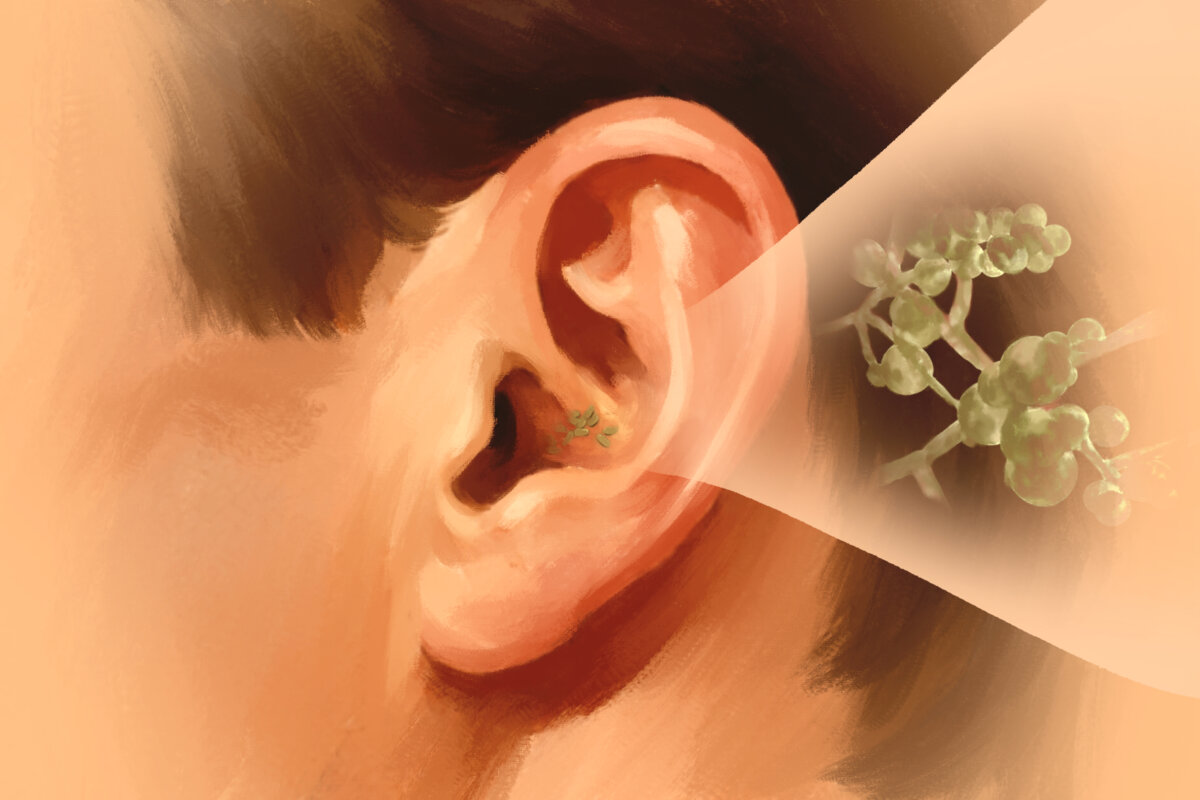
Candida auris is a yeast that is often resistant to multiple antifungal drugs. It was first identified in a patient’s ear canal in Japan in 2009. Its name comes from “auris,” Latin for “ear.” It has since spread worldwide and is most dangerous to patients who are already seriously ill.
Known as a “superbug,” Candida auris can cause potentially deadly infections. Invasive infections have been associated with mortality rates of 30 percent to 60 percent among hospitalized patients.
C. auris can lead to a range of infections, from skin infections to life-threatening bloodstream infections. Symptoms vary depending on where the infection occurs and how severe it is. Possible symptoms include:
-
Fever and chills
-
Extreme tiredness or weakness
-
Low blood pressure
-
Rapid heart rate
-
Abnormally low body temperature
-
Ear pain, pressure, or a feeling of fullness if the ear is infected
These symptoms can resemble those of bacterial infections. A persistent high fever with chills, especially if it doesn’t improve with antibiotics, may signal a fungal infection, such as C. auris, because antibiotics don’t treat fungal infections.
People who are colonized but not infected may remain colonized indefinitely. The fungus may make them sick later. The fungus on their body can spread to surfaces, equipment, and other patients.
[shortcut_anchor id=”anchor_1792129619569″ label=”Causes”]What Causes Candida Auris Infection?[/shortcut_anchor]C. auris is well adapted to living on human skin. Sweat and skin oils help it adhere to the skin, and it forms biofilms, organized communities of fungal cells surrounded by a protective coating. Biofilms can make the fungal cells more tolerant to drugs and immune defenses, making the fungus harder to remove.
The fungus may enter the body through cuts, wounds, or openings associated with surgery or medical devices, then enter the bloodstream and spread to other parts of the body.
C. auris can spread easily in healthcare settings, particularly in hospitals, nursing homes, and other long-term facilities. It is commonly transmitted through direct person-to-person contact, including contact with infected skin or wound fluids. It also spreads indirectly through contact with contaminated surfaces, such as curtains and floors, objects such as cellphones, and medical equipment such as blood pressure cuffs.
The fungus can survive on surfaces for weeks, and many common cleaning agents, including quaternary ammonium compounds, do not reliably kill it.
Airborne spread may also contribute to the transmission of C. auris, although its exact role remains under investigation. Environmental studies have detected C. auris in air samples and on surfaces around ceiling and hallway air vents, suggesting that the fungus may spread beyond the immediate area surrounding a colonized patient. Activities that generate air turbulence, such as making beds, may disturb contaminated particles and potentially allow C. auris to become airborne and travel greater distances.
The risk of developing a serious C. auris infection is greatest among people who are already medically vulnerable.
-
Prolonged or Repeated Hospital Stays: Increase the opportunity for contact with colonized patients, contaminated surfaces, healthcare workers, and medical equipment.
-
Living in a Nursing Home or Long-Term Care Facility: Residents have frequent close contact with healthcare workers and other residents and may share equipment or facilities.
-
A Weakened Immune System: Makes it easier for colonization to progress to infection.
-
Invasive Medical Devices or Recent Surgery: Surgical wounds and devices such as central venous catheters, urinary or biliary catheters, wound drains, feeding tubes, and breathing tubes can provide pathways for the fungus to enter the body.
-
Diabetes: Diabetes can impair immune defenses and wound healing, making it more difficult for the body to fight infections.
-
Multiple Underlying Medical Conditions: Having several underlying health conditions can make a person more medically vulnerable and may compromise their immune defenses. These conditions may also increase the need for hospitalization, procedures, medications, and medical devices.
-
Recent Use of Broad-Spectrum Antibiotics or Antifungal Medications: Can alter the body’s normal microorganisms or place selective pressure on fungi, killing off sensitive strains and allowing resistant strains to multiply.
[shortcut_anchor id=”anchor_1792129633134″ label=”Diagnosis”]How Is Candida Auris Diagnosed?[/shortcut_anchor]Screening helps healthcare facilities identify patients carrying the fungus early, so they can take precautions to prevent it from spreading and causing outbreaks.
C. auris is found worldwide, and because it is hard to identify, cases may go undiagnosed and transmission undetected.
1. Screening
The screening test is painless and involves collecting skin swabs, typically from the armpits and groin, for lab testing.
Screening is recommended for patients admitted to high-risk units, such as intensive care units; those in units with ongoing C. auris cases; and those transferred from high-risk healthcare settings or locations. Patients with a history of C. auris colonization generally do not need repeat screening.
C. auris can be misidentified using traditional yeast identification methods, so accurate detection requires advanced techniques such as DNA sequencing, real-time PCR (polymerase chain reaction), and MALDI-TOF (matrix-assisted laser desorption/ionization time-of-flight mass spectrometry).
2. Environmental Sampling
Environmental sampling is recommended to identify potential sources of C. auris contamination, particularly during outbreaks. Although contamination can be widespread, specific objects may serve as sources of transmission. For example, a 2018 outbreak was linked to contaminated reusable underarm temperature probes, and new cases declined only after the probes were removed.
3. Diagnosis
Depending on the suspected site of infection, a blood sample, wound or ear swab, or another appropriate specimen is collected and sent to the lab.
Blood tests may include:
-
Blood Cultures: Determine whether the organism has actually entered the bloodstream.
-
Complete Blood Count and Basic Metabolic Panel: Assess the patient’s overall condition and organ function. They don’t specifically identify C. auris, but they can help evaluate the severity of illness and guide treatment.
-
(1,3)-Beta-D-Glucan: Detects a component of many fungal cell walls. It may provide supporting evidence of an invasive fungal infection but is not specific for C. auris and cannot identify the infecting species.
[shortcut_anchor id=”anchor_1792129647433″ label=”Treatments”]What Are the Treatments for Candida Auris?[/shortcut_anchor]Treatment of C. auris infection should be individualized based on clinical symptoms and antifungal susceptibility testing, with guidance from an infectious disease specialist.
1. Colonization Without Symptoms
The Centers for Disease Control and Prevention generally does not recommend treating people who are colonized with C. auris but have no active infection. No proven method eliminates colonization, and unnecessary antifungal treatment may promote drug resistance, making future infections harder to treat.
2. Initial Infection Treatment
Fluconazole, a common antifungal treatment for other Candida infections, does not work against C. auris. Some strains resist all three antifungal drug classes: triazoles (such as fluconazole), polyenes (such as amphotericin B), and echinocandins (such as anidulafungin).
The CDC recommends echinocandins as the first-line treatment for C. auris infections in most adults and children 2 months and older, as resistance to this class of antifungal medications remains relatively uncommon. One example is rezafungin, a long-acting echinocandin approved for certain patients with bloodstream infections or invasive candidiasis.
Treatment should be monitored closely because resistance to echinocandins can also develop. If the patient does not improve, liposomal amphotericin B may be considered. Newborns and infants younger than 2 months generally receive amphotericin B deoxycholate first.
3. Treatment Based on Infection Site
The location of the infection affects which antifungal medication is most appropriate. Echinocandins may not work well in areas such as the central nervous system or urinary tract because they do not reach adequate concentrations there. Amphotericin B, sometimes combined with flucytosine, may therefore be considered for C. auris infections involving these areas, with treatment adjusted according to the infection site and antifungal susceptibility testing.
Treating bloodstream infections requires more than medications. Central venous catheters and other indwelling devices should be removed, and any infected abscesses or pockets of infected fluid or pus should be drained when appropriate. Blood cultures should be repeated daily or every other day until the infection clears. If cultures remain positive, doctors should look for signs that the infection has spread to other parts of the body, such as the heart or blood clots in the veins.
Guidelines differ on routine eye examinations for bloodstream infections. The Infectious Diseases Society of America recommends a dilated examination, whereas the American Academy of Ophthalmology recommends an eye examination primarily for patients with eye-related signs or symptoms. Clinicians should follow current institutional and specialist guidance.
4. Emerging Treatments
Most U.S. strains still respond to echinocandins, but cases resistant to echinocandins or all three major antifungal drug classes, known as “pan-resistant,” are becoming more common. For pan-resistant C. auris, investigational agents such as fosmanogepix or ibrexafungerp may be considered in consultation with infectious disease specialists and obtained through expanded-access programs.
5. Preventing Invasive Infection in Colonized Patients
The goal is to keep the fungus out of normally sterile areas of the body. This includes using medical devices appropriately, regularly reassessing whether catheters and other tubes are still needed, and removing them as soon as they are no longer necessary.
Proper care and maintenance of tracheostomy sites (surgically created openings in the windpipe) are also important. Patients undergoing surgery should have their skin thoroughly cleaned and prepared with an alcohol-based antiseptic.
[shortcut_anchor id=”anchor_1792129676754″ label=”Lifestyle Approaches”]What Are the Natural and Lifestyle Approaches to Candida Auris?[/shortcut_anchor]Growing resistance to antifungal medications has increased interest in natural substances as potential treatments for C. auris. Although these substances have shown promising antifungal activity, there is currently limited evidence from human studies and are not considered proven treatments.
1. Essential Oils
Lab and early animal studies suggest that several essential oils can block C. auris growth and biofilm formation. Their safety and effectiveness in humans remain unknown.
-
Tea Tree, Niaouli, White Thyme, and Cajeput: A 2022 study found that all four oils inhibited growth and biofilm formation. White thyme and cajeput also destroyed established biofilms.
-
Lemongrass, Clove Bud, and Cinnamon Bark: These oils stood out among 21 oils tested, including in vapor form. Some combinations with antifungal drugs worked better than either treatment alone, suggesting potential applications in surface disinfection and skin sanitization. A 2023 study tested 15 essential oils against C. auris and found that cinnamon bark was the most effective. It worked with fluconazole in lab and animal studies, appearing to help overcome the fungus’s resistance to the drug.
2. Plant-Derived Compounds
Study findings suggest that several plant-derived compounds may have potential as complementary antifungal treatments.
-
Carvacrol: In a 2021 study, researchers found that four plant-derived compounds—carvacrol, thymol, eugenol, and methyl eugenol—showed some antifungal activity, but carvacrol was the most effective. Carvacrol may fight C. auris by inhibiting its growth and reducing its ability to attach to human cells and produce infection-related enzymes. Combining carvacrol with conventional antifungal medications enhanced their activity against some C. auris strains, including drug-resistant strains, without interfering with the antifungal drugs.
-
Traditional Herbal Compounds: In a 2020 study, researchers found that five natural compounds—sodium houttuyfonate, berberine, palmatine, jatrorrhizine, and cinnamaldehyde—showed antifungal activity against Candida species, including C. auris. Some combinations worked better than when the compounds were used alone. The combinations also appeared to change the fungus’s protective outer layer, exposing substances that may make the fungus more vulnerable.
-
Baicalein: A 2024 study found that baicalein, a plant-derived compound from the medicinal herb Chinese skullcap, inhibited the growth, attachment, and biofilm formation of C. auris by damaging the fungus’s cell membrane and cell wall and reducing its ability to colonize and invade tissues.
3. Manuka Honey Baths and Oral Probiotics
A study published in August involving more than 400 senior care home residents tracked how long colonization lasted and tested whether Manuka honey baths and oral probiotics shortened its duration. Colonization cleared faster in the intervention group (224 days versus 427 days), but the difference was not statistically significant, meaning it could be due to chance.
[shortcut_anchor id=”anchor_1792129706182″ label=”Prevention”]How Can I Prevent Candida Auris?[/shortcut_anchor]C. auris can survive harsh conditions, including high temperatures and salt concentrations, allowing it to persist on dry and wet surfaces for long periods. Its ability to form biofilms on medical equipment and other surfaces makes transmission easier and outbreaks difficult to control. Prevention therefore relies on several measures working together.
In the Hospital
When a patient at a hospital or long-term care facility is identified as either colonized or infected with C. auris, the following methods are used:
-
Place colonized or infected patients in private rooms with dedicated bathrooms when possible. During outbreaks, patients with the same type of multidrug-resistant strain may be housed together in the same room or in a designated partitioned area. Maintain appropriate ventilation.
-
Avoid sharing equipment. Remove nonessential equipment and avoid storing supplies in open hallways.
-
Use antibiotics only when necessary, and avoid unnecessary use of broad-spectrum antibiotics to help prevent disruption of the normal microbiota and reduce the risk of Candida colonization.
Staff should follow strict hand hygiene practices and use appropriate personal protective equipment (PPE) to protect themselves and prevent the spread of C. auris. Soap and water, 70 percent alcohol-based hand sanitizer, and chlorhexidine-based products can help remove C. auris from hands.
The environment should also be disinfected:
-
Clean Often: Clean and disinfect environmental surfaces at least twice daily. More frequent cleaning may be needed during outbreaks.
-
Use the Right Products: Use an Environmental Protection Agency-registered hospital disinfectant proven effective against C. auris. If unavailable, chlorine-based disinfectants, including sodium hypochlorite at appropriate concentrations, can effectively eliminate C. auris from surfaces.
Avoid products that rely solely on quaternary ammonium compounds because they are not reliably effective against C. auris. -
Hydrogen Peroxide Vapor: May be used as an additional decontamination method, particularly after terminal cleaning.
After Hospital Discharge
Patients who have been colonized or infected may continue to carry C. auris on their skin or other body sites after discharge. They and their caregivers can take the following precautions at home:
-
Wear gloves when providing hands-on care, such as changing wound dressings or helping with bathing, and clean hands afterward.
-
Keep invasive medical devices, such as catheters, clean and safe.
-
Keep cuts or abrasions properly covered with waterproof adhesive dressings until they have healed.
[shortcut_anchor id=”anchor_1792130005314″ label=”Complications”]What Are the Possible Complications of Candida Auris?[/shortcut_anchor]Complications depend on the severity of the infection, the patient’s overall health, and whether the strain is drug-resistant.
C. auris can cause bloodstream infections that may spread to other organs. Invasive infection can lead to sepsis and organ failure. The fungus may also spread through the bloodstream to other sites, including the heart valves, eyes, brain, bones, liver, or spleen. In severe cases, the infection can be life-threatening and may result in death.