



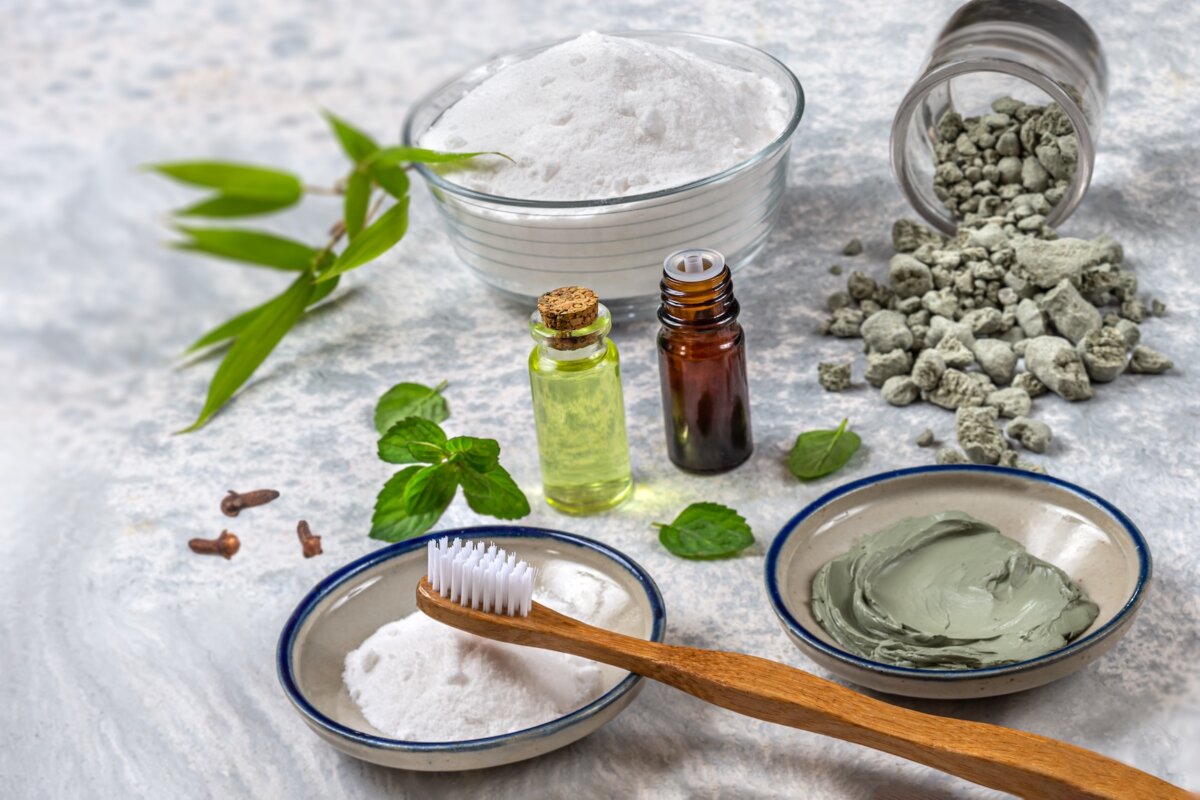
In this article, we explore the potential dangers of chemicals found in some store-bought toothpastes as well as the advantages of formulating your own. Two all-natural recipes tailored to address the needs of tooth whitening and re-balancing the oral microbiome are provided.
Unveiling the Hazards of Conventional Toothpaste
Some of the potential harmful chemicals lurking in some commercial toothpastes include the following:
Titanium Dioxide: An insoluble mineral used to whiten toothpaste; titanium dioxide was classified by the International Agency for Research on Cancer as “possibly carcinogenic to humans.” The determination was based partly on studies reporting lung tumors in rats after inhaling titanium dioxide, as well as evidence of absorption of titanium dioxide by the human gastrointestinal tract.
Artificial Coloring: Commonly added to store-bought toothpaste, artificial colors, including Blue No. 1, are used to increase the appeal of toothpaste. However, according to a 2021 scientific review published in Advances in Nutrition, Blue No. 1 is a possible neurotoxin and may have cytotoxic and genotoxic effects. Attention deficit and hyperactivity in children have also been associated with Blue No. 1.
Antimicrobials: Antimicrobial agents, such as stannous fluoride and sodium monofluorophosphate, are widely used in commercial toothpaste. They may help prevent plaque and gingivitis; however, the daily use of antimicrobials raises concerns regarding the promotion of bacterial resistance to antibiotics.
Sodium Lauryl Sulfate (SLS): The most widely used detergent or foaming agent in toothpaste, SLS can lead to mouth irritation and sensitivity, disrupting the delicate oral ecosystem.
For example, the American Journal of Dentistry published a review in 2022 reporting that SLS can lead to “irritation or inflammation” of the mouth and tongue, as well as “ulcerations, and toxic reactions in the oral cavity.”
According to a study published in the European Journal of Oral Sciences, SLS “significantly increased the incidence of desquamation of the oral mucosa [peeling of the inside of the mouth].”
Artificial Sweeteners: Used to enhance taste, artificial sweeteners such as saccharin and sorbitol may disrupt the microbiome and lead to health issues.
Changes in intestinal microbiota resulting in gut dysbiosis and alterations of glucose metabolism have been reported following ingestion of saccharin, according to a 2019 study published in Advances in Nutrition.
Sorbitol may contribute to blood vessel and nerve injury in diabetic patients. Sorbitol can also accumulate within lens cells resulting in osmotic stress and breakdown of normal lens physiology, potentially triggering cataract formation in diabetics, according to a 2019 study published in Scientific Reports.
Fluoride: Fluoride in excess can be toxic to nerve and kidney cells, according to a scientific review published in 2018 by Preventive Nutrition and Food Science. Systemic fluoride can pass into the brain and lead to lower IQ during early development, according to a 2019 study published in Environmental Health. Even small doses of fluoride have shown negative effects on thyroid function, the skeletal system, and the reproductive system. Excess fluoride can also lead to dental fluorosis (white or brown spots on teeth), especially in children during teeth-forming years.
You can avoid these harmful chemicals and protect your health from potential risks associated with long-term exposure by making your own toothpaste.
Benefits of Making Your Own Toothpaste
By embracing natural toothpaste, you’ll unlock a host of benefits beyond chemical-free assurance, including the following:
Cost Savings in Inflationary Times: Natural ingredients used in homemade toothpaste are often more affordable when purchased in bulk, plus you lock into today’s prices. Reusing containers also reduces costs.
This article includes two toothpaste recipes made from organic ingredients: Whitening and Oral Health.
Using today’s bulk pricing, the Whitening toothpaste recipe costs 50 cents per ounce, which is less expensive than most store-bought conventional whitening toothpaste and most store-bought organic toothpaste.
The Oral Health recipe costs $1 per ounce, which is less expensive than the premium version of most mainstream conventional brands. It’s comparable in price to the staple versions of those conventional brands; however, since the Oral Health recipe uses organic ingredients, you pay a similar price for a higher quality product.
Customizable Formulas: By experimenting with natural ingredients, such as essential oils, you can tailor your toothpaste to fit your unique needs and preferences.
Eco-Friendly Approach: Creating your own toothpaste supports sustainability by reducing demand for single-use packaging.
DIY Natural Toothpaste Recipes
Below are two simple recipes that harness natural ingredients to promote oral health, including:
Coconut Oil
As an anti-inflammatory and antimicrobial, coconut oil may help rebalance your oral microbiome and reduce the risk of periodontal disease. Coconut oil can decrease plaque formation and plaque-induced gingivitis, according to a study published in 2015.
Bentonite Clay
Rich in minerals and not too abrasive, bentonite clay is a natural teeth polisher. It has antibacterial properties and can modulate the immune response of the body as well as inhibit the growth of some human cancer cells, according to a study published in 2017 by the Iranian Journal of Public Health.
Essential Oils
These natural oils add flavor to homemade toothpaste while providing oral health benefits. Clove, for instance, contains antiviral properties and is as effective as nystatin, a drug commonly prescribed to manage yeast infections of the mouth, according to a study published in Oral Microbiology and Immunology.
Cinnamon bark essential oil can decrease dental caries and plaque formation, according to a study published in the Journal of Clinical and Diagnostic Research.
Baking Soda
Renowned as a teeth whitener, which is why it’s used in mainstream store-bought brands, baking soda contains antibacterial properties and can remove plaque. It’s also alkaline, which helps neutralize acids and maintain proper pH for the prevention of dental caries. Baking soda reportedly hinders inflammation and aids in healing periodontal disease.
A Word on Ingredient Quality
Use organic ingredients whenever possible. Organic means the crop wasn’t genetically modified or sprayed with synthetic fertilizers or pesticides.
To decrease costs, essential oils are sometimes adulterated by adding a similar but cheaper oil or diluting the natural oil with various solvent oils. In 2023, ConsumersAdvocate.org tested 11 peppermint essential oil samples and four were reportedly adulterated. Therefore, choose essential oils that are organic, don’t contain additives or synthetic chemicals, and have been tested for heavy metals, microbes, and glyphosate.
Recipe 1: Toothpaste for Whitening
Ingredients:
- 4 tablespoons cold-pressed, unrefined coconut oil
- 4 tablespoons baking soda
- 10 drops cinnamon or peppermint essential oil
Instructions:
Melt coconut oil and let cool slightly.
Combine the baking soda with the melted coconut oil until well mixed.
Add the peppermint essential oil for a refreshing flavor.
Transfer the mixture to a small glass jar and secure the lid tightly. Keep out of direct sunlight and away from heat.
To use: Apply a pea-sized amount to toothbrush, wet toothbrush with filtered water, and then brush teeth. If toothpaste feels too clay-like, wet toothbrush with filtered water again. Don’t spit toothpaste down the sink. Coconut oil solidifies at room temperature and, therefore, can clog drains. Instead, spit toothpaste into a trash can.
Recipe 2: Toothpaste for Re-balancing Oral Health
Ingredients:
- 3 tablespoons food-grade bentonite clay
- 2 tablespoons coconut oil
- 8 drops cinnamon essential oil
- 5 drops clove essential oil
- 1 capsule probiotic (optional)
Instructions:
Open the probiotic capsule and empty the contents into a large glass bowl. Add remaining ingredients and mix with a wooden spoon until thoroughly combined. Toothpaste should have a solid consistency like modeling clay.
Transfer the mixture to a small glass jar and tightly secure lid. Keep out of direct sunlight and away from heat since coconut oil will melt.
To use: Apply a pea-size amount to toothbrush, wet toothbrush with filtered water, and then brush teeth. If toothpaste feels too clay-like, wet toothbrush with filtered water again. Don’t spit toothpaste down the sink. Coconut oil solidifies at room temperature and, therefore, can clog drains. Instead, spit toothpaste into a trash can.
[series_posts_list][/series_posts_list]
Contraindications and Precautions
Pregnant or breastfeeding women, children under the age of 2, and anyone consuming prescription medications should consult their health care provider before using essential oils.
Peppermint oil is contraindicated in children under two years of age. Peppermint may interact with some prescription drugs, such as cyclosporine, acid-reducing medications, ulcer medications, calcium channel blockers, and other drugs used for hypertension or high blood pressure. People with a hiatal hernia, gastroesophageal reflux disease, diarrhea, or a condition in which the stomach doesn’t produce enough acid should consult with a health care provider before consuming peppermint.
Clove essential oil is contraindicated in children under 2 years of age. Clove oil contains a chemical called eugenol that slows blood clotting. Therefore, clove oil might cause bleeding in people with bleeding disorders, slow blood clotting following surgery, or interact negatively with anticoagulant or antiplatelet medications. Taking clove with diabetes medication might cause blood sugar to drop too low.
Cinnamon essential oil may interfere with diabetes medications, as well as blood sugar control during and after surgery.
Before using the recipes in this article, consult with your health care provider to ensure the ingredients are aligned with your specific health needs. Before using, always check for sensitivities or adverse reactions by only applying a small amount of product. Don’t use these recipes if you’re allergic or sensitive to any of the ingredients.
Final Thoughts
As we embark on our journey to create DIY personal care products, remember to research and experiment with ingredients that resonate with your unique needs. Buy in bulk whenever possible and purchase organic ingredients. Your mouth deserves the best—all-natural ingredients that build health and wellness so that you can thrive in your natural brilliance.
[note label=”Next” title=”Part 4 – Crafting Your Own Age-Defying Eye Cream” hyperlink=”https://cmsapi.theepochtimes.com/health/crafting-your-own-age-defying-eye-cream-5516214″ description=”Craft a revitalizing treat for your skin, unburdened by toxic additives. “][/note]