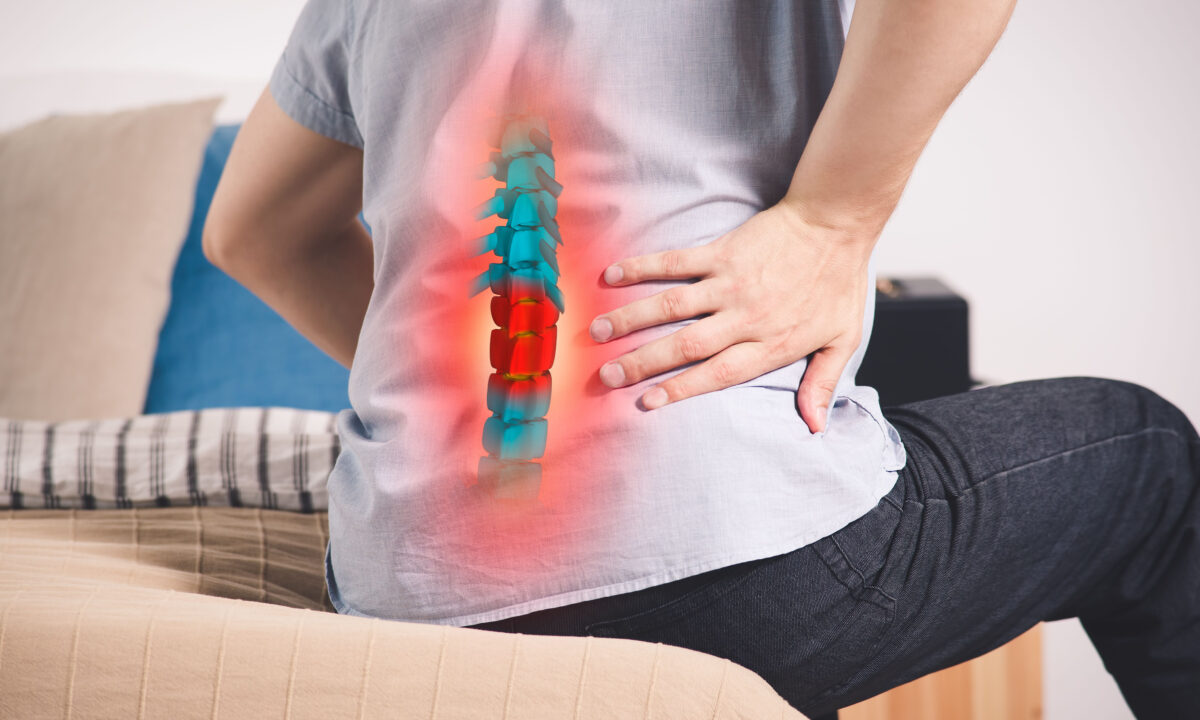
A herniated disc is a common condition that may occur in the cervical or lumbar spine: symptoms of cervical herniation may include neck pain and hand numbness; while lumbar herniation may cause low back pain, numbness in feet, and sciatica.
Many patients suffering from disc herniation have the same questions: Is surgery necessary to treat a herniated disc? Can it be improved through exercise? This article will address all these questions.
Cervical Disc Herniation Fixed in 3 Years Without Surgery
Dr. Annie Wu, an attending neurologist in Flushing, New York, shared a case of treating herniated cervical disc without surgery.
A patient visited Dr. Wu in 2018. He was in very bad shape, with an extremely sore and tight neck, as well as weakened hand strength. The patient was distressed because he felt that many parts of his body were not feeling right.
Previously, other physicians asked the patient to go for an MRI examination, and the result was quite serious: he had a severely herniated disc between the C3 and C4 cervical vertebrae. It can be clearly seen from the MRI film that the herniated intervertebral disc has severely compressed the spinal cord, almost pushing it in.
All the doctors who had seen the film were worried and recommended surgery. However, the patient was terribly afraid of surgery and worried that there would be many complications if it failed.
After reading the film, Dr. Wu decided to conduct a comprehensive examination (including a neurological exam) before discussing with the patient whether or not to undergo surgery.
The results of the neurological exam were not too bad. Although the compression looked severe on the film, the patient did not experience acute symptoms at that time.
Based on the examination results, Dr. Wu suggested that the patient could exercise and take medication if he really did not want to undergo surgery. However, she also told the patient to actively cooperate, follow the exercise she set carefully, and do it diligently.
The patient expressed willingness to do anything as long as he did not have to undergo surgery. So, he started the treatment under Dr. Wu’s careful guidance. Although his symptoms seemed to worsen at one point during the process, he persevered to the end of the treatment.
In 2021, Dr. Wu asked him to do another MRI scan. Surprisingly, the spot where the disc herniated and severely compressed the spinal cord was evidently no longer compressed.
The patient was very grateful and kept exercising and taking good care of himself; he no longer experienced weakness and nerve paralysis.
Dr. Wu believes that this example shows that problems with the cervical spine do not necessarily require immediate surgery. She said that doctors treat “patients”, not “MRI films”; they must fully assess a patient’s condition before deciding on the necessity of surgery.
Conservative Treatment Should Be the First Choice for Disc Herniation
In general, the possibility of surgery should only be considered if symptoms cannot be alleviated or completely eliminated by conservative treatments such as physical therapy, exercise, and drugs.
Even then, patients should discuss with their doctor whether their overall health is fit enough to undergo surgery before making any decision.
The results of surgery are not always satisfactory. Although most patients with herniated discs experience significant symptom relief after surgery, there is no guarantee that surgery will help.
In addition, there are certain risks associated with the surgery, which should be carefully evaluated by both patients and doctors. Dr. Wu said that there may be many complications if cervical spine surgery is not done well.
Surgery may be considered in the following circumstances:
1.) Pain and numbness that cannot be relieved by drugs, which greatly affects a patient’s quality of life.
2.) Symptoms of progressive neurological deficits appear, such as gradual weakness and numbness in the hands and legs, and spinal muscular atrophy.
3.) Impaired bowel and bladder function, leading to incontinence.
4.) Difficulty standing and walking, limiting regular activities.
3 Ways to Improve Herniated Disc Symptoms
How to improve the symptoms of cervical disc herniation? In an interview with The Epoch Times, Dr. Gwo-Bin Wu, the director of Xinyitang Chinese Medical Clinic in Taiwan, shared a set of self-adjustment methods for the cervical spine.
Dr. Wu’s Self-Adjustment Method for Cervical Spine
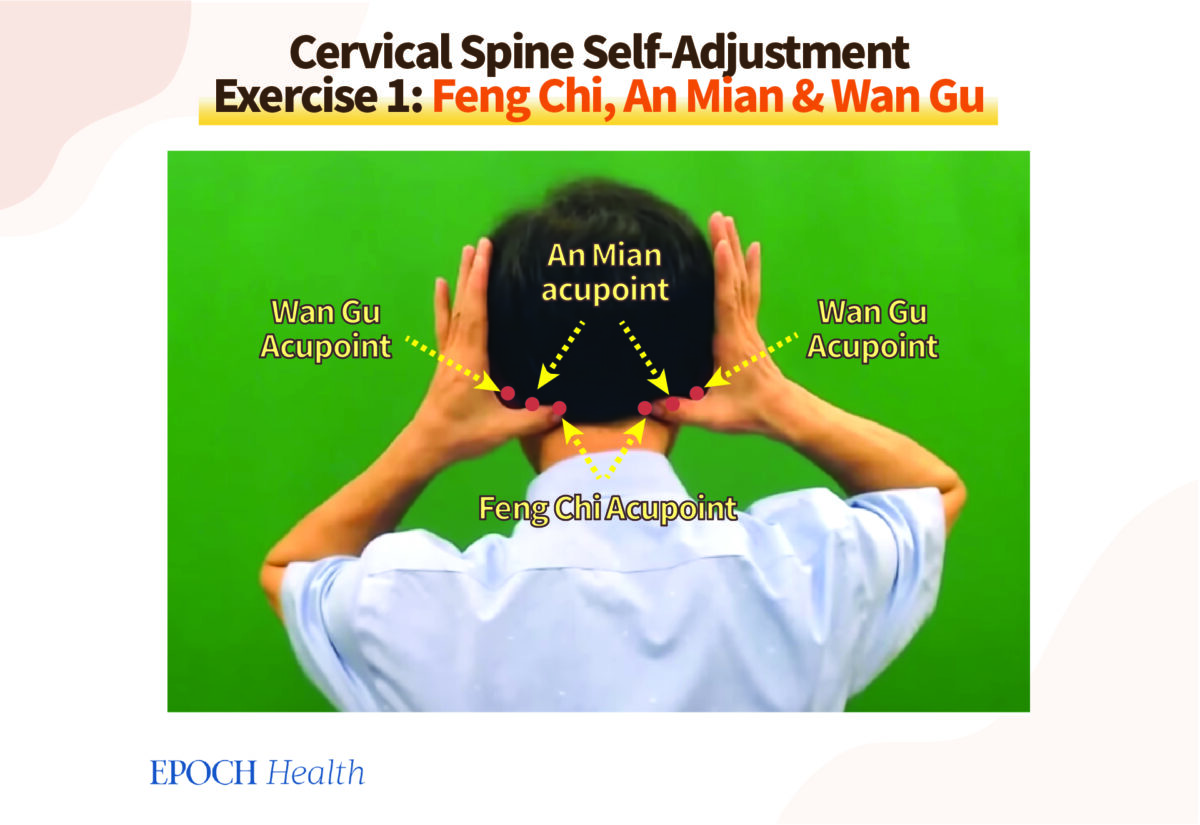
1.) Massage the muscles under the skull: Put your hands behind your head and use your thumbs to massage the muscles under the skull to loosen them. There are many TCM acupuncture points around this area, such as Feng Chi acupoints and An Mian acupoints. You can also press the acupuncture points with your thumbs, and shake your head from side to side to use the momentum to press the points.
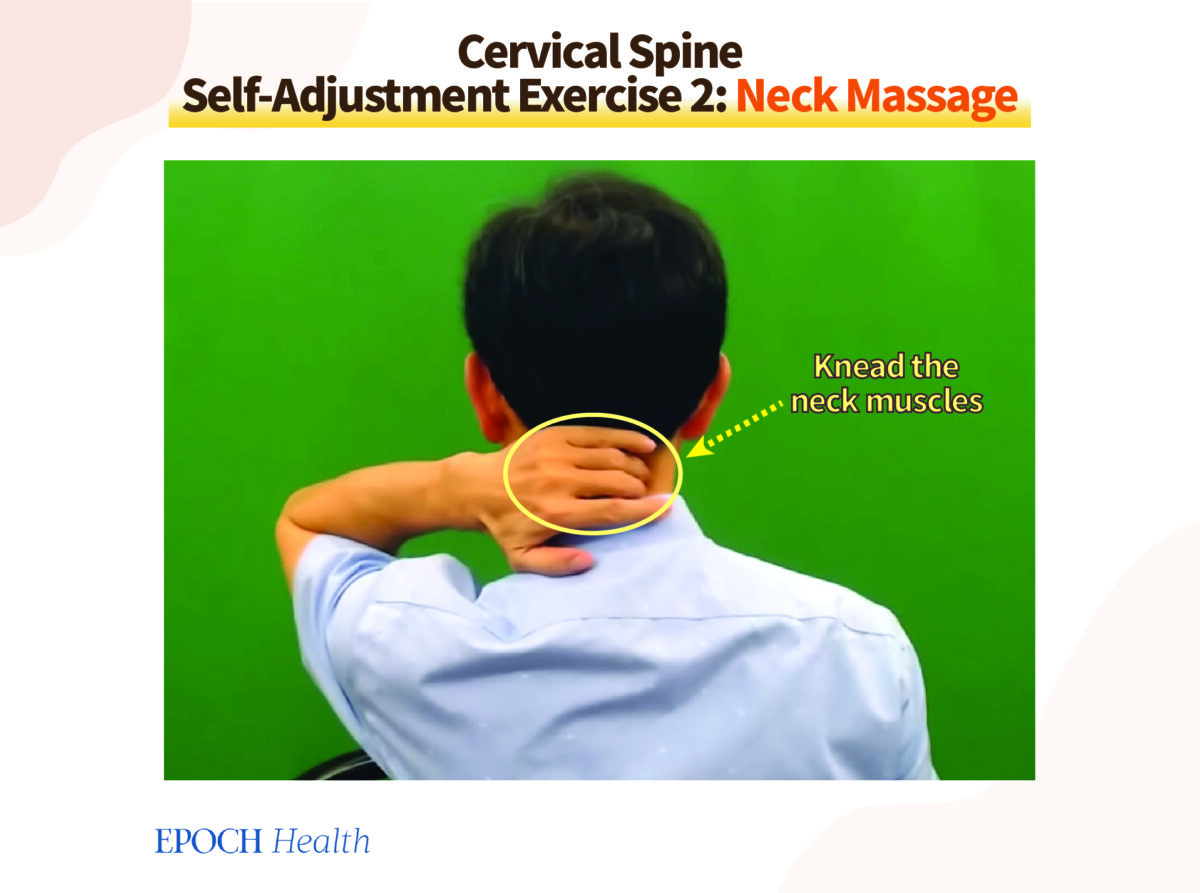
2.) Neck massage: Place your palm across the back of your neck and knead the neck muscles with four fingers; you can also switch hands.
3.) “Turtle Head” exercise: keep your upper body as flat and low as possible, extend your head outward, and keep your cervical spine parallel to the ground. Next, you can move your neck slowly in any direction – you can nod, shake and stretch your head.
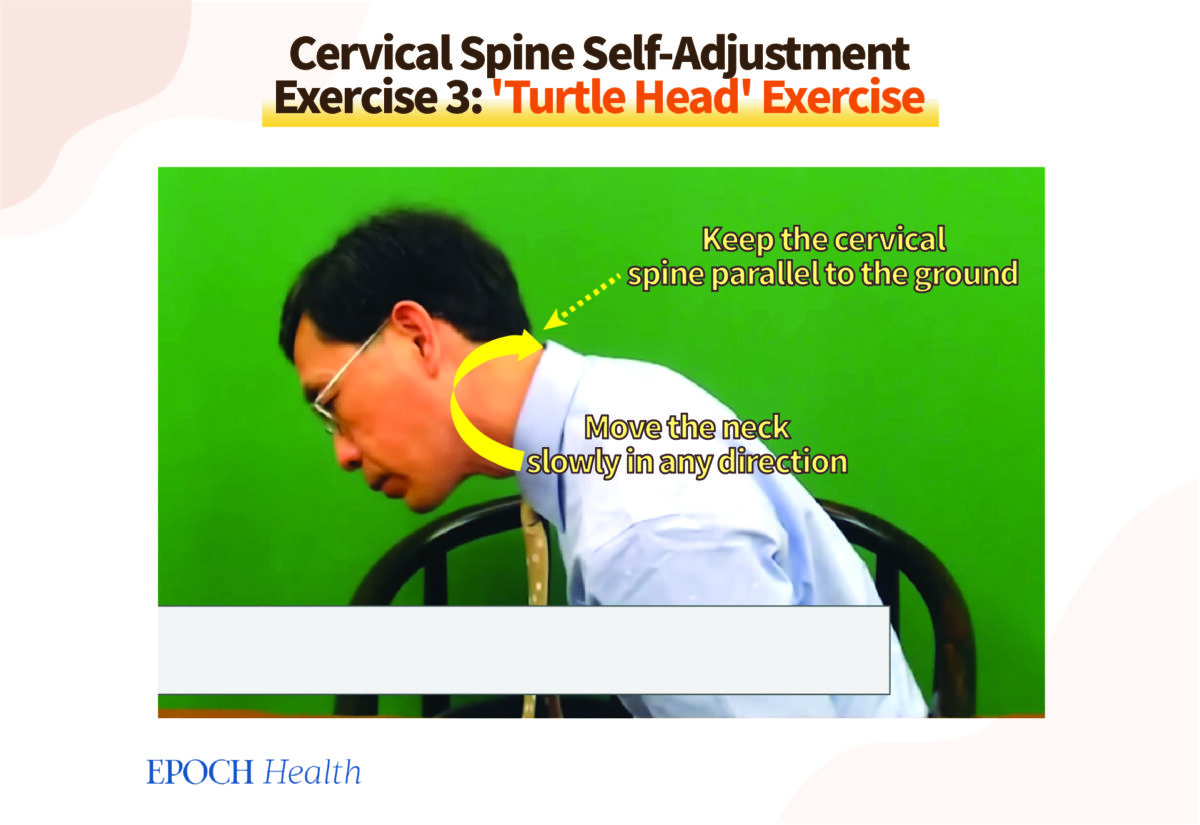
For lower back pain and lumbar disc herniation, you may consider doing William’s Flexion Exercise and McKenzie Extension Exercise to relieve symptoms.
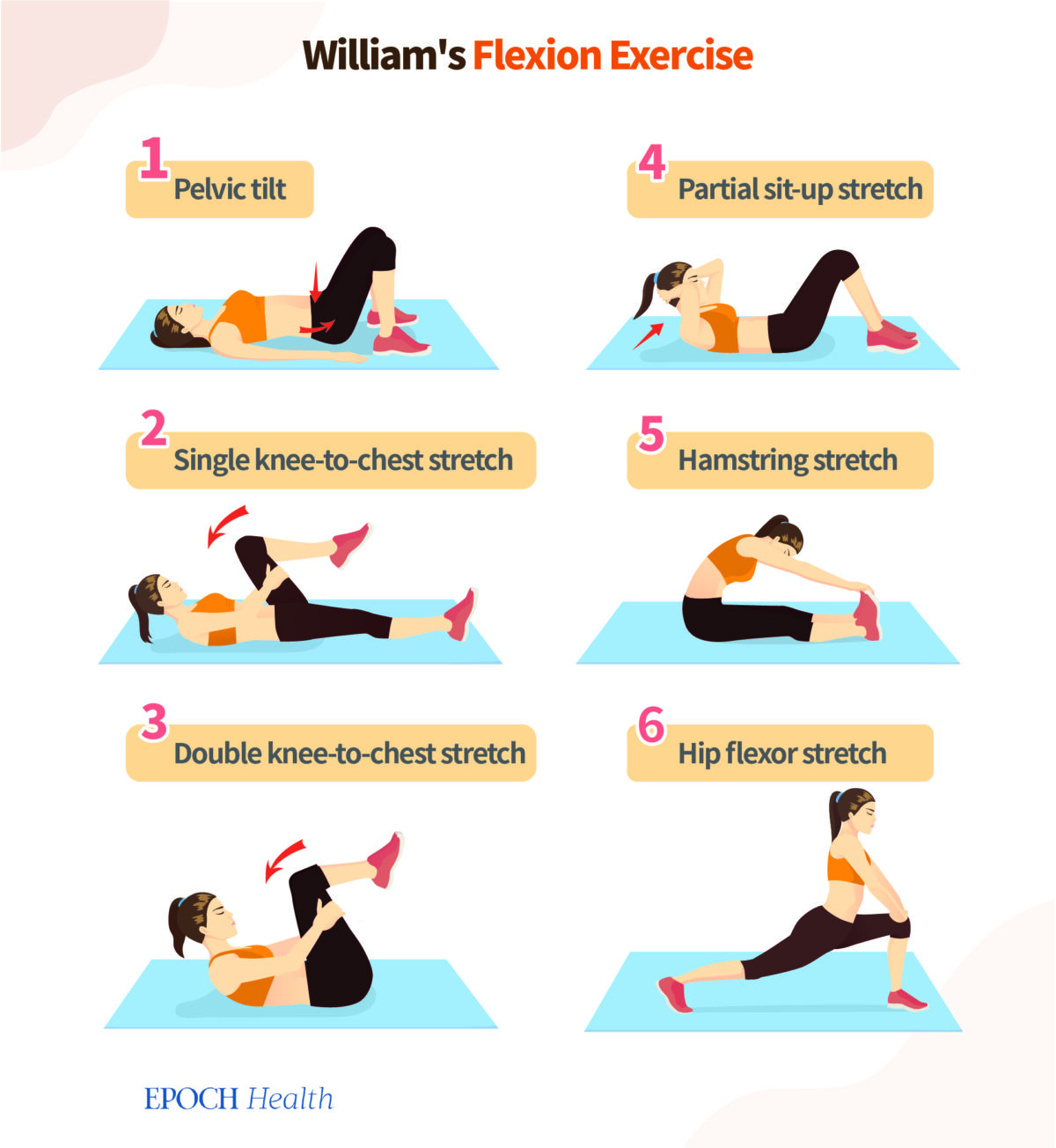
William’s Flexion Exercise
1.) Pelvic tilt: Lie on your back on a mat with knees bent and feet flat on the ground. Tilt your pelvis backward, keeping your back as close to the floor as possible without leaving any gaps. Hold the position for 10 seconds.
2.) Single knee-to-chest stretch: Lie on your back on a mat, bend one knee, pull it to your chest with your hands, and hold for 10 seconds. Repeat with the other knee when finished.
3.) Double knee-to-chest stretch: Lie on your back on a cushion, pull both of your knees to your chest one by one, and hold your knees for 10 seconds. Slowly lower to the original position one side at a time.
4.) Partial sit-up: The initial posture is the same as the first exercise—keep your pelvis tilted backward. Then, gently lift your shoulders off the ground until the lower edge of the scapula clears the resting surface; hold for about 2 seconds and slowly return to the starting position.
5.) Hamstring stretch: Sit on a mat with your legs together and straight, toes pointing up. Slowly lower your body and extend your hands straight toward your toes while keeping your eyes looking straight ahead.
6.) Hip flexor stretch: in a standing position, step forward with your left foot, or place your left foot on a low stool and squat with your knees bent. Extend your right foot back as much as possible, straighten your arms and touch the ground (or the low stool); keep your waist straight. Lean your chest as far forward as possible to your left knee and hold for 10 seconds; repeat with the other foot.
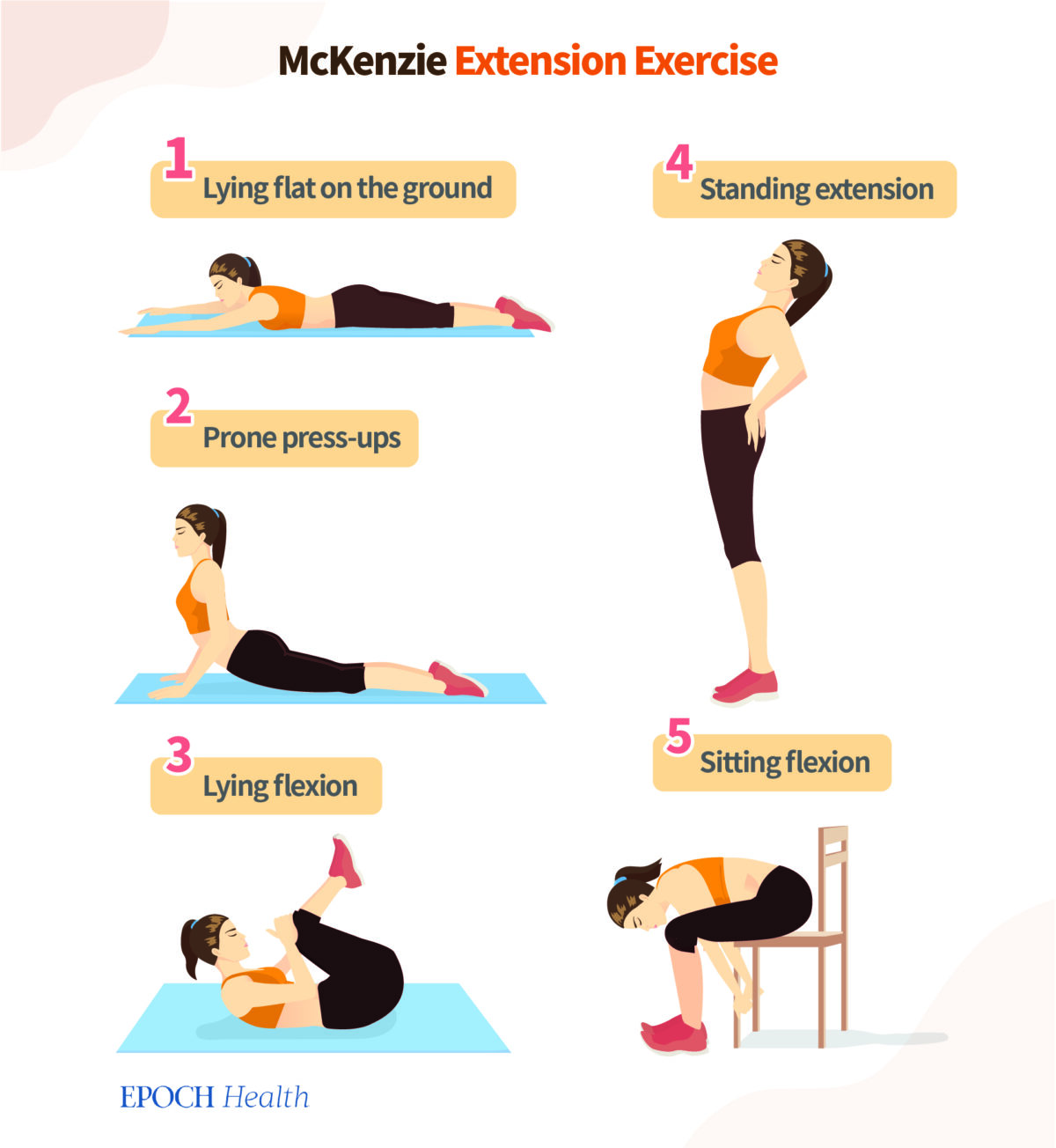
McKenzie Extension Exercise
This exercise method can relieve the pressure on the back of the lumbar herniated disc.
1.) Lying flat on the ground: Lie flat on a mat and put your hands at your sides (your hands can be adjusted according to the position of the herniated disc; the closer it is to the hip, the lower the position of the hands).
2.) Prone press-ups: Lift your upper body off the ground with both hands, and hold at a position that does not cause pain; keep your pelvis firmly on the ground throughout the entire movement. Repeat steps 1 and 2 for 15 reps; do this 3 to 5 times a day.
3.) Lying flexion: Lie down on a mat, pull your knees to your chest with your hands, and then slowly roll your whole body left and right. Repeat about 10 to 20 times.
4.) Standing extension: Stand up straight with your feet shoulder-width apart, and bend backward to lean your upper body back. Return to the original position after holding for 10 seconds.
5.) Sitting flexion: In a sitting position, bend your knees at 90° at the height of the chair; bend down, hold the legs of the chair with your hands straight, stretch your back, and hold for 10 seconds.