



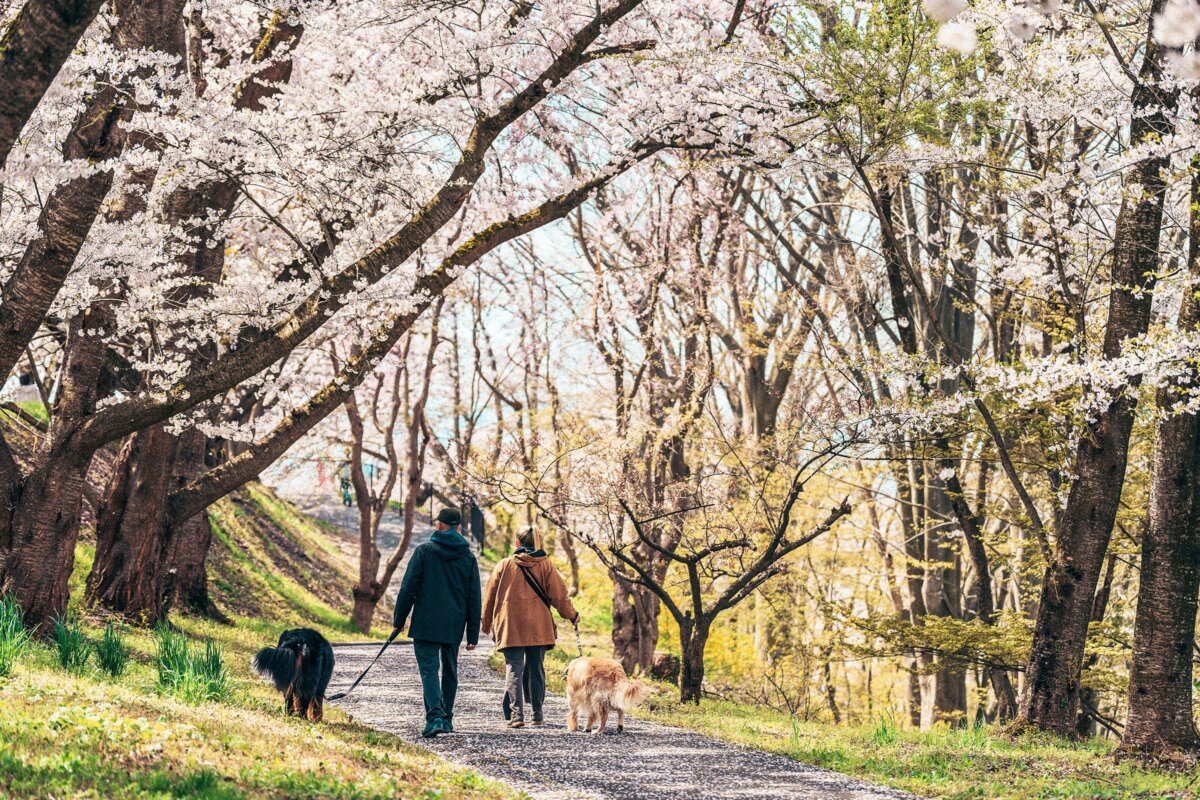
Spring is the season of rejuvenation.
The ancient Chinese medical text “Yellow Emperor’s Inner Classic” (“Huangdi Neijing”), written 2,000 years ago, states that the three months of spring are called the time of germination—the time when all things flourish. People go to bed later and rise earlier, take longer walks in the courtyard, let their hair down, and relax their bodies.
Yet for many, spring brings a lingering heaviness, what’s often called “spring fatigue,” making it harder to enjoy the season’s brightness.
3 Reasons for Spring Fatigue
Spring may signal growth, but it can also expose underlying imbalances. Wu Chien Tung, director of Yung Sheng Chinese Medicine Clinic and a director of the Taiwan Association of Chinese Medicine, told The Epoch Times that fatigue might be due to three factors:
1. Nutritional Deficiency: Poor health during winter or poor digestion can lead to insufficient qi (energy) and blood.
2. Energy Stagnation: Circulation can also be obstructed by emotional stress or lack of exercise.
3. Poor Metabolic Function: Traditional Chinese medicine (TCM) refers to the accumulation of metabolic waste as “dampness,” caused by both internal and external factors. Springtime is often rainy and humid, which can affect circulation and metabolism. Poor internal metabolic function, such as high blood sugar or high blood lipids, can also disrupt fluid metabolism, leading to “internal dampness.”
However, some spring health preservation advice may offer some inspiration.
Sunbathing Increases Yang Energy
A morning walk not only strengthens the body, but also exposes you to sunlight, helping to regulate your biological clock. From a TCM perspective, sunbathing increases yang energy.
There are two energies in the human body and the universe—“yin and yang,” in TCM theory. Yang represents the sun, signifying light, warmth, dryness, and vitality, while yin represents the shade, signifying darkness, coolness, moisture, and inactivity.
In the human body, yang is associated with growth and development, metabolism, and immunity, while yin is associated with rest, body fluids, and nutrition. The balance of yin and yang is key to health.
The waxing and waning of yin and yang in the human body correspond to changes in the duration of sunlight. In a yearly context, starting from the winter solstice, the hours of daylight gradually increase, and yang energy slowly recovers from its weakest state. It flourishes in spring and reaches its peak in summer.
Likewise, during the day, yang energy rises in the morning, filling people with vitality, while yin energy increases at night, allowing people to sleep and repair their bodies. An imbalance of yin and yang leads to daytime fatigue and nighttime insomnia.
Morning sunlight is most conducive to the rise of yang energy, “dispelling gloom and expelling cold or dampness from the body,” Wu said. When tired in the afternoon, sunbathing is beneficial but not as much as in the morning.
Wu also pointed out that from the perspective of modern medicine, the transformation of yin and yang in the human body is mainly achieved through the endocrine and nervous systems, and sunlight is key to initiating this transformation.
As dawn breaks, the body’s autonomic nervous system switches from the parasympathetic nervous system (rest and repair), which is active at night, to the sympathetic nervous system (activity and wakefulness). Cortisol secretion increases, leading to improved mental state.
Wu suggests that if it is cloudy, outdoor activity time can be extended, for example, by about 50 percent to 100 percent.
Ideal Sleep Time
According to the “Yellow Emperor’s Inner Classic,” springtime sleep need not be too early. Unlike the winter principle of “early to bed and late to rise,” the spring principle should be “later to bed and early to rise.”
Wu clarified that “later to bed” does not mean staying up all night; it simply means not going to bed too early. It is still recommended to be in bed before 11 p.m. If you are still awake after 1 a.m., the sympathetic nervous system will be activated, keeping the body alert and resulting in poor sleep quality.
From an energy flow perspective, 11 p.m. to 1 a.m. is the time of the gallbladder meridian (energy pathway), and 1 a.m. to 3 a.m. belongs to the liver meridian. Not resting during these times is therefore detrimental to liver and gallbladder function. Wu emphasized that TCM considers spring the season for nourishing the liver.
However, if work or other reasons prevent early bedtimes, maintaining a regular sleep schedule is more important than simply going to bed early and waking up early.
“If you maintain a regular sleep schedule, your nervous and endocrine systems can still adjust appropriately,” Wu said. “However, if your sleep schedule is inconsistent, with periods of excessive activity and frequent late nights, your body will find it difficult to adjust effectively.”
Li Ying-Ta, a TCM practitioner, told The Epoch Times that in spring, it is recommended to rise between 6 a.m. and 7 a.m. and go out as soon as possible for a walk in the morning light.
“Spring is different from winter,” Li said. “Sleeping that extra hour or two won’t help you; in fact, it will make you more tired throughout the day.”
Springtime Walks
To adjust your biological clock to a later-to-bed, early-to-rise state, morning sun exposure is key, and walking is the best way to satisfy this.
The walking described in “Yellow Emperor’s Inner Classic” focuses on slow, gentle stretching of the body and the smooth flow of qi and blood, Wu said. Therefore, in ancient times, people would let their hair down and wear loose clothing when walking.
To align with the rising yang energy of spring, clothing should be loose and comfortable. Avoid overly tight garments such as yoga pants, leggings, or excessively tight belts, ties, or underwear, as these can hinder the growth of yang energy.
Wu further pointed out that slow-paced exercises are best, such as walking or jogging.
“You can take larger strides but avoid moving too fast or too vigorously,” Wu said, suggesting that the transition from winter to spring should aim to gradually accelerate the flow of qi and blood.
Although vigorous exercise can quickly improve cardiopulmonary function, as most people exercise less in winter, a gradual approach is recommended.
Besides stretching the limbs through morning strolls, a key focus of TCM spring health preservation lies in relaxing the mind. From a TCM perspective, spring is a time to nourish the liver, which is considered an energy system centered around the liver, with the function of “regulating qi.” This means that it is there to maintain a balance between metabolism, circulation, and emotions.
The liver corresponds to the wood element in the Five Elements theory.
“The liver is like a tree, sprouting and spreading in spring,” Li said. “If you are depressed, it will suppress the liver.”
In spring, Li said, the sprouting of plants and the green landscape can make people feel happy. Contact with nature also helps regulate emotions, and emotional relaxation is closely related to the smooth flow of qi.
In addition to walking and stretching, Wu said, singing, playing wind instruments, playing the piano, and even listening to music and chatting can promote the smooth flow of qi and blood. These activities involve deep breathing and rhythmic breath control, naturally promoting the flow of qi and blood throughout the body and helping the liver function more smoothly.