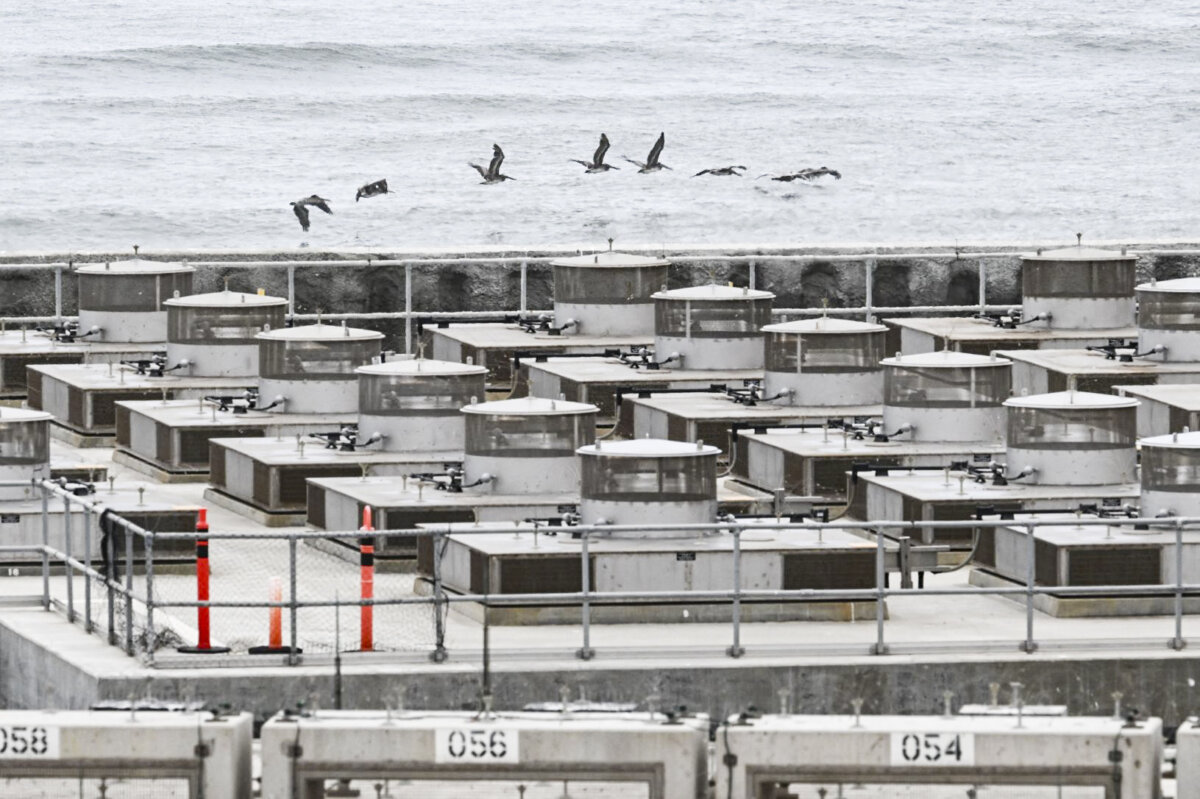

The U.S. federal government has outlined a preliminary framework to oversee the approval of offshore nuclear power projects, advancing President Donald Trump’s agenda to safely unleash domestic energy production and reestablish the United States as the global leader in nuclear energy.
“While no commercial deployment on the Outer Continental Shelf is planned or approved at this time, it could greatly strengthen America’s energy security in the future,” Matt Giacona, acting director of the Interior Department’s Marine Minerals Administration, said in announcing the initiative on July 22.
The Marine Minerals Administration and the Nuclear Regulatory Commission (NRC) released an agreement on July 22 that lays the groundwork for a more “detailed cooperative framework” outlining jurisdictional oversight for development of offshore nuclear power projects in “a safe and environmentally responsible way.”
The memorandum of understanding between the Marine Minerals Administration (MMA), which oversees energy projects in federal waters of the outer continental shelf, and the federal government’s independent civilian nuclear regulator will “foster cooperation” and “allow shared technical expertise to ensure reviews are efficient and transparent,” the NRC said in a statement.
Director of the NRC’s Office of Advanced Reactors Jeremy Bowen said, “[The agreement] creates a clear framework for how our agencies will work together and ensures our processes remain efficient, transparent, and technically robust.”
“The agreement will also allow MMA and the Nuclear Regulatory Commission to responsibly respond to industry requests, supporting novel offshore energy production,” the MMA stated.
The MMA also oversees offshore development, such as seabed mining and space launch infrastructure.
Restoring Energy Abundance
The announcement is the latest step taken by the federal government as the president pushes forward with his agenda to quadruple U.S. nuclear power capacity by 2050 and restore U.S. energy abundance.
The president declared a national energy emergency upon returning to office and has since signed numerous executive orders to achieve this goal, including licensing 10 new reactors by 2030.
Leaders in the energy sector have warned that significant investments are needed to address the increasing shortfalls in domestic power supply, as experienced during the recent summer heat waves, when grid operators were forced to issue warnings of potential outages due to inadequate resources to meet peak energy demand.
In March, major U.S. tech companies agreed to build their own electricity generation infrastructure to power their data center operations. They also pledged to help triple global nuclear capacity by 2050.
New Reactor Designs
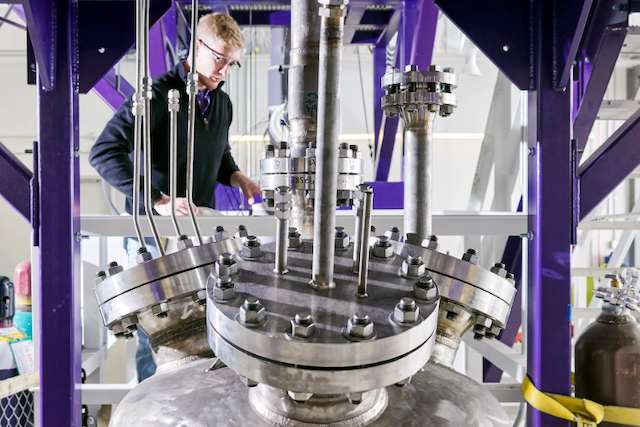 A technician monitors Natura Resources’ MSR-1 molten salt research reactor in Lockhart, Texas, in 2024. The reactor is the first liquid-fueled advanced reactor ever licensed and the first university research reactor approved in more than 30 years. (Courtesy of Natura Resources)
According to the International Atomic Energy Agency, many countries are working to develop small modular reactors, including concepts suited for marine or floating applications. Russia is the only country currently operating a floating nuclear power plant, the Akademik Lomonosov. Located in the country’s far east, it has been in operation since 2020.
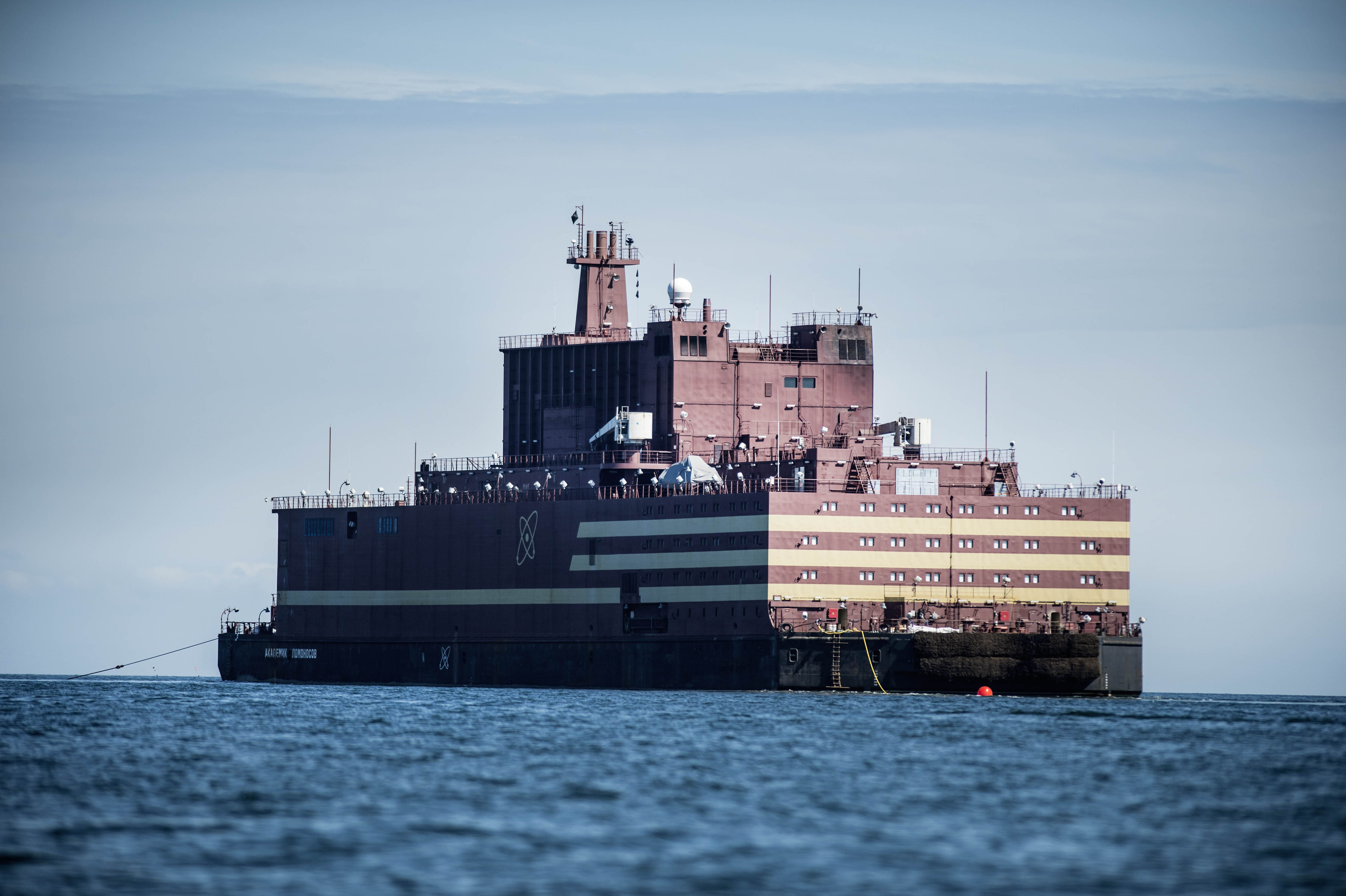 The world’s first floating nuclear power plant, Russian “Akademik Lomonosov,” passes by the island of Langeland, off the coast of Spodsbjerg, Denmark, on May 4, 2018, as it is pulled through the Baltic Sea to Murmansk. (Tim Kildeborg Jensen/AFP via Getty Images)
The nuclear power renaissance in the United States, which largely has bipartisan support, is also being forwarded by Trump’s 2025 executive order to fast-track domestic mineral production, including Uranium.
 Friends Read Free
Copy
Facebook
Tweet
Friends Read Free
Copy
Facebook
Tweet