



In the 1992 comedy “Death Becomes Her,” starring Meryl Streep and Goldie Hawn, the fear of growing old drives the two women to sign a pact with the devil and drink a potion that will stop aging and give them a younger appearance. In the real world, the same desire has given rise to cosmetic procedures meant to let us trick fate a little and escape our real age.
Every now and then, we meet a man or a woman who looks younger than their years. Many of them cannot explain why, and when complimented, they offer a familiar answer: “good genes.”
At the same time, there are people who look older than their age. We might think they are “aging poorly,” and here, too, they may blame genetics, or the hardships they have endured.
In recent years, scientists have developed measures to provide a more accurate estimate of our biological age—the body’s true pace of aging—as opposed to our chronological age. Research shows that significant gaps can emerge between the two, for better or for worse.
Other studies have revealed external influences on how fast we age—factors not solely at the whim of “good or bad genes” but things that we can actually control. If we learn to take these factors into account, scientists believe, we may be able to slow aging and perhaps even reverse course by repairing and rejuvenating the cells in our bodies.
How Our Cells Change
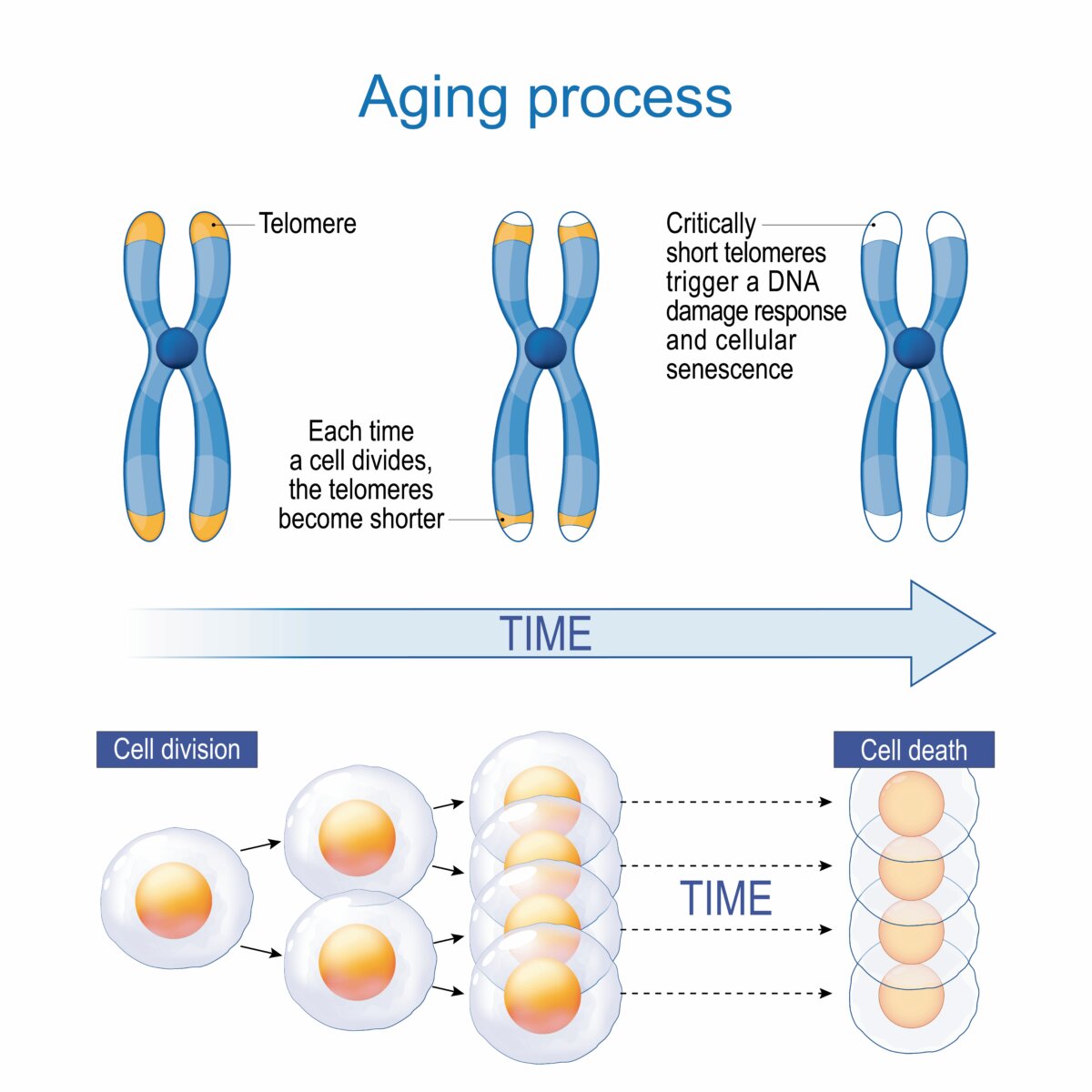
To understand what causes us to age, or to remain relatively young for our age, we must first be able to measure our biological age. One of the first methods of doing this, identified about 30 years ago, links aging to the ends of our chromosomes, known as “telomeres.”
Chromosomes are 46 long, thread-like structures found in the nuclei of our cells, carrying all the genetic information we have inherited from our parents.
In the 1970s, Elizabeth Blackburn, during postdoctoral research at Yale University, examined chromosomes in single-celled organisms and discovered something interesting. She found that at the end of all chromosomes there is a long chain of genetically meaningless, repeating sequences: the telomere.
It later became clear that these repeating structures appear at the ends of all chromosomes in all species. In more complex organisms, such as humans, the seemingly meaningless sequences can repeat thousands of times, producing a very long telomere.
In another study conducted at the University of California, Berkeley, in 1985, Blackburn and doctoral student Carol Greider identified, in certain cells, an enzyme capable of lengthening telomeres. They called this enzyme “telomerase.” At this stage, Blackburn still did not understood what this complex telomere mechanism was for, or why telomeres lengthen.
After completing her doctorate, Greider continued her research, and in 1990, she solved the mystery. After collecting fibroblast cells (skin connective tissue cells) from human donors of different ages and measuring their telomere lengths, Greider and her colleagues were surprised to find that the older the donor, the shorter the telomeres. Moreover, when they allowed these cells to keep dividing in the lab—a process that also occurs in our bodies as we age—they found that telomeres shortened further with each cell division.
From this, Greider concluded that telomeres protect the genetic information spread across chromosomes. Each time a cell splits into two daughter cells, its chromosomes are copied, and telomeres, not the essential genetic information, shorten; in this way, damage to genes with hereditary significance is prevented. In a 1990 paper, Greider explains that this is not the end of the story: when a telomere becomes too short, a cell can no longer replicate its chromosomes and renew itself—at that point, it dies.
In 2009, professors Blackburn and Greider, together with a third researcher, Jack Szostak, received the Nobel Prize in Physiology or Medicine for their discoveries about telomeres. As a result, over the past 20 years, scientists have measured the pace of cellular aging, or our biological aging, by examining telomere lengths. The shorter the telomeres, the shorter our lifespan.
However, in the past decade, several limitations of this technique have been identified, and a more accurate tool for assessing cellular aging has been developed. It, too, is linked to chromosomes, though more tied to other processes that occur over time.
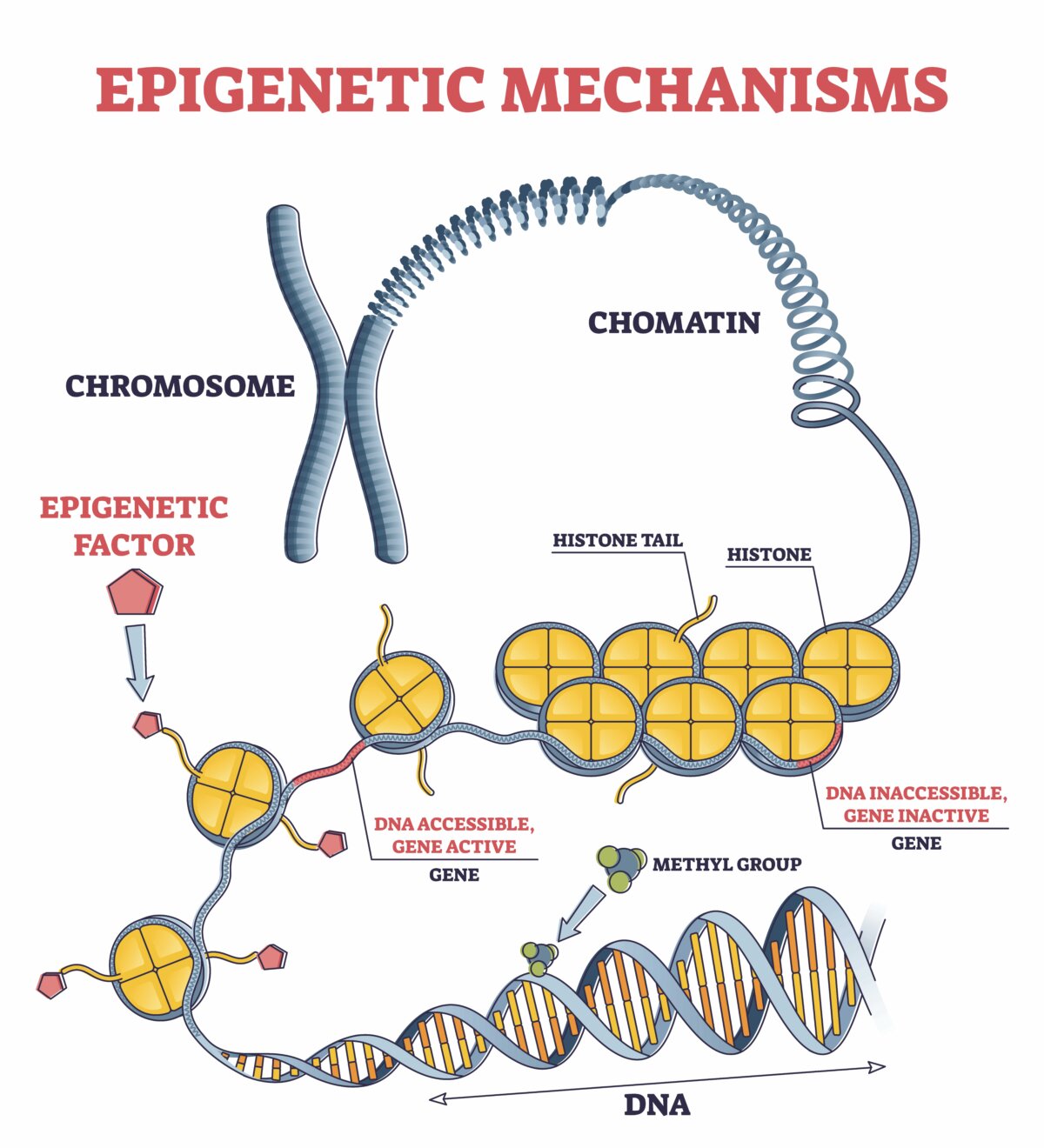
Chemical modifications of the DNA molecule are called epigenetic changes. Epigenetic information regulates gene activities by controlling which genes are expressed and which are silenced. For example, genes essential only for liver function will be silenced in our eye cells. Over recent decades, it has become clear that additional information accumulates on our chromosomes over time, and that these epigenetic alterations are fundamental drivers of aging.
In 1975, biologist Arthur Riggs identified a central mechanism in the gene-silencing processes and named it “methylation.” Since then, additional epigenetic mechanisms have been discovered, but methylation is still considered one of the most important.
A study published in 2005 by an international research group led by scientists from Spain demonstrated a strong connection between methylation processes and cellular aging. The study included 40 pairs of identical twins aged 3 to 74. The researchers collected a type of white blood cells called lymphocytes from participants. When they examined the cells’ chromosomes and compared methylation markers between identical twins, they observed a clear trend: when the twins were young, the methylation patterns along their chromosomes were similar or appeared mostly in the same places, indicating the same genes were silenced.
But as the twins aged, differences in methylation across their chromosomes grew—in some cases, the “silencing” mechanism of certain genes was removed; whereas elsewhere, methylation marks were added, indicating vital genes were silenced. The researchers concluded that methylation patterns formed in our cells in youth are influenced by the genetic information we have inherited from our parents, but as we age, epigenetic marks increasingly change in accordance with how we live our lives.
Building Aging Clocks
At this point, professor Steve Horvath of the University of California, Los Angeles entered the picture. Horvath, who as a teenager in Germany had been intrigued by the possibility of extending human life, completed his Ph.D. in mathematics from the University of North Carolina, Chapel Hill in 1995, and a Ph.D. in biostatistics from Harvard in 2000. He reckoned he might be able to learn about cellular aging processes by tracking methylation patterns on chromosomes.
“I stumbled across the first ‘epigenetic clock’ by accident,” Horvath said in a 2020 TED talk. “A colleague gave me a methylation data set because he was interested in studying sexual orientation. This methylation data from saliva didn’t lead to any signal whatsoever for sexual orientation, but when I correlated the methylation data to age, I almost fell off my chair, because the signal was so strong.”
He said he “immediately decided that I will drop everything else in my lab and will focus on using methylation data to build ‘aging clocks.’”
Horvath and his colleagues at UCLA collected saliva samples from 68 participants—34 pairs of identical twins aged 21 to 55—and compared their methylation data. Their findings were published in June 2011. After examining about 27,000 genomic locations, they identified 88 specific sites where methylation is influenced by age. At 69 of those sites, methylation increased with age, indicating that genes that had been active in younger cells were silenced in older age; at the other 19 sites, methylation that had been present was removed, indicating that genes deemed non-essential in particular cells began to be expressed. The more such disruptions occur in chromosomal methylation, the more cellular function is impaired. Cellular aging is one manifestation of that impairment.
By analyzing methylation at those 88 sites, Horvath developed the first “epigenetic clock,” capable of estimating a participant’s age with a mean absolute error of 5.2 years.
In other words, a methylation test performed, say, on your blood cells, by someone who has never met you, can surmise your age within a five-year range.
However, each tissue type has its own unique methylation patterns, depending on the proteins required in that particular type of cell. This led Horvath to another idea: develop an epigenetic clock that could apply to all human tissues and cell types, including blood samples or brain cells from deceased donors.
“That’s how we developed the ‘pan-tissue clock.’ You give me a DNA sample from any cell in your body; I can tell you your age,” Horvath explained in the same TED talk, adding that a more ambitious goal was a ‘universal mammalian clock’ that applies to all mammal species. In August 2023, in a joint paper with dozens of researchers around the world, Horvath and colleagues proposed such an epigenetic clock suitable for 185 different mammal species.
Since Horvath’s first clock was developed, other researchers have developed a variety of other epigenetic clocks and many reached even higher accuracy, with one arriving at a margin of error of 2.3 years.
Further research into biological age and how it relates to chronological age has led scientists to conclude that there are things we do in life that affect methylation processes and our telomeres—things that can either shorten or extend the lifespan of our cells—and thus influence our rate of aging.
Factors That Affect How Fast We Age
A Green, Calm, Comfortable Environment
In a study published in December 2023, researchers from the United States and Canada examined how the neighborhood we live in—in particular the extent of green spaces in it—affects the shortening of our telomeres and, consequently, our true pace of aging.
The researchers used the National Health and Nutrition Examination Survey database and analyzed data from about 7,800 participants over about 20 years. The data included participants’ places of residence and information about the availability of green spaces. Blood samples allowed the researchers to measure telomere lengths in participants’ white blood cells and track how they changed over time.
In an initial analysis, the researchers found a clear association between living environment and telomere lengths. They concluded that living in a neighborhood rich in green space could make our biological age up to 2.6 years younger than our chronological age.

When they examined additional factors such as neighborhood socioeconomic status, racial segregation, and air pollution, they found that these factors, too, played an important role. According to researchers, one thing these different factors have in common is that they affect the level of day-to-day stress a person experiences, which in turn affects the pace of telomere shortening. These findings align with another study from 2019 that found neighborhood socioeconomic status affects the pace of telomere shortening.
Chronic Stress
The impact of chronic stress on cellular aging has been known since 2004, when Blackburn, together with psychologist Elissa Epel, examined the link between the individual experience of chronic stress and the pace of telomere shortening. They recruited 39 mothers caring for children with chronic illnesses, a situation involving round-the-clock stress. The control group included 19 mothers of similar ages whose children were healthy. Blood tests allowed the researchers to measure telomere lengths in the mothers’ white blood cells. Questionnaires helped estimate the level of stress they experienced.
The researchers found that the more stress a mother experienced in daily life, the shorter her telomeres were. The questionnaires showed that mothers caring for a chronically ill child experienced far higher stress than those having healthy children. Among all mothers under age 50, the researchers identified an almost decade-long difference in “cellular age” between the experimental and control groups. Within the chronic-stress group, the longer the stress lasted—meaning more years had passed since the child’s diagnosis—the shorter the mother’s telomeres.
In an interview this author conducted with Epel in 2017, she described various thinking patterns that can heighten daily stress and thus contribute to telomere shortening, including pessimistic thoughts, thought suppression, repetitive rumination on problems, and more.
In other words, how we think about the difficulties we face may play a major role in our cellular aging. The researchers observed differences in telomere lengths between mothers of sick children who viewed daily challenges as threatening and those who faced those challenges as obstacles they could cope with. “What determines how stressed these mothers are is not the complicated care itself, but mostly how they respond in their thoughts to the situation. The situation ‘lives’ in their thoughts differently, and they also talk about it in different ways,” Epel explained.
Epigenetic clocks point to similar trends regarding stress and cellular aging. In a 2021 study, researchers at Yale University recruited 444 healthy people aged 18 to 50 and used interviews as well as questionnaires to learn about stressful events they had prior to the study. They also assessed participants’ ability of self-control and emotion regulation. Blood tests helped determine their “biological age.”
Here, too, the pattern was clear: the greater the cumulative stress a person had experienced over their lifetime, the more their biological age accelerated compared to their chronological age.
However, the Yale researchers found that among participants who had learned to incorporate emotional regulation or self-control practices into their lives, these tools appeared to buffer the effects of stress.
Physical Activity
We tend to think the more we exercise, the healthier—and perhaps younger—we will be. Indeed, studies on telomere length and studies based on epigenetic clocks have found that physical activity helps cells age more slowly. However, a research team at the University of Maryland concluded in 2008 that the dosage of exercises matters a great deal.
The Maryland study included 69 healthy participants aged 50 to 70, who reported in interviews about their weekly physical activities, including the exercises they did, the intensity of activities, how often they exercised, and for how long. Then researchers calculated each participant’s exercise energy expenditure, a measure of how much energy a person expends through physical activity per week. For statistical analysis, participants were divided into four groups based on their exercise energy expenditure. Group one included those who did almost no exercise (0–990 kcal/week); group two included those with moderate activity (991–2,340 kcal/week); group three included those with high activity (2,341–3,540 kcal/week); group four included those with the highest activity levels (above 3,540 kcal/week).
When the researchers examined telomere lengths and the activities of telomerase (the enzyme that lengthens telomeres) best results were found in the two middle groups. Those in the highest-activity group aged faster, with shorter telomeres and lower telomerase activity, compared to the moderate and high activity groups.
There are also forms of physical activities that, despite being calm and involving little physical exertion, help our cells maintain their youth. In 2012, an Australian research group examined the effects of tai chi—a gentle Chinese mind-body practice using slow, flowing movements—on women over age 45. The experimental group included about 240 women aged 45 to 88 who had practiced tai chi for at least three years; the control group included about 260 women of similar ages who had never practiced tai chi.
When researchers examined genomic locations for methylation markers linked to cellular aging, they found marked differences at six sites. In four of them, the control group showed reduced methylation (indicating nonessential genes became active), while in two other sites, methylation increased (indicating vital genes were silenced). Similar aging trends appeared among tai chi practitioners but at a rate that is about 5 percent to 70 percent slower. In other words, aging-related processes were documented in the control group, while those same processes slowed down in the cells of tai chi practitioners.
Nutrition
Researchers in Naples, Italy examined how a Mediterranean diet affects cellular aging. The diet has long been known for its health benefits and is characterized by high consumption of vegetables, fruit, legumes, and fish, alongside moderate consumption of red meat and dairy. Interviews and questionnaires were used to assess participants’ health status and eating habits, and participants were divided into three groups based on their level of adherence to the Mediterranean diet. The study included 217 participants aged 71 and older.
When researchers examined telomere lengths and telomerase activities in participants’ white blood cells, they found better results in the medium-adherence group compared to the low-adherence group. The strong adherents, however, had significantly longer telomeres and increased telomerase activities.

But it’s not only food quality that matters, quantity does too. Epigenetic clocks suggest that calorie restriction may also affect the pace of cellular aging. Researchers at the University of Texas examined methylation changes in various tissues (such as liver, spleen, and bone marrow) in mice that, for most of their lives, consumed a diet with 40 percent fewer calories than mice fed without restriction. They found that methylation-change reduction in the liver and blood was substantial, with cells measured at about 1.6 years younger than the mice’s chronological age. A smaller age-related reduction, about 0.4 years, was observed in the intestine.
The researchers also examined calorie restriction in rhesus macaques monkeys that for most of their lives, consumed a diet with 30 percent fewer calories than those that ate freely. Blood tests performed when monkeys were around age 30 (an advanced age for this species) showed that a low-calorie diet reduced methylation changes in their blood cells, making their biological age on average seven years younger than their chronological age.
Cannabis Use
Researchers in the United States examined the effects of long-term cannabis use using data from the Coronary Artery Risk Development in Young Adults (CARDIA) study, which has followed about 5,000 Americans since the mid-1980s. The researchers focused mainly on about 1,900 people who reported marijuana use over the years. In about 1,000 of them, methylation was measured after 15 years of drug use; in others, after about 20 years.
The researchers identified about 200 genomic sites associated with methylation changes linked to marijuana use, some related to long-term use and others to more recent use. They concluded that the many epigenetic changes that had appeared as a result of cannabis use may contribute to a variety of diseases, without specifically addressing aging.
In another study, an international researcher team followed 1,037 residents of Dunedin, New Zealand, from age 18 to 45 and collected data on their cannabis, cigarette, and alcohol use. When participants reached age 45, researchers estimated how much their bodies had aged, not using epigenetic clocks but through measures such as brain aging (assessed via MRI scans), walking speed, and facial aging rate.
They found that those who used cannabis over long periods of time aged faster than those who did not use it across nearly all measures (except for walking speed). Moreover, the more cannabis a person used over the years, the faster their aging rate. Even after controlling for the effects of smoking and alcohol consumption, cannabis use alone still showed a significant association with accelerated aging.
Searching for the Elixir
After developing epigenetic clocks and improving their accuracy again and again, Horvath continued to think ahead. A healthy lifestyle will help us age more slowly, he said in the TED talk. “However, unfortunately, it will not be enough for you to reach 123 … What we need to develop are aging interventions that are much more powerful.”
“Can we use these epigenetic clocks in order to identify or validate anti-aging interventions?” he asked.
As a result, in recent years, research groups around the world, including Horvath’s, have been using these new tools in a continuous search for a mysterious youth formula that could make us live longer. In 2021, for example, researchers in the United States and Canada designed a broad experiment covering multiple aspects of lifestyle. The 43 participants in the experimental group, aged 50 to 72, were required to adhere for eight weeks to a strict regimen—a mostly plant-based diet with lean meat and probiotic supplements.
Participants were also asked to get seven hours of sleep each night and to maintain a schedule of five workouts per week, each 30 minutes long. In addition, they performed two daily breathing practices for stress reduction. At the end of the experiment, the 18 participants’ cells were estimated to be, on average, 1.96 years younger than they had been about a week prior to the strict regimen. However, because the experiment only lasted eight weeks, it fell short of determining how the regimen would affect the participants’ long-term biological age.
In a clinical study published in 2019, Horvath and colleagues examined what would happen when our body was encouraged to produce new cells. They used growth hormone to restore the function of the thymus gland, an organ that plays an important role in producing immune-system cells. After a year-long treatment in 10 participants aged 51 to 65, the biological age of immune cells was calculated to be 2.5 years younger than they would have been without such treatment.
There is still a long road ahead before an “elixir of youth” like the one Horvath envisions can be found, if it can be found at all. In the meantime, there are many things in our daily lives that, practiced consistently, may help us stay a bit younger and more energetic relative to our age.
This article was originally published by Epoch Magazine Israel.