



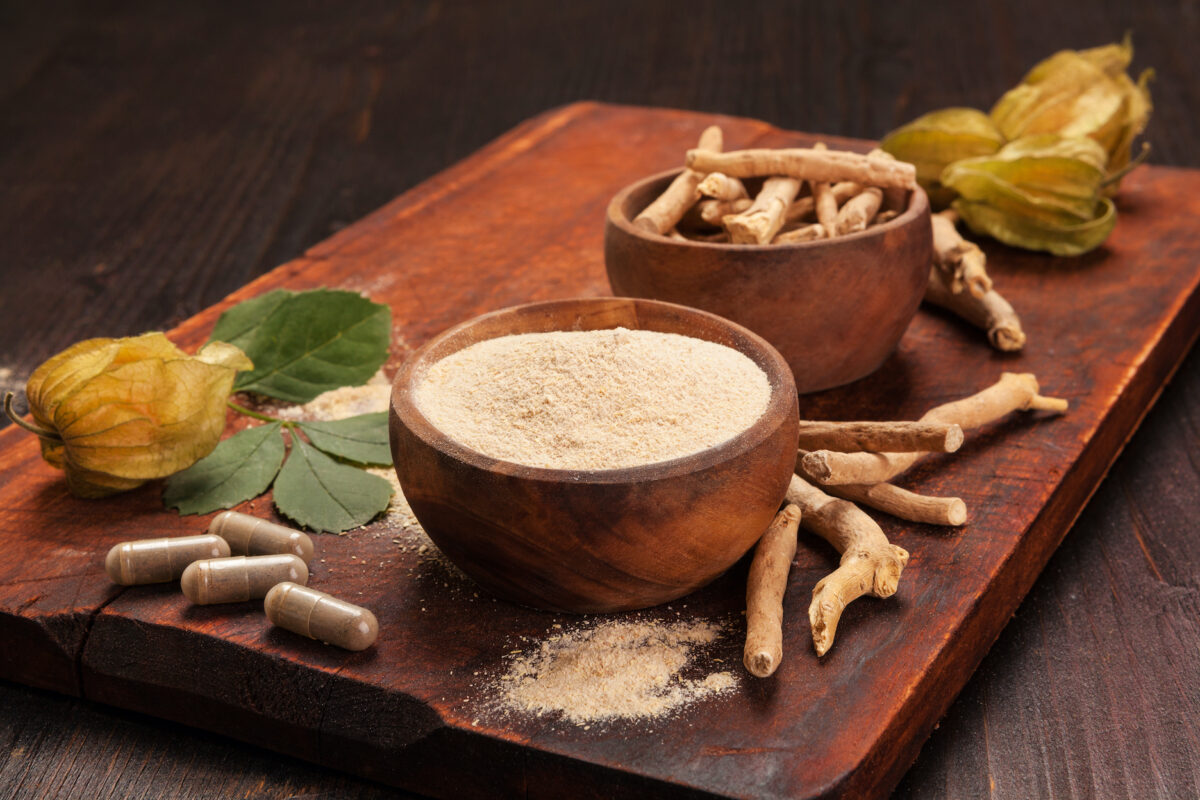
“Ashwagandha” is the wellness world’s latest crush.
You can’t swing a yoga mat without hitting someone who’s added it to a smoothie, a gummy, or a conscience-cleansing latte.
Gwyneth stirs it into her morning blend, J.Lo chews it between workouts, and Oprah sips it in something golden and frothy.
The name sounds like something yelled across a Roman battlefield, but it’s actually a root—earthy, ancient, and now moonlighting as the modern cure for stress and sleeplessness.
A Medicine Older Than Democracy
Ashwagandha’s been doing the rounds a lot longer than Goop newsletters. In India’s ancient Ayurvedic medicine, it was a rasayana—a rejuvenator meant to strengthen mind, body, and spirit.
Long before the wellness industry discovered fonts with soft edges, villagers were grinding it into powder to calm nerves, revive libido, and help the sleep-deprived finally close their eyes.
The plant is a hardy shrub with dusty red berries that thrives in places most things give up: rocky plains, parched fields, and the occasional Australian backyard.
The Science (Finally) Catches Up
Modern science has wandered in, clipboard in hand, looking mildly surprised to find the ancients might have been right.
Studies now show Ashwagandha works as an “adaptogen,” meaning it helps the body adapt to stress, a novel concept in an era when most of us adapt to stress by complaining about it online.
It seems to lower cortisol (that’s the stress hormone), ease anxiety, and improve sleep. In one study, people taking Ashwagandha had fewer 3 a.m. staring contests with the ceiling. Another found it soothed nerves as effectively as certain prescription drugs, minus the foggy aftermath.
More Than a Mood Lift
It’s not just a one-trick shrub. Ashwagandha has been linked to better heart health, sharper memory, balanced hormones, and improved fertility in both sexes.
One study even showed it boosted endurance and muscle recovery in athletes.
In lab tests, Ashwagandha has shown an intriguing knack for tackling breast cancer cells, including the stubborn ER/PR-positive and triple-negative types. It’s early research, but the herb’s clearly not just here for anxiety and good skin.
Some call it “Indian ginseng,” but that’s a bit unfair to both parties. Ginseng gives you a buzz; Ashwagandha gives you balance.
The Chemistry Bit (Don’t Panic)
Inside its roots, scientists have found all sorts of hardworking compounds with names that sound like Scrabble victories, withanolides, alkaloids, and sitoindosides.
Together, they reduce inflammation, boost immunity, and generally encourage your cells to stop behaving like commuters stuck on Parramatta Road.
A Modern Miracle (With a Catch)
It’s little wonder Ashwagandha has gone global. Silicon Valley execs put it in smoothies; influencers drop it into oat milk; insomniac parents buy it in bulk. It’s the herbal equivalent of “quiet luxury,” understated, effective, and trending hard.
That said, it’s not magic. Those with thyroid conditions, pregnant women, or anyone on sedatives should check with their doctor first. And not all powders are created equal—some are about as potent as a herbal tea served at a school fete. Look for standardised extracts like KSM-66 or Sensoril, and buy from people who know their soil better than their slogans.
The Irony, Served Warm
After centuries of dismissing “folk medicine,” we now pay boutique prices to rediscover that a horse-scented root might beat half our gadgets at stress relief.
Science has finally confirmed what traditional healers have always known: that health isn’t the absence of disease but the presence of balance.
Ashwagandha’s effects may not be immediate, and you may have to take it for several months before noticing its effects. Always speak with a doctor to ensure ashwagandha or other supplements are safe for you to use.
How to Take It
Ashwagandha comes in powders, tablets, capsules, teas, tinctures, and even gummies. Powders offer flexibility but a strong earthy taste, and tablets or capsules provide convenient, pre-measured doses of standardized extract for easier use.
Dosage recommendations vary widely, so a healthcare professional can help you choose the right form and amount—especially if you have underlying conditions or take regular medication.
In a century obsessed with optimisation, Ashwagandha’s appeal is quietly subversive. It doesn’t promise more, only enough. And maybe that’s the most radical wellness trend of all.