



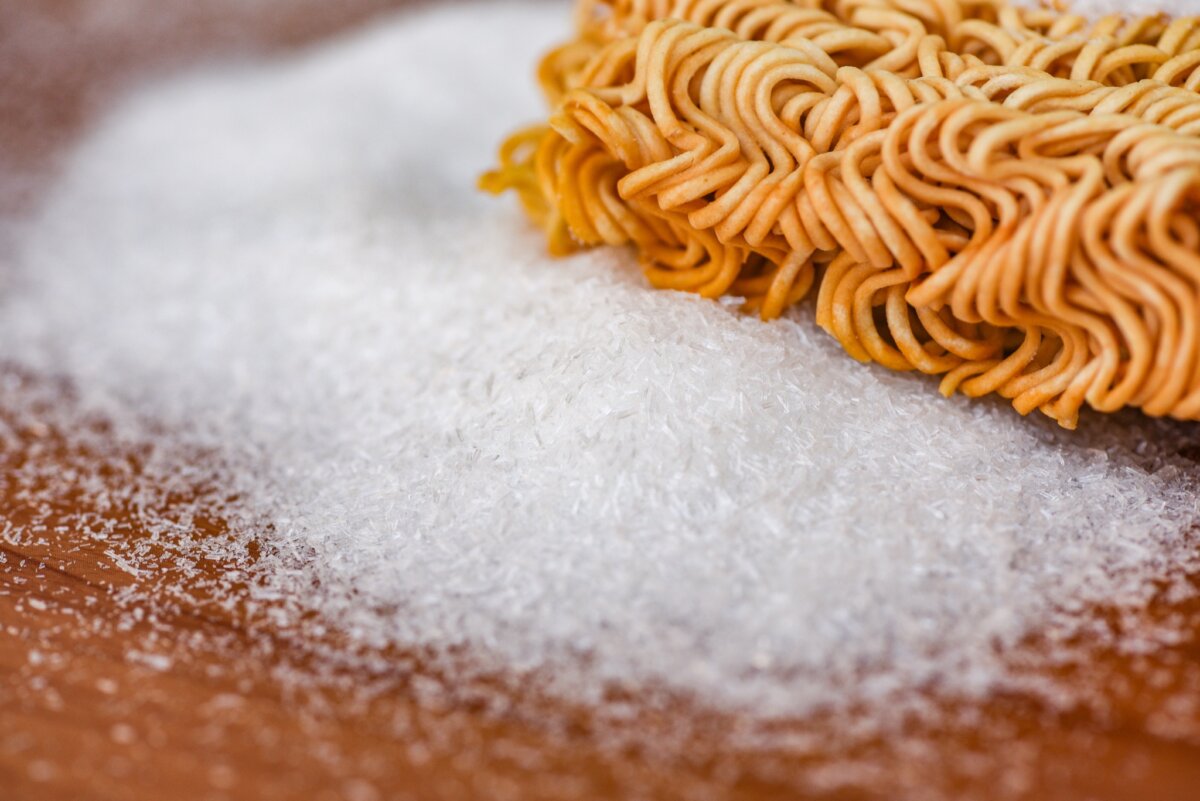
Monosodium glutamate (MSG) is a commonly used food additive known for its flavor-enhancing properties. However, the debate about its potential impact on health persists. In this article, we will explore whether MSG indeed poses a threat to our well-being.
Components of MSG
The primary component of MSG is a free form of glutamic acid, which enhances the flavor of food. However, when glutamic acid is bound with other amino acids, it becomes a part of proteins and does not have the same flavor-enhancing effect.
This free-form glutamic acid is naturally present in many foods, such as tomatoes, cheese, mushrooms, green peas, and some grains.
MSG is not natural glutamic acid, nor is it chemically synthesized. It is produced through the hydrolysis or fermentation of food. The human body cannot differentiate between the glutamic acid in MSG and the natural glutamic acid, leading to identical metabolic processes in the body—according to current science.
The Origin and Controversy Surrounding MSG
So who invented MSG? In 1908, a Japanese professor named Kikunae Ikeda discovered a distinct flavor in his wife’s seaweed broth, a taste that could not be described as sour, sweet, bitter, or spicy. He then extracted the compound responsible for this flavor and created a seasoning, which we now know as MSG. MSG has become an essential part of many people’s diets for over a century.
How did MSG’s bad reputation come about? It traces back to the 1960s when an American professor dined at a Chinese restaurant. After his meal, he felt unwell, experiencing symptoms such as headaches, numbness in his limbs, mental fogginess, and nausea. Subsequently, he wrote an open letter detailing his symptoms and speculating that they might be linked to the consumption of MSG. Since then, people have coined a term for this cluster of symptoms known as “Chinese Restaurant Syndrome.”
As a result, many Chinese restaurants were affected. Many people began associating Chinese cuisine with MSG, believing it posed various health risks. Some even started to boycott Chinese food. To this day, in an effort to retain their business, some Chinese restaurants explicitly declare that they do not use MSG.
Are There Side Effects of Consuming MSG?
Does consuming MSG truly lead to symptoms? In reality, people have yet to find concrete evidence to substantiate such claims. The American professor in question did not directly consume a spoonful of MSG and then exhibit a reaction; instead, he experienced symptoms after consuming a variety of dishes that included MSG. Therefore, it cannot be definitively concluded that the consumption of MSG caused his adverse reaction.
In fact, numerous scientists have conducted research on MSG, and none of them could find any evidence linking MSG to “Chinese Restaurant Syndrome.”
So why do some people experience such reactions? Common sense suggests that individuals may have varying sensitivities to different substances. Therefore, it is possible that some individuals might experience allergic reactions like headaches, fatigue, nausea, vomiting, or skin rashes after consuming food containing MSG. However, it is unclear how many cases of these reactions there are, which may lead some to call into question the basis for rumors about the harmful effects of MSG.
Research Findings on MSG
While MSG has not been proven to be harmful to health, some studies have found that frequent consumption of MSG can lead to weight gain and impact metabolism.
This is because the savory flavor of MSG stimulates appetite, potentially leading to excessive calorie and salt intake, which can indirectly result in weight gain and metabolism-related issues.
A study involving 752 healthy adults found that those who consumed MSG had a higher body mass index (BMI) and were more prone to being overweight than those who did not. Furthermore, individuals who consumed MSG generally also ate more animal protein, fats, cholesterol, and calories while eating less vegetable protein, total carbohydrates, fiber, starch, and magnesium than those who did not.
In addition to these findings, a study conducted by Harvard University explored responses to MSG consumption. The research team recruited 130 volunteers who self-reported reactions to MSG and had them ingest 5 grams of MSG or a placebo. It was considered a positive response if they exhibited two or more of the 10 listed symptoms within two hours of ingestion. After several rounds of testing, the researchers concluded that no persistent or severe effects due to MSG intake were observed, and the responses during retesting were inconsistent.
Considerations When Consuming MSG
While there is no direct evidence to prove that MSG is harmful, important considerations must be made when consuming MSG.
First, glutamate (glutamic acid) is an excitatory neurotransmitter that plays a crucial role in memory, cognition, and mood regulation. Excessive MSG consumption during dinner may potentially lead to sleep issues.
Second, if you experience discomfort after consuming food with MSG, avoiding MSG in the future is advisable.
The truth is that MSG is not limited to Chinese cuisine; it is present in many processed foods. However, sometimes, food labels may not explicitly indicate the presence of MSG. It must only be listed on the label when MSG is a major ingredient.
Views expressed in this article are the opinions of the author and do not necessarily reflect the views of The Epoch Times. Epoch Health welcomes professional discussion and friendly debate. To submit an opinion piece, please follow these guidelines and submit through our form here.